Ingredients
Find the right ingredient for the texture, seasoning and dish you have in mind.
Sauces & seasonings
Chinese light soy sauce
A seasoning sauce, not a promise of less sodium. Check the style named in your recipe before reaching for a bottle marked light.
Soy sauce
A broad pantry match for recipes that call for ordinary soy sauce without naming a more specific style. Read the recipe and bottle before substituting Chinese light or dark soy; sodium and wheat vary.
Chinese dark soy sauce
Useful when a dish calls for deeper color. It is not an equal-volume stand-in for light soy sauce, and Japanese dark soy sauce belongs to a different naming system.
Miso
Choose for the dish, then read the grain and seasoning details. A tub with added dashi changes the flavor and may contain fish; barley miso contains gluten.
Coconut milk
For a curry or savory sauce, look for unsweetened coconut milk intended for cooking. A drinking beverage may be too dilute, even when it comes in similar packaging.
Coconut cream
Unsweetened cream adds more richness than cooking coconut milk. Sweetened cream of coconut is a different ingredient, so read the whole name before substituting.
Gochujang
A thick Korean fermented chile paste with grain, soybean, salt and sweetness as well as heat. Loosen a measured spoonful for the sauce or glaze you are making rather than treating it as a pourable hot sauce.
Doubanjiang
A salty fermented broad-bean and chile paste. Coarse beans can be chopped, and a gentle bloom in oil releases color and aroma before the rest of a stir-fry or braise is built.
Shaoxing wine
An aromatic Chinese yellow rice wine used in marinades, stir-fries and braises. Cooking bottles may contain added salt, so read the label before seasoning the rest of the dish.
Toasted sesame oil
A dark, fragrant seasoning oil that usually has its greatest effect in a measured finishing amount. It is distinct from pale untoasted sesame oil and contains a major allergen.
Rice vinegar
Plain rice vinegar leaves sugar and salt to the cook; seasoned rice vinegar already contains them. Read the label before substituting, especially in a tested pickling recipe.
Greens, fruit & aromatics
Bok choy
Look for broad leaf stalks gathered at the base. Rinse between those layers, where grit collects, and give thick stalk pieces more cooking time than the leaves.
Choy sum
A leafy flowering stem, often sold as yu choy or yu choy sum. Tender flowers can stay; yellowing, deteriorating leaves are a different matter. Adjust cooking to the thickness of the stems.
Gai lan
Chinese broccoli has substantial stems and broad leaves rather than a large broccoli head. Peel fibrous lower stalks and keep the tender leaves and buds.
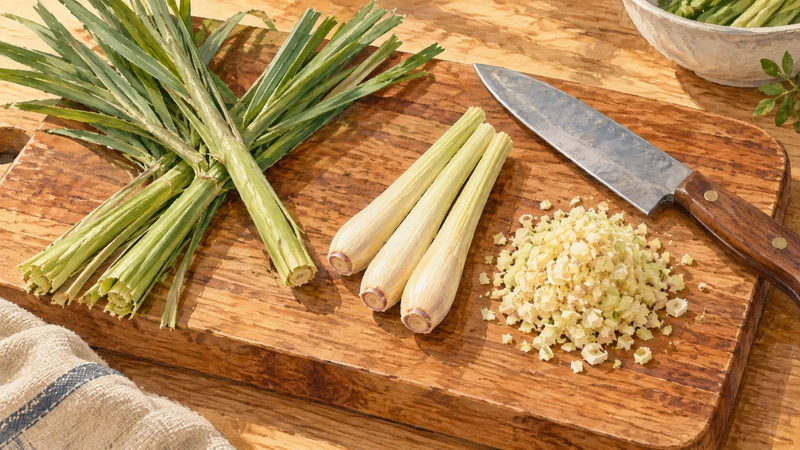
Lemongrass
Finely mince the tender lower core when it will be eaten. Bruise larger pieces for infusing a liquid, then remove them before serving; long cooking does not make woody fibers pleasant to chew.
Mango
Choose firmness for the meal: crisp fruit for a tart salad, slight give for slices, or softer ripe flesh for blending. Red skin alone does not tell you the fruit is ripe.
Scallions
Dry scallions thoroughly before frying them for oil; slice them fresh when they are a finishing garnish. The same bunch behaves differently when it is slowly browned, folded into noodles or stirred into a batter.
Napa cabbage kimchi
Well-fermented kimchi and a little brine season a savory pancake. Check the container for fish sauce, salted shrimp and other allergens instead of assuming every kimchi has the same ingredients.
Sweet corn kernels
Drain thawed frozen corn or canned corn before it reaches hot butter. Drier kernels can pick up a few golden spots without watering down the noodle coating.
Dried shiitake mushrooms
Rehydrate the caps under refrigeration, strain the soaking liquid and cook both the mushrooms and any liquid used in the dish.
Chayote / sayote
Wash before peeling, remove the seed and cut even slices. Some fruit releases sticky sap during prep; gloves can make handling easier, and the slices soften quickly in a covered skillet.
Kabocha or butternut squash
Kabocha makes a denser pumpkin soup; butternut is easier to peel and usually blends looser. Cut either into even pieces so the last firm cube does not delay the pot.
Meat & poultry
Boneless chicken thighs
Cut broad sections into similar pieces, keep raw-chicken tools separate and use a thermometer. Every piece must reach 165°F (74°C), even when the sauce has already reduced to a gloss.
Tofu
Regular firm tofu
A useful starting point for sturdy skillet slices and browned cubes. Drain, blot or press as the recipe directs; those steps remove different amounts of moisture.
Silken tofu
Smooth and delicate, suited to a spoonable texture or blending. Even firm silken tofu is not the same as regular firm tofu. Do not press it under a heavy weight.
Rice, wrappers & finishing touches
White jasmine rice
Keep the measuring, rinsing or soaking, water and cooking method together. Brown jasmine and instant rice need different instructions; a rice-cooker cup is not an ordinary US measuring cup.
Rice paper for fresh rolls
Choose edible wrappers labeled for fresh rolls. Rice and tapioca blends soften differently, so follow the packet and try one sheet before wetting a stack.
Roasted nori
Plain sheets, seasoned snacks and shredded garnish have different uses. Keep the spare sheets sealed and dry, and add a crisp garnish close to serving.
Black sesame seeds
Whole seeds add little points of texture; crushed seeds spread through a dough. For the shortbread, start with toasted seeds and stop grinding before they turn into a paste.