Ingredients
Scallions and Garlic Chives in the Kitchen
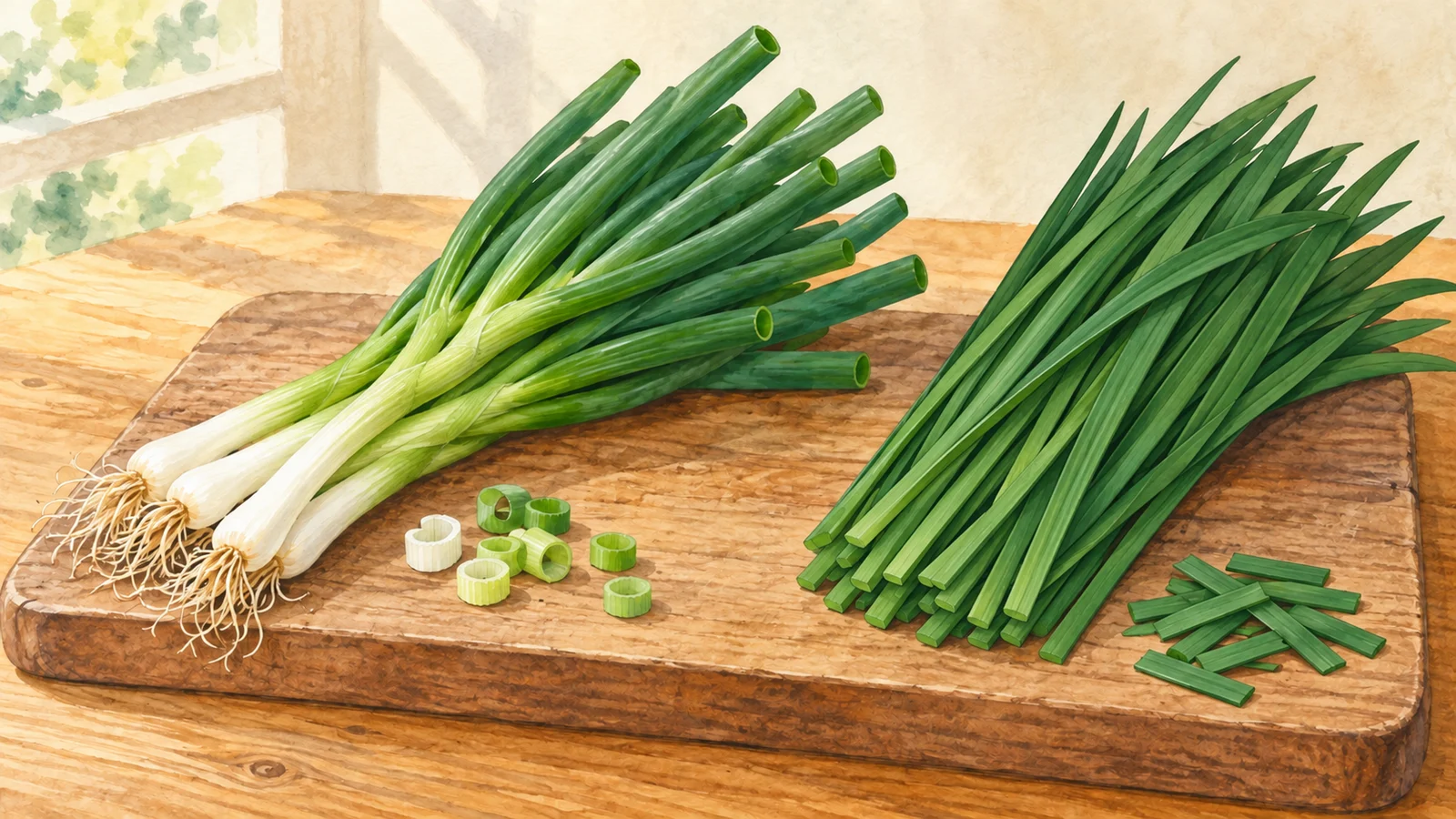
One green bundle can season the pan, another can become the vegetable, and a third may only finish the bowl. Scallions, garlic chives and common chives sometimes stand beside one another at the market, but the amount a recipe uses reveals how different their jobs are.
When the green begins the dish
Scallions—often labeled green onions—have a slim white base and hollow, tubular green leaves. The white portion carries the stronger onion flavor and can soften with oil at the start of cooking. The green tops are gentler and often join later. Illinois Extension describes using both portions raw or cooked.
Trim the roots, damaged outer layers and dry tips, then keep the sound white and green parts. When a recipe separates them, make two piles as you cut: whites for the pan, greens for later. Milk Street’s guide to scallion parts explains the difference in timing.
The same bunch can take another route. Steamed eggs with scallions receive sliced greens at serving, while pan-seared tofu with ginger-scallion sauce briefly cooks the chopped scallion in the dressing.
When the green is the dish
Garlic chives have flat, narrow leaves and a garlic-like aroma. Markets may call them Chinese chives, jiu cai, Korean buchu or Japanese nira. Maangchi’s buchu guide and Just One Cookbook’s nira guide show the familiar flat-leaf bunch.
A recipe may use the whole bundle in dumpling filling, pancakes, eggs or a stir-fry. Remove damaged leaves and dry, tough ends, then cut for the role: short pieces distribute through a filling; longer lengths remain distinct in a hot pan. Mincing the whole bunch as though it were a garlic clove loses the leafy texture the cook bought it for.
Two less-familiar packages belong to the same family. Yellow garlic chives are deliberately grown without light and taste milder; they are not ordinary chives that have gone limp and yellow. Garlic-chive flower stalks are firmer stems sold with unopened buds and offer a crisper bite. Choose the form named in the recipe.
When the green is the final accent
Common chives have very fine, round leaves and a mild onion flavor. They are the herb often sold in a small packet simply marked “chives.” Illinois Extension’s chive guide contrasts those round leaves with the flat leaves of garlic chives.
Common chives or thin scallion greens can often replace a small finishing sprinkle when a mild onion note suits the dish. That logic does not scale to a pancake or filling based on a whole bunch of garlic chives. There, scallion greens are a possible substitute, as Maangchi notes, but the flavor, moisture and shape change. Cut them finely enough to spread through the mixture and judge the quantity by the prepared volume rather than the unreliable phrase “one bunch.”
For dishes chosen specifically for garlic-chive flavor, finding the actual ingredient produces a more coherent result than trying to rebuild it from scallions and minced garlic.
A quick check before cutting
The Woks of Life aromatics guide photographs scallions, several garlic-chive forms, green garlic and garlic scapes. Green garlic and scapes come from garlic plants; they are not alternate names for the flat leaves.
Choose crisp scallion tops and fresh garlic-chive leaves. Rinse loose bunches under running water, opening the leaves near the base where soil can collect, then dry them with a clean towel. The FDA’s produce guidance calls for clean hands and utensils and advises against soap or detergent on produce.
Refrigerate scallions in a produce bag. Loosely wrap garlic chives in paper towel before bagging, as Maangchi recommends, and use the tender leaves soon. The green-onion growing guide and garlic-chive container guide continue the story from kitchen bundle to home harvest.