Ingredients
Let the Dish Choose the Tofu
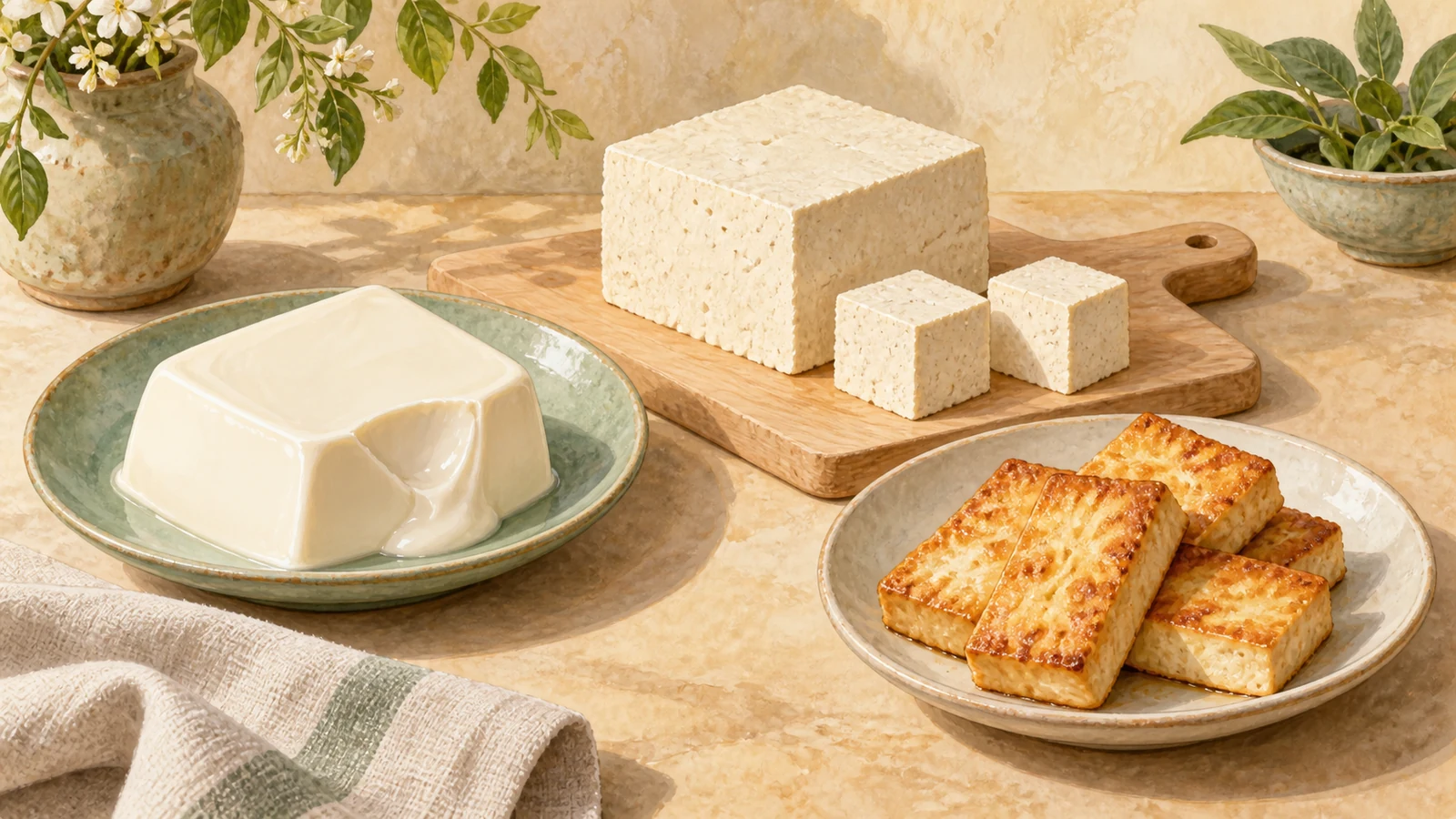
The tofu shelf makes more sense from the dinner table backward. Decide whether tonight’s tofu should brown at the edges, float tenderly in broth or blend until smooth. Then choose the package that can make that texture.
Firmness is only half the label. Tofu also comes in two broad families: regular, or cotton-style, tofu has a visible curd structure, while silken tofu has a smooth, delicate set. A package marked “firm silken” and one marked “regular firm” therefore hold different kinds of block.
Kelly Bone’s guide to tofu types explains that distinction. Japanese labels may say kinugoshi or kinu for silken tofu and momen for cotton tofu; Just One Cookbook’s tofu guide shows both. Firmness names vary among manufacturers, so read the family name and the recipe together.
Dinner one: tofu with a browned surface
For cubes or slices that need to survive turning in a skillet, regular firm or extra-firm tofu is the forgiving starting point. Extra-firm gives a denser bite and less surface moisture. Regular firm can keep a softer center.
That softer middle may be exactly the goal. In her pan-fried teriyaki tofu bowl, Nami uses medium-firm momen tofu, drains it and fries it for a tender interior. The recipe’s texture choice matters more than a blanket rule that browned tofu must use the firmest block available.
Pour away the packing liquid, then blot the surfaces that will meet the pan. Press only when the recipe asks for it. Pressing changes moisture and texture; it is not a ceremonial step every block needs. Silken tofu cannot be turned into extra-firm tofu under a heavy weight—it is more likely to collapse.
Dinner two: tofu in broth
Silken tofu brings a custard-like smoothness to miso soup or a gentle simmer. Momen or other regular tofu gives each cube more structure. Both can belong in soup, but they produce distinct spoonfuls.
Cut delicate tofu on a stable board and support the pieces with a broad utensil. Slide them into the pot with room to move. Fold the broth or sauce around them instead of repeatedly stirring through the cubes. A recipe built around tender silken tofu also needs gentler handling than one written for sturdy momen.
Dinner three: tofu that becomes the base
For a blended dressing, dip or creamy dessert, silken tofu supplies a smooth texture without a grainy curd. Follow a recipe that accounts for its moisture. Swapping in a regular firm block can produce a thicker, rougher mixture; using silken tofu in a formula designed for firm tofu may add more water than expected.
A chilled tofu dish also puts the block itself at center stage. Here the maker, freshness and exact texture may matter more than they do beneath a strongly seasoned crust. Choose the specific fresh or silken tofu named by the recipe when possible.
Translate the package at the store
Use this order when several cartons look alike:
- Find the style: silken/kinu or regular/cotton/momen.
- Match the firmness to the bite the recipe describes.
- Check the package size so the sauce and tofu stay in proportion.
- Read the storage directions before the package leaves the cart.
| Dish | Starting choice | Texture |
|---|---|---|
| Browned cubes or slices | Regular firm or extra-firm | Sturdy enough to turn; extra-firm is denser |
| Soup or a gentle simmer | Silken for smoothness; momen for structure | Either tender or more clearly defined pieces |
| Blended dressing or dessert | Silken | A smooth base with ample moisture |
Some unopened tofu is shelf-stable; other packages must remain refrigerated. The carton shape alone does not tell you which. Tofu is a soy food, and flavored or prepared versions may include additional allergens.
After opening, refrigerate tofu below 40°F (4°C). Oregon State University Extension recommends refrigerating opened tofu and using it within 3–4 days, or sooner if the package directs. Store unused water-packed tofu in a clean container with fresh water as instructed. Discard a questionable block rather than tasting it to judge safety.
Freezing creates a more porous, chewy texture after thawing. That can be useful when a dish benefits from it, but the block will not return to its fresh texture. Try one package before committing the week’s supply.
Once the tofu is chosen, the soy-sauce label guide can sort out the bottles beside it. The block should fit the meal you are cooking, not simply carry the strongest word on the shelf.