Recipes
Gai Lan with Oyster Sauce
Tender-crisp gai lan with oyster sauce, peeled lower stems and leafy tops briefly boiled and drained before dressing.
Jump to recipe ↓Recipe
- Total time
- 15–20 minutes
- Method
- Boil and dress
- Difficulty
- Easy
- Allergens
- Shellfish may be present in oyster sauce · Soy or wheat may be present in oyster sauce
About 2–3 side servings
Allow roughly 15–20 minutes, including bringing the water to a boil. Once the greens go in, stay at the pot; this is a short, attended cook.
Equipment: Wide pot, tongs, colander, knife, peeler and serving platter.
Ingredients
- 450 g gai lan (Chinese broccoli), about 1 lb
- 2 liters water, for boiling
- 1 teaspoon fine table salt, for the cooking water
- 1 tablespoon neutral cooking oil
- 2 tablespoons oyster sauce, or less to taste
Method
Trim the woody parts
Wash the gai lan thoroughly. Cut away dry ends. On thick, mature stalks, peel the tough outer skin from the lower stem. Leave tender baby stalks whole; split unusually thick stalks lengthwise so their stems are closer in thickness to the others.
Convert a measurement for this stepGet the water boiling
Bring the 2 liters water to a boil in the wide pot, leaving plenty of room above the water for the greens. Add the salt and oil. Set a colander and platter nearby before you add the gai lan.
Convert a measurement for this stepCheck a stem, not just a leaf
Lower the gai lan into the boiling water with tongs and gently submerge the leaves. Work in batches if crowded. Start checking after about a minute: the leaves should be wilted and a small knife should enter the thickest stem with slight resistance. Tender stalks may take only 1–2 minutes; larger ones can need longer. Keep watching and checking rather than leaving them to a timer.
Convert a measurement for this stepDrain before dressing
Lift the cooked greens into the colander and let the water drain away. Cook any remaining batch, then turn off the burner. Arrange the gai lan on the platter and pour away any water that collects before adding sauce.
Convert a measurement for this stepAdd a narrow ribbon of sauce
Drizzle 1 tablespoon oyster sauce over the greens. Taste a cooled bite, then add up to the remaining tablespoon if wanted. Serve promptly while the stalks are hot.
Convert a measurement for this step
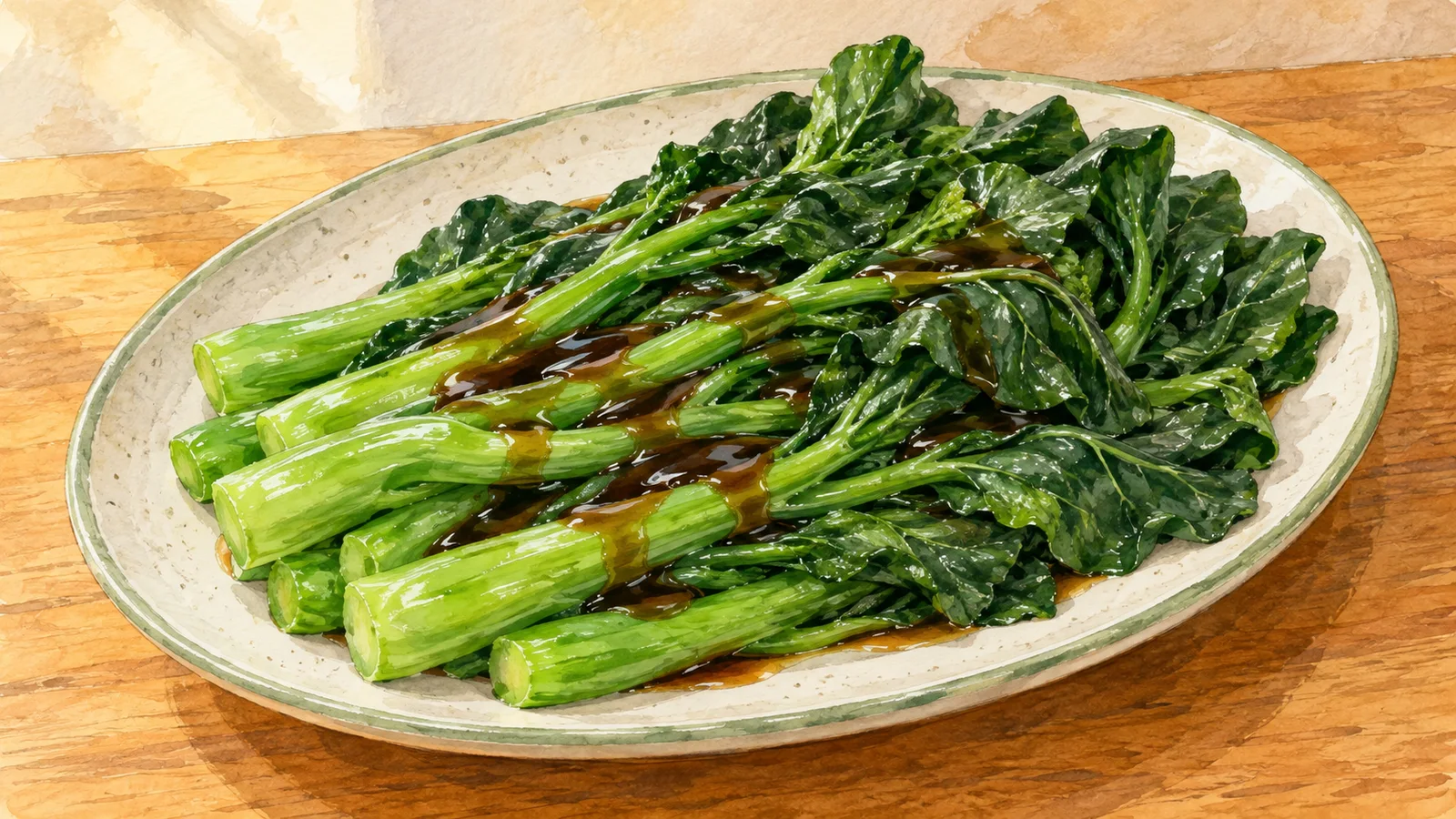
The stem decides when dinner is ready
A gai lan leaf can look cooked while its thick stem still needs work. Test the largest stem in the pot. You want a little bite, not a woody center that a knife struggles to enter.
Trimming matters before the water ever boils. Small, tender stalks need very little attention. Mature ones may have a fibrous outer layer near the cut end; peeling that section is more useful than cooking the leaves into collapse. The Woks of Life gai lan guide shows the distinction between tender stalks and older ones.
For a mixed bunch, put the slimmer stalks where the tongs can reach them. Take them out when ready and give the larger pieces longer. The whole pot does not have to finish at once.
Water on the platter is seasoning you did not choose
Let the greens drain before you sauce them. Otherwise the first spoonful of oyster sauce slides into a pool at the bottom, and adding more makes the dish saltier without fixing the water.
Use the oyster sauce straight from the bottle. Start with one tablespoon, then taste before adding more. No extra soy sauce or starch slurry is needed.
The brief boil and direct oyster-sauce finish are adapted from Sarah Leung's Chinese broccoli with oyster sauce.
If you need an oyster-free plate
Oyster sauce contains oysters. Some versions also contain soy or wheat, so read the ingredients on your bottle. A mushroom-based vegetarian stir-fry sauce is an alternative seasoning, not an identical flavor or an automatic allergy-safe substitute; check its label too. Add it sparingly and taste before using the full amount.
Gai lan grown at home can come to the table the same way. The gai lan growing guide covers the gardening side; remove damaged parts and wash your harvest just as carefully as a purchased bunch.
After the meal
Refrigerate leftovers in a shallow container within two hours, or one hour above 90°F (32°C). Store at 40°F (4°C) or below for up to 3–4 days; reheat to 165°F (74°C). Those limits follow USDA leftover guidance. Reheated gai lan will be softer, so cook only the amount you need if crisp stems are the priority.