Ingredients
Toasted Sesame Oil Goes in Last
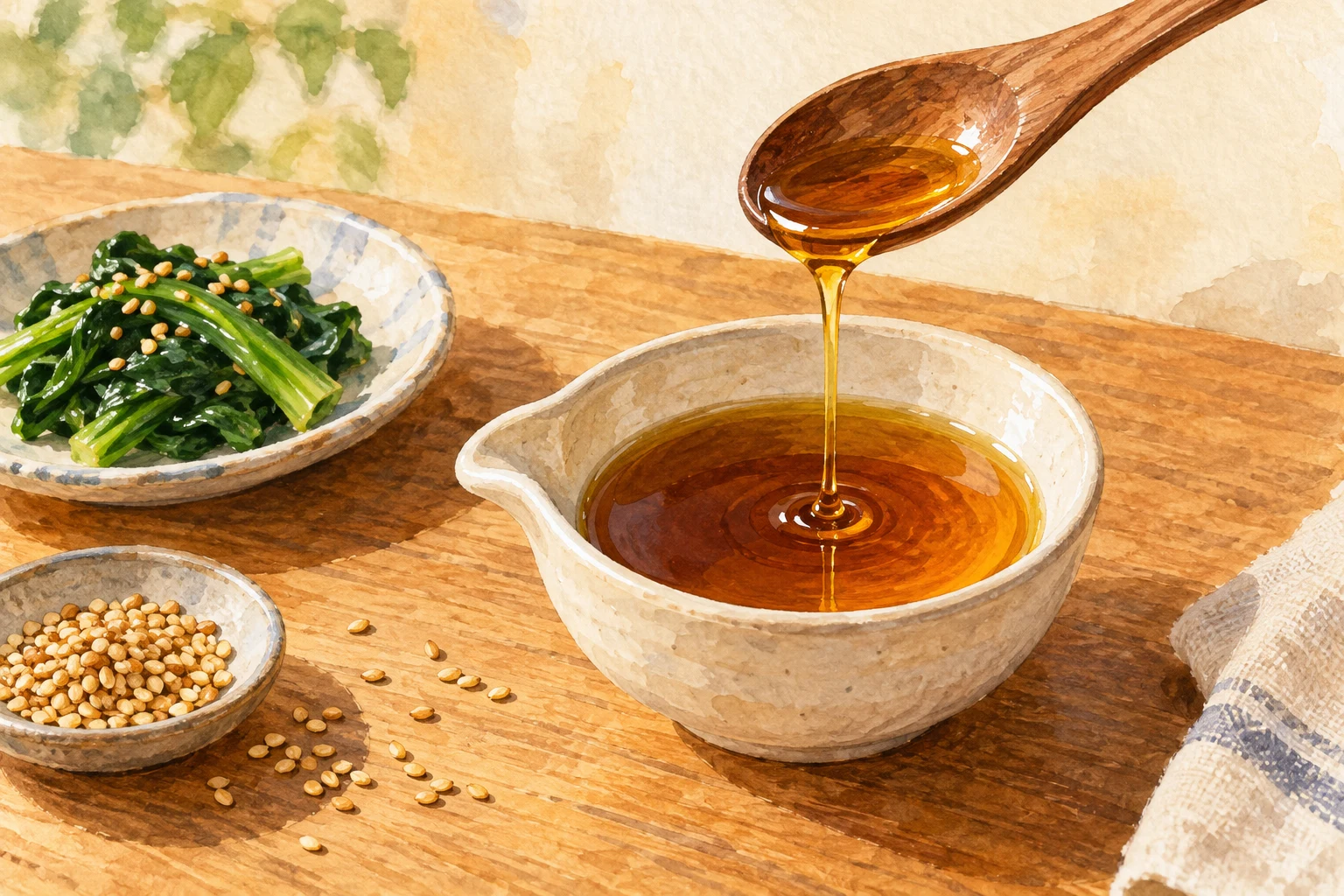
Imagine the same bowl seasoned at three moments. Toasted sesame oil added to the empty hot pan spends its aroma before the food is finished. Added while the food is still warm, it spreads and softens into the other seasonings. Added at the table, it stays bright and unmistakable. None of those moments is automatically correct, but they do not produce the same bowl.
Choose the moment on purpose
| When it goes in | What it does best | What to watch |
|---|---|---|
| Briefly warmed with aromatics | Joins another cooking fat and carries aroma into a sauce | Follow a recipe written for this; prolonged high heat flattens the fragrance |
| Mixed through warm food | Coats noodles or vegetables evenly without tasting raw | Measure, toss thoroughly and taste before adding more |
| Drizzled at serving | Leaves the clearest toasted aroma above a soup, egg dish or cold plate | A few drops may be enough for a delicate portion |
These are different from filling the pan with toasted sesame oil for a long sear. The dark aromatic oil is usually a seasoning; a neutral cooking oil can handle sustained high heat unless the recipe says otherwise.
Confirm which sesame oil you have
Toasted sesame oil is made from toasted seeds and is generally amber to dark brown with a pronounced nutty aroma. Untoasted sesame oil is paler and milder. Just One Cookbook’s sesame oil guide explains how the two are used differently in Japanese cooking.
A tinted bottle can hide the color, so read for words such as “toasted” or “roasted.” Check the ingredients as well: a blended oil may contain other vegetable oils and taste milder. Pale sesame oil cannot provide the same finish, while a dark toasted oil can dominate a dish designed around a neutral frying fat.
Use a spoon before using the spout
Measure the oil into a spoon or small bowl. Add part of it, toss well and taste a safely cooled bite. The aroma should be noticeable without leaving the food slick. For a two-portion dish, adjust by drops or half-teaspoons rather than another free pour. More soy sauce cannot correct excess sesame oil; it only adds salt.
The bottle appears in several different roles across this kitchen. A few drops can finish Chinese steamed eggs. In beef japchae, it joins the seasoning that coats noodles and vegetables. In smashed cucumbers, it rounds the sharp dressing without hiding the vinegar.
Heat, light and air gradually dull the oil. Buy a size you will use, close it promptly and store it according to the maker’s directions in a cool, dark place. A stale, waxy or paint-like smell means the bottle has moved past the warm toasted aroma you wanted.
Sesame is one of the nine major food allergens in the United States, as listed in the FDA’s food-allergy guidance. Even a finishing drizzle matters when cooking for someone with an allergy; check blended oils and prepared sauces too.