Recipes
Scallion Oil Noodles with Crisp Green Strands
Shanghai-style wheat noodles dressed with slow-fried scallions, light and dark soy sauce, and just enough sugar to round the concentrated sauce.
Jump to recipe ↓Recipe
- Total time
- About 25 minutes
- Method
- Pot and skillet
- Difficulty
- Easy
- Allergens
- Soy · Wheat
2 noodle bowls
Allow roughly 25 minutes and stay near the skillet while the scallions fry. The sauce is concentrated, so dress the noodles gradually. Contains soy and wheat.
Equipment: Medium pot, colander, 10-inch skillet, tongs or chopsticks, small bowl and clean plate.
Ingredients
- 300 g fresh Chinese white wheat noodles or 250 g dried wheat noodles, plus water for boiling
- 100 g scallions, washed, thoroughly dried and cut into 5 cm (2 inch) lengths; split thick white pieces lengthwise
- 80 ml neutral cooking oil (1/3 cup)
- 1 1/2 tablespoons Chinese light soy sauce
- 1 tablespoon Chinese dark soy sauce
- 2 teaspoons sugar
Method
Dry and divide the scallions
Make sure the washed scallions are dry, then cut and split them as described. Stir the light soy sauce, dark soy sauce and sugar together in the small bowl. Set a clean plate beside the skillet for the fried scallions.
Convert a measurement for this stepFry the scallions slowly
Heat the oil in the skillet over medium-low. Add the scallion whites first and cook for 2 minutes, then add the greens. Fry, turning regularly, until the pieces are wilted, deeply browned at the edges and partly crisp, usually 8–12 minutes more. Lower the heat if they blacken. Lift the scallions onto the clean plate.
Convert a measurement for this stepBubble the soy mixture gently
Reduce the heat to low. Carefully pour the soy-and-sugar mixture into the scallion oil; it may foam. Stir for 1–2 minutes, just until the sugar dissolves and the sauce bubbles gently. Turn off the heat.
Convert a measurement for this stepCook and drain the noodles
Boil the noodles according to their package until tender with a little bite. Turn off the burner and drain thoroughly; do not rinse unless the package directs it.
Convert a measurement for this stepDress, taste and finish
Return the skillet to low heat and add the drained noodles. Start with about two-thirds of the scallion sauce and toss until glossy. Taste a cooled strand before adding more. Turn off the burner, fold in the fried scallions and divide between two bowls.
Convert a measurement for this step
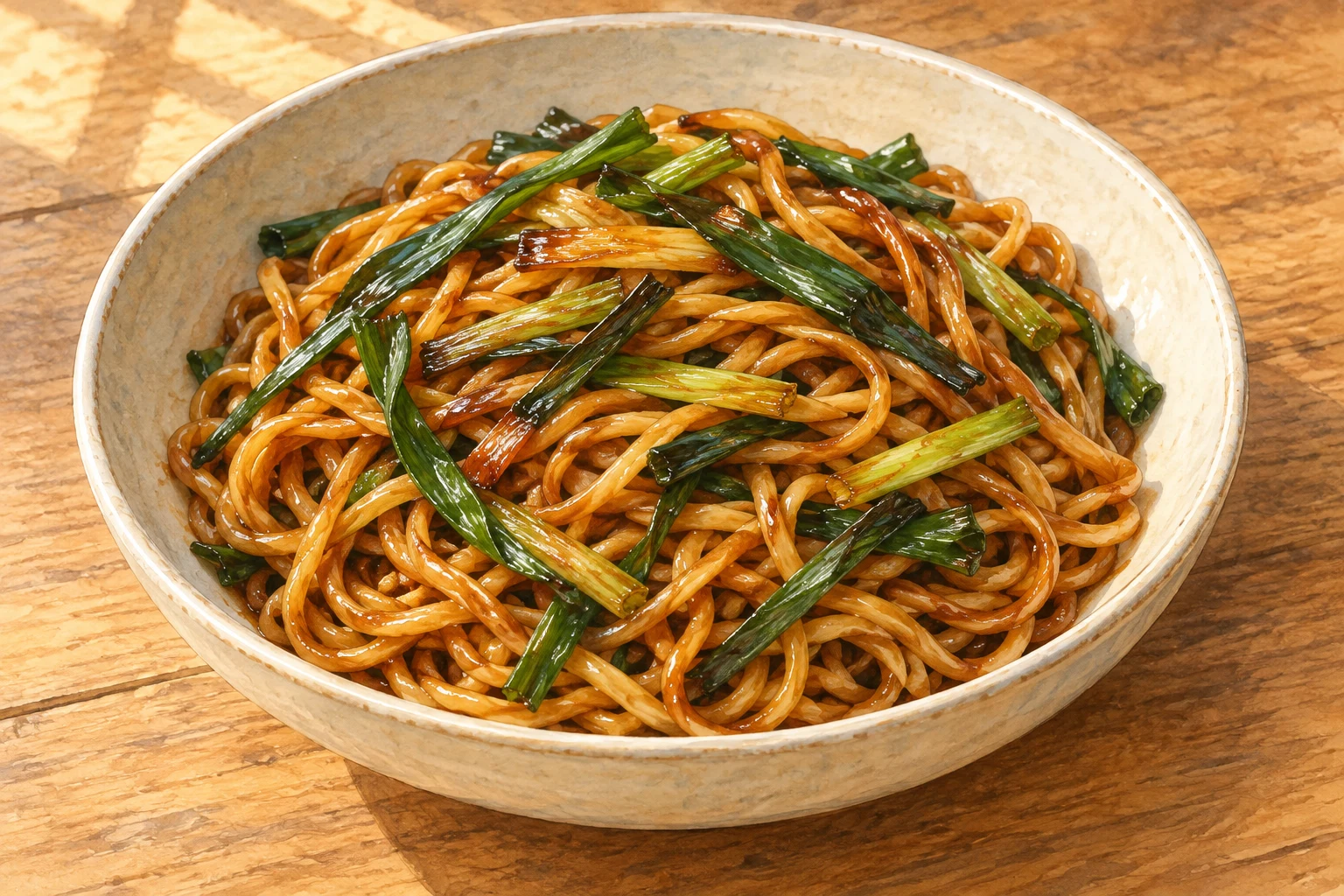
The scallions begin bright and grassy, then slowly give their flavor to the oil. By the time the noodles arrive, the pan holds crisp green strands and a dark, savory dressing. The transformation is the whole dish.
This two-bowl version follows the slow scallion frying in Judy Leung’s Shanghai scallion oil noodles, scaled down with less sauce for an ordinary skillet.
Dry scallions make calmer oil
Wash the scallions thoroughly, then dry them before cutting. Water clinging to the leaves can spit when it reaches hot oil. Split thick white sections lengthwise so they cook closer to the pace of the greens, and keep the heat moderate enough that the scallions darken gradually instead of scorching at the tips.
The scallions are ready when they look wilted, wrinkled and deeply browned at the edges. Lift them out before adding the soy sauces. Some will be crisp and some tender; both belong on the noodles.
The sauce should look too strong on its own
Light soy sauce carries most of the seasoning. Dark soy contributes color and a rounder, less salty impression; it is not a one-for-one replacement for the light sauce. If the bottle labels are unclear, the soy sauce guide separates style from sodium claims.
Sugar softens the hard edges without making a sweet noodle sauce. Stir it into the oil over low heat and wait for the mixture to bubble gently. Soy sauce can foam when it hits hot oil, so use a skillet with room and pour carefully.
Dress the noodles a little at a time
Boil the noodles according to their package, because fresh and dried wheat noodles do not share one cooking time. Drain well. Start by adding only part of the scallion oil, then toss and taste a cooled strand. The concentrated sauce is easier to add than remove.
Return the crisp scallions at the end so they remain distinct. Serve the noodles straight away, while the strands are loose and glossy. Soy sauce and most Chinese wheat noodles contain common allergens; check both packages when cooking for someone with an allergy.