Recipes
Miso Butter Corn Udon in One Bowl
Thick udon tossed with browned corn, mellow miso butter, scallions and sesame, with hot noodle water turning the seasoning into a silky coating.
Jump to recipe ↓Recipe
- Total time
- About 20 minutes
- Method
- Pot and skillet
- Difficulty
- Easy
- Allergens
- Wheat · Soy · Milk · Sesame · Fish may be present in miso with dashi
2 noodle bowls
Allow roughly 20 minutes. Reserve hot noodle water before draining. Contains wheat, soy, milk and sesame; miso with added dashi may also contain fish.
Equipment: Medium pot, colander, 10-inch skillet, heatproof cup, spoon, tongs and two bowls.
Ingredients
- 400–500 g frozen udon, about 2 portions, plus water for boiling
- 200 g corn kernels, thawed and drained if frozen or canned
- 2 tablespoons unsalted butter, divided
- 1 1/2 tablespoons white or awase miso
- 2 scallions, washed, trimmed and thinly sliced
- 1 tablespoon toasted sesame seeds
Method
Drain the corn and slice the scallions
Pat very wet corn dry and slice the scallions. Put the miso in the heatproof cup. Keep the udon frozen until the water is boiling.
Convert a measurement for this stepCook the udon and save a little water
Boil the udon for the package time, easing the strands apart as they loosen. Before draining, scoop 60 ml (1/4 cup) hot noodle water into the cup with the miso and stir smooth. Turn off the burner and drain the udon.
Convert a measurement for this stepGive the corn a few golden spots
Melt 1 tablespoon butter in the skillet over medium. Add the corn in a single layer. Cook for 3–5 minutes, stirring only occasionally, until hot and lightly golden in places.
Convert a measurement for this stepCoat the noodles over low heat
Reduce the heat to low. Add the drained udon, miso mixture and remaining tablespoon of butter. Toss until the butter melts and the liquid becomes a glossy coating. Add another spoonful of water only if the strands remain tight. Do not boil the miso sauce hard.
Convert a measurement for this stepFinish with scallion and sesame
Turn off the burner. Fold in most of the scallions and sesame, divide between two bowls, and scatter the rest on top. Serve immediately while the udon is loose and hot.
Convert a measurement for this step
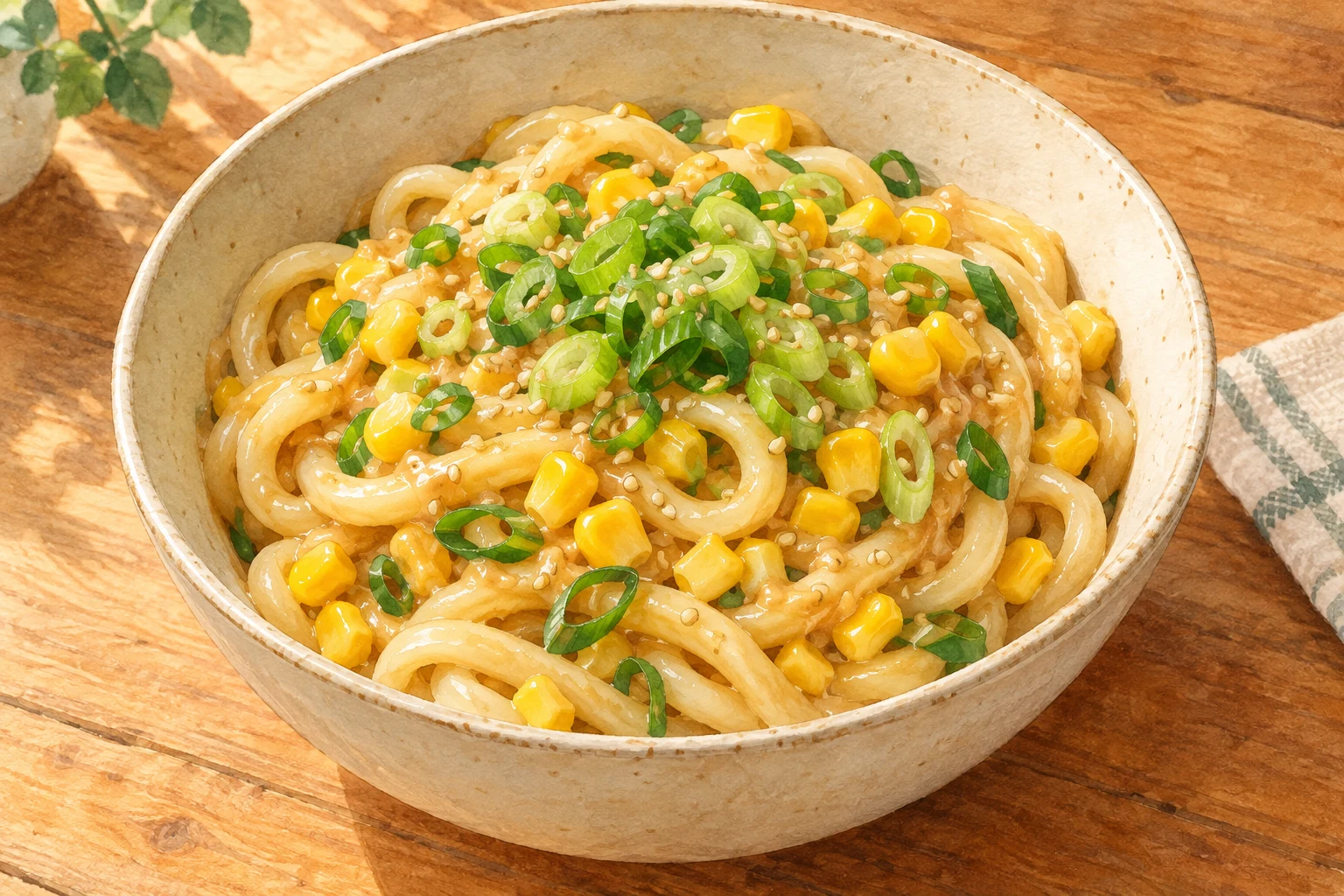
Corn collects in the curves of udon. Miso butter coats everything else. This is a soft, chewy bowl with little bursts of sweetness, built for the evening when a packet of frozen noodles feels more useful than a long plan.
The pairing is adapted from Namiko Hirasawa Chen’s miso butter corn. Here the same savory butter becomes a loose noodle coating with hot udon water rather than a glaze for grilled corn.
Mix miso with water before it meets the skillet
Miso does not melt like butter. Stirring it first with a little hot noodle water creates a smooth slurry that can travel around the noodles instead of remaining in salty pockets. White or blended miso works well here; darker miso may be more assertive, so the miso buying guide can help if the tub is unfamiliar.
Do not boil the miso mixture hard. The skillet only needs enough heat to warm the sauce and help it cling.
Let the corn color in one layer
Drain thawed frozen corn well, or drain a can and pat the kernels dry. Extra water steams the corn and dilutes the butter. Spread the kernels across the skillet and leave them briefly between stirs. A few golden spots add contrast to the soft noodles.
Frozen udon generally needs only a short trip through boiling water, but the packet is the authority for that product. Ease the strands apart as they loosen. Pulling a frozen block can tear the noodles before the centers have warmed.
Finish where the heat is gentle
Add the drained udon, miso slurry and remaining butter with the burner low. Toss until no watery puddle remains, loosening with another spoonful of noodle water only if the strands seem tight. Scallions and sesame go in at the end so they keep their aroma and texture.
Miso contains soy; udon usually contains wheat; butter contains milk; sesame is also a major allergen in the United States. Check the actual packages. If your miso includes dashi, it may also contain fish. Refrigerate leftovers promptly and reheat until steaming throughout.