Ingredients
Doubanjiang Starts in the Oil
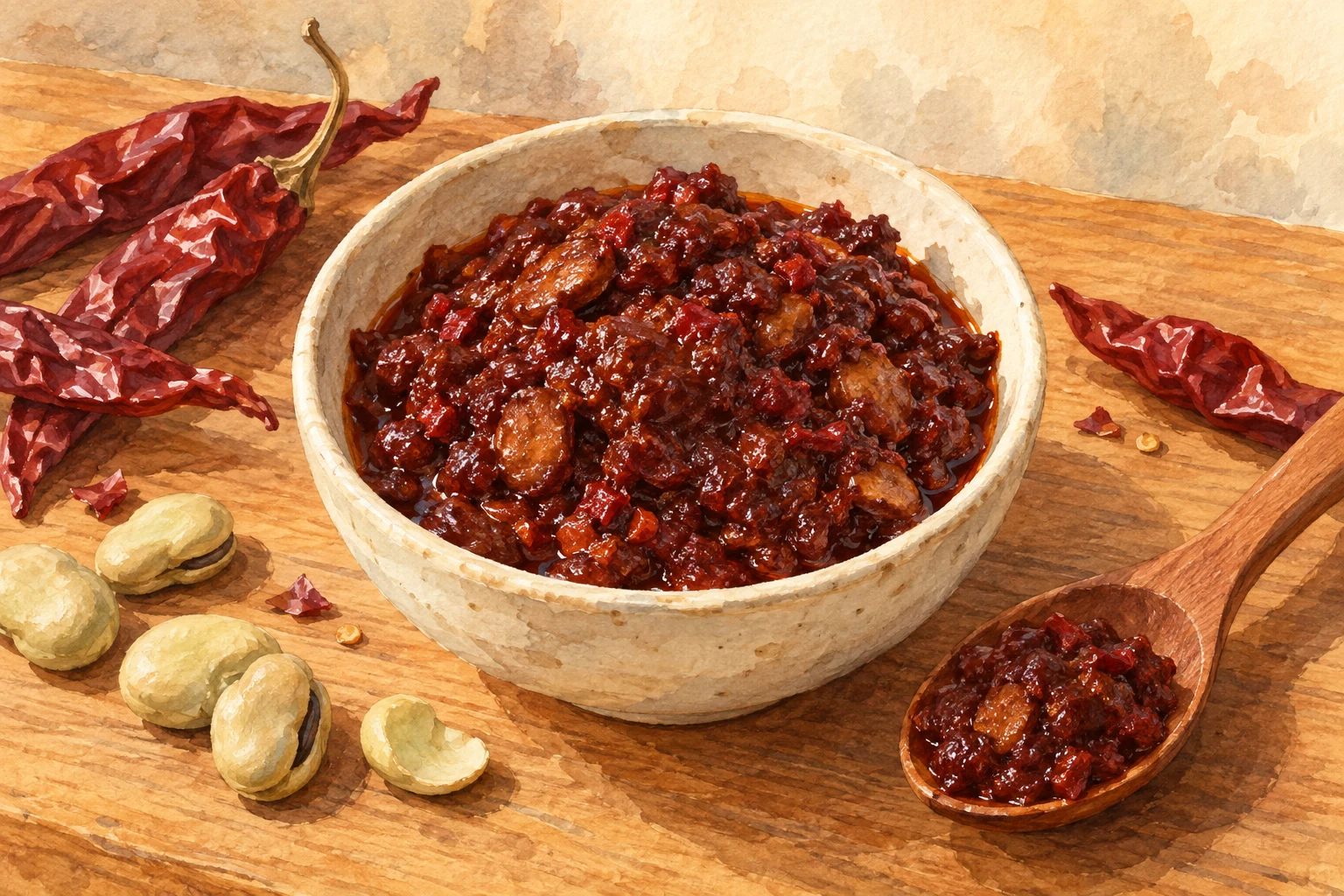
The cue is visible before it is audible: a spoonful of doubanjiang loosens, then the oil around it turns red. Only after that does the fermented aroma rise from the pan. That short change is why this ingredient usually belongs near the beginning of a dish instead of being stirred in as a final salty paste.
First, look at the spoonful
Doubanjiang is often translated as chile bean paste, but broad beans are central to its character. Protected Pixian doubanjiang from Sichuan is made with red chile, broad beans, flour and salt, then fermented. China’s geographical-indication specification records those ingredients and the traditional exposure to sun and dew.
Jars differ. A young red-oil style may be loose and bright; a longer-aged paste can be darker, denser and more deeply fermented. The Mala Market’s pantry guide discusses using vivid red-oil paste for quicker dishes and aged paste for braises and soups.
Stir the jar if its oil has separated, measure what the recipe asks for, then inspect the beans. Large pieces can deliver isolated, salty bites in a quick sauce. A few passes with a knife help them season the pan evenly. In a long braise, some texture may be welcome, so use the recipe and the jar rather than chopping by reflex.
Then, watch the pan
Warm the recipe’s cooking oil over medium-low or medium heat. Add the measured paste and stir continuously. You are looking for three changes:
- the paste loosens into the oil;
- the oil takes on a red tint; and
- the aroma grows rounder and more pronounced.
This Sichuan beef-and-celery method blooms doubanjiang slowly before building the rest of the dish. The exact time depends on the pan, burner, quantity and paste. If the solids stick hard, darken quickly or smell acrid, lower the heat immediately. Garlic and ginger often follow, but the recipe’s order takes precedence.
Once the other ingredients enter, taste before adding soy sauce or salt. Doubanjiang has already seasoned the oil, and later reduction will concentrate it.
If the jar is missing
Gochujang is generally smoother and sweeter. Miso lacks doubanjiang’s chile profile. Garlic-chile sauce can bring heat but not the same broad beans or fermentation. Any of them can lead to a good dinner, yet none preserves the original balance spoon for spoon. For a dish in which doubanjiang is the foundation, a recipe designed around the available paste is the more dependable choice.
Check the jar for broad beans, wheat and other allergens, and follow its storage directions after opening. A clean spoon keeps stray food and water out. The rest of the work happens in the pan: stay close long enough to see the oil change, then build dinner on that seasoned base.