Recipes
Sayote with Pork and Fish Sauce
A Filipino-style ginisa of translucent chayote slices, browned ground pork, onion and garlic, finished with fish sauce and only enough water to soften the vegetable.
Jump to recipe ↓Recipe
- Total time
- About 30 minutes
- Method
- Covered skillet
- Difficulty
- Easy
- Allergens
- Fish
About 4 servings with rice
Allow roughly 30 minutes. Chayote sap can feel sticky during peeling; gloves can make prep easier. Ground pork must reach 160°F (71°C). Fish sauce contains fish.
Equipment: Cutting board, vegetable peeler, knife, large skillet with lid, spoon or spatula and food thermometer.
Ingredients
- 2 medium chayote (sayote), about 700 g total, washed, peeled, seeded and cut into thin half-moons
- 250 g ground pork
- 1 medium yellow onion, thinly sliced
- 4 garlic cloves, finely chopped
- 1–1 1/2 tablespoons fish sauce, divided
- 1 tablespoon neutral cooking oil
Method
Prepare the sayote
Wash the whole chayote under running water, then peel, halve and remove the seed. Cut into thin, even half-moons. Slice the onion and chop the garlic. Wash hands, the knife and the board after handling any sticky sap.
Convert a measurement for this stepBrown the pork in crumbles
Heat the oil in the skillet over medium-high. Spread in the ground pork and leave it briefly to brown, then break it into small crumbles. Cook until no raw pink patches remain, about 4–6 minutes; the temperature check comes before serving.
Convert a measurement for this stepSoften the onion and garlic
Add the onion and cook until it begins to soften, about 3 minutes. Add the garlic and stir for about 30 seconds, just until fragrant. Lower the heat if the garlic colors quickly.
Convert a measurement for this stepSteam the sayote in its own moisture
Add the sayote and 1 tablespoon fish sauce. Toss well, then add 2 tablespoons water and cover. Cook over medium heat, opening to stir every few minutes, until the thickest slice is tender with a little bite, usually 7–10 minutes. If the skillet dries first, add water one tablespoon at a time.
Convert a measurement for this stepCheck the pork and finish the seasoning
Uncover and let excess liquid evaporate until the sayote is lightly glazed. Check several pork crumbles with a food thermometer; they must reach 160°F (71°C). Taste a cooled sayote slice, then add the remaining fish sauce only if needed. Turn off the burner and serve with rice.
Convert a measurement for this step
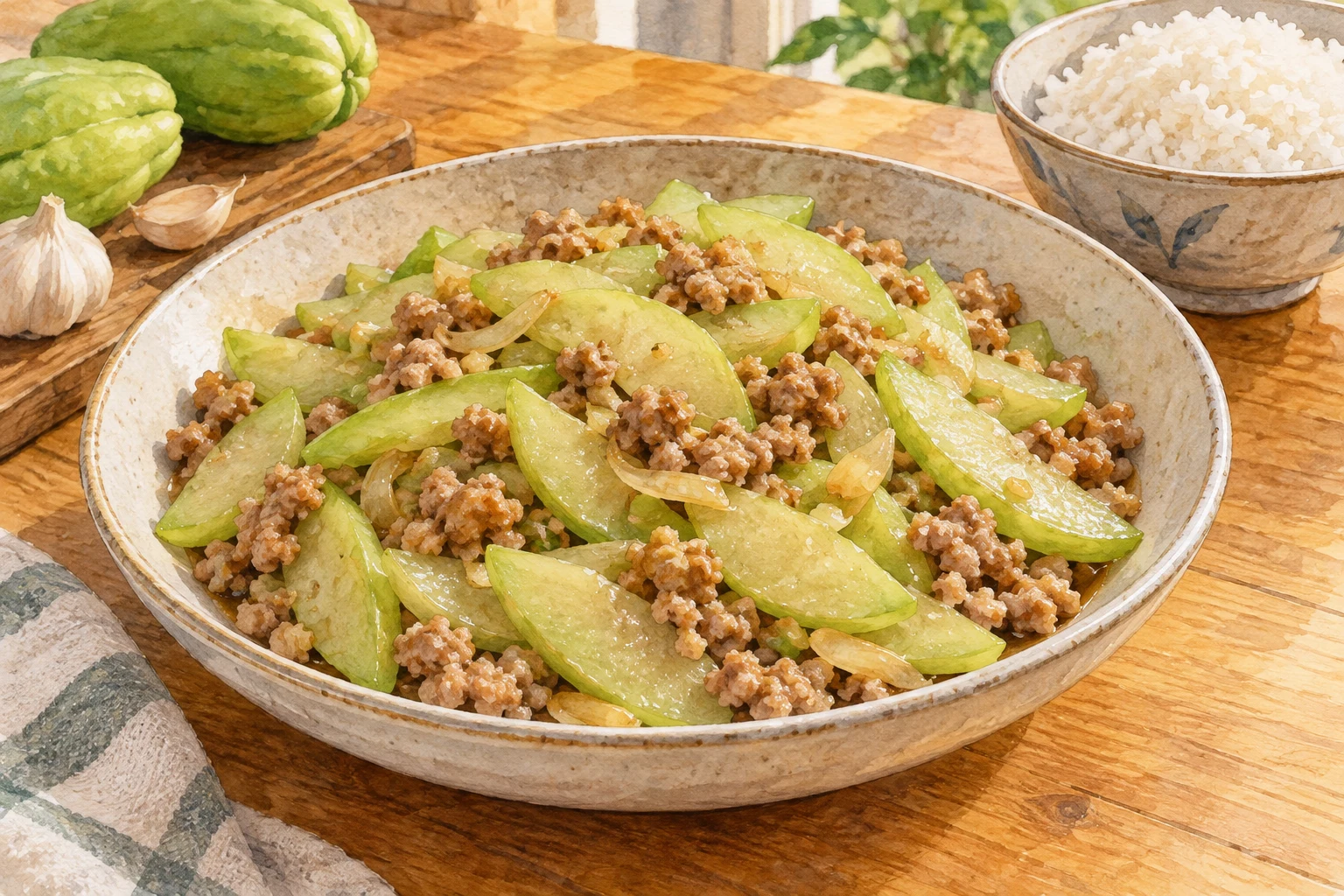
Sayote begins crisp and pale. In the skillet it turns translucent at the edges, softens without collapsing, and catches the savory juices from browned pork. The finished dish belongs beside rice, but it should not become a bowl of broth.
This streamlined ginisa draws on the garlic-onion-pork sequence in Vanjo Merano’s ginisang sayote and the fish-sauce seasoning described in his ginisang sitaw.
Wash before peeling
Rinse the whole chayote under running water before the knife breaks the skin. The FDA advises washing produce even when it will be peeled, so dirt is not carried inward by the blade.
Some chayote releases a sticky sap as it is cut. Gloves make handling easier; otherwise wash the residue from hands and the board with soap and water after prep. Cut away the peel, divide the fruit along its natural seam and remove the seed, then make thin half-moons that can soften at the same rate.
Brown the pork before adding the vegetable
Spread the pork across the hot skillet rather than stirring continuously from the first second. Once the underside browns, break the meat into small crumbles and add the onion and garlic. A little color underneath the pork adds more flavor than a pan full of pale, steaming meat.
Ground pork must reach 160°F (71°C), measured with a food thermometer. Check a cluster in the center of the skillet before serving rather than judging by color alone.
Add water only when the pan asks for it
Chayote releases moisture as it cooks. Covering the skillet briefly lets that moisture help soften the slices. If the pan dries before a thick slice is tender, add water one tablespoon at a time. The goal is a light glaze, not a soup.
Fish sauce is concentrated and brands differ, so add it in two stages and taste a cooled piece before the last spoonful. Fish sauce contains fish and may contain additional allergens. Refrigerate leftovers within two hours and use them within three to four days.