Kitchen skills
Keeping Nori Crisp from Packet to Plate
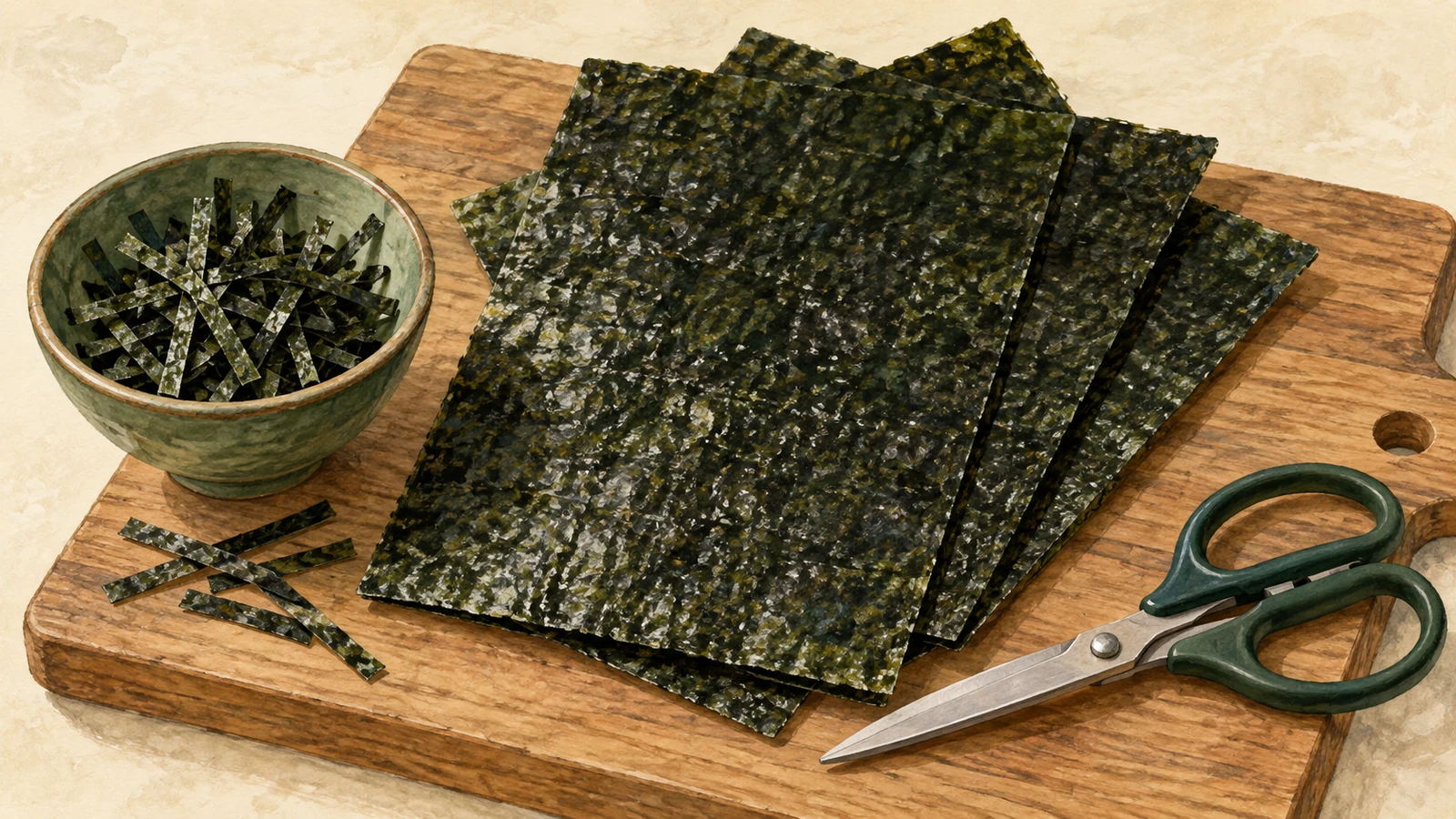
A sheet of nori can leave the packet with a clean snap and reach the table as a bendy wrapper. Often the problem is not the nori: it is the open bag beside the steaming pot, or the garnish added long before anyone sits down.
Think of roasted nori as a dry finishing ingredient. Protect the unused sheets first; bring the portion you want to eat into contact with moisture only when that contact serves the dish.
Close the bag before opening the saucepan
Take out what you need with dry hands. Press excess air from the packet, seal it thoroughly and return it to a cool, dark place. A clip across a loosely folded bag is less protective than a properly closed moisture-resistant bag or airtight container.
Keep an intact food desiccant sachet with the nori if it came in the package. Do not open it or sprinkle its contents onto the food. Keep it away from children, and discard a torn sachet. Do not substitute packets salvaged from shoes or other nonfood packaging.
Yamamotoyama’s storage guidance identifies heat, moisture and light as the main enemies. Store the packet away from the kettle, dishwasher steam and sunny counter, not just away from direct splashes.
Buying a smaller packet can make more sense than repeatedly opening a large one. If you divide a pack, use clean, completely dry containers and keep the reserve portion sealed while you work through the smaller portion.
Cold storage has an extra step
In a hot, humid kitchen, refrigerated or frozen storage may help protect unopened portions, if consistent with the package directions. The important moment is taking the cold nori back out.
Let the sealed packet come to room temperature before opening it. Opening cold sheets into warm, damp air can wet them with condensation. Mikuniya explains this point in its nori storage instructions.
Portioning before cold storage means you do not have to warm and reopen the whole supply each time. A sealed small bag is easier to bring to the table than a large container you keep taking in and out of the freezer.
Choose the kind, then choose the cut
Plain roasted sheets, seasoned snack sheets and shredded nori do different jobs. Seasoned versions may contain oil, salt, soy sauce or other flavorings; read the ingredients before adding more seasoning or serving someone with an allergy.
For thin garnish, stack just a few plain sheets and snip them with clean, dry kitchen scissors over a dry bowl. Make the strips shortly before the meal. Small squares work when you want diners to pick up a bite; a whole sheet is useful when wrapping is the job.
Nori and the green seaweed powder often called aonori are not simply two cuts of the same ingredient. Namiko Hirasawa Chen’s nori guide distinguishes shredded nori from those green flakes, which come from other algae. Do not buy one expecting the texture of the other.
Add it when the plate is ready to leave the kitchen
Finish a bowl, bring it to the table, then add the nori. Or place a small dry dish of strips beside each serving so everyone can add their own.
For a packed lunch, carry the nori separately from moist food and combine them when eating. Wrapping a damp filling hours ahead produces a different texture; a tightly closed lunch box cannot keep the seaweed crisp while it touches that filling.
Not every use requires a snap. Nori added to soup will soften, and a wrapped bite may deliberately be pliable. If a recently opened, properly stored sheet has merely lost crispness, use it where a softer texture is welcome rather than expecting it to behave like a fresh garnish.
That is not a rescue plan for spoiled food. Discard food with mold or suspicious odors, including nori; heating does not make questionable sheets worth keeping. A package date alone cannot tell you what happened after the bag was opened.