Recipes
Oven-Roasted Lemongrass Chicken
Boneless chicken thighs with a finely minced lemongrass marinade, roasted on one tray and served with rice and lime.
Jump to recipe ↓Recipe
- Total time
- About 1 hour 15 minutes
- Method
- Oven
- Difficulty
- Moderate
- Allergens
- Fish · Soy · Wheat may be present in soy sauce
About 3 servings with rice
Allow roughly 75 minutes including a 30-minute refrigerated marinade. Oven time varies with thigh size; begin checking after 20 minutes. Prepare any rice separately before serving.
Equipment: Rimmed metal baking sheet, foil, covered food-safe bowl, knife, board, tongs, clean serving plate and instant-read food thermometer.
Ingredients
- 700 g boneless skinless chicken thighs (about 1 1/2 lb)
- 3 tablespoons very finely minced tender lemongrass core, from about 2 stalks
- 3 garlic cloves, finely minced
- 2 tablespoons fish sauce
- 1 tablespoon regular light soy sauce, not dark or sweet soy sauce
- 1 tablespoon brown sugar
- 1 tablespoon neutral cooking oil
- 1 tablespoon lime juice, plus lime wedges to serve
- 1/4 teaspoon ground black pepper
- Freshly cooked rice, to serve
Method
Make a fine aromatic coating
Wash and trim the lemongrass, peel away tough layers and use only the tender pale core. Slice across the fibers, then mince very finely and measure 3 tablespoons. Mix with the garlic, fish sauce, soy sauce, sugar, oil, lime juice and pepper. Add the chicken and coat it thoroughly. Do not wash raw chicken. Wash hands and clean utensils and surfaces after raw poultry contact.
Convert a measurement for this stepMarinate in the refrigerator
Cover the bowl and refrigerate at 40°F (4°C) or below for 30 minutes. Keep it below ready-to-eat food. It can stay refrigerated for up to 24 hours if preparing ahead; do not leave it on the counter to marinate.
Convert a measurement for this stepHeat the oven and spread out the thighs
Heat a conventional oven to 400°F (200°C), with a rack in the middle. Line the rimmed baking sheet with foil. Once the oven is hot, lift the thighs out with tongs and unfold them in one layer with gaps between pieces. Leave large puddles of marinade behind and discard the raw marinade. Put the tray in the oven; clean the raw-chicken tongs before using them again.
Convert a measurement for this stepRoast, then check each thick center
Set a 20-minute first-check timer once the chicken is in the hot oven. Stay nearby. At the check, insert the thermometer into the thickest part of several thighs without touching the tray. Continue roasting in short intervals if any are below 165°F (74°C). If the surface darkens too quickly, loosely cover with foil while the centers finish.
Convert a measurement for this stepSlice at the table
Turn off the oven and use oven mitts to remove the tray. Transfer the cooked thighs with clean utensils to a clean plate. Serve with rice and lime wedges. Keep raw marinade away from the finished chicken.
Convert a measurement for this step
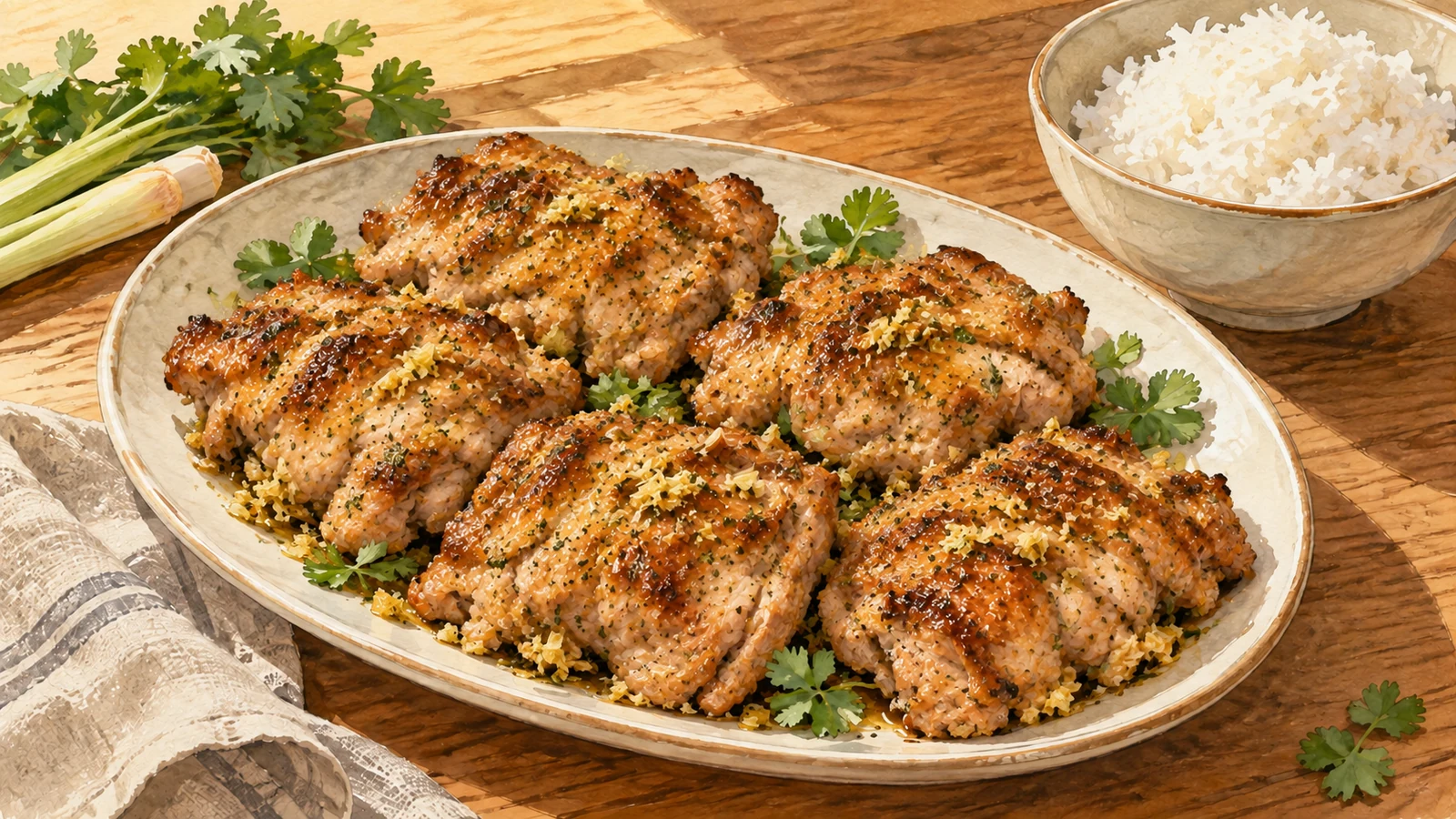
The oven version has its own finish
These thighs have a savory lemongrass coating and browned edges, not the smoky char of a grill. Boneless pieces unfold into a fairly even layer, which makes them a practical fit for a baking sheet. Do not swap in bone-in thighs and expect the same first-check time.
Adapted from lemongrass chicken recipes by Nagi Maehashi and Herman Chan.
The stalk needs more attention than the tray
Coarse lemongrass does not disappear in the oven. If the mince looks stringy, keep working on it before it meets the chicken. The lemongrass preparation guide shows which parts belong in an edible coating and which are better kept for infusing liquids.
Do not chase color past doneness. Sugar can brown before the interior is ready, and a pale patch does not prove that a thigh needs another ten minutes. The thermometer decides when the chicken is cooked. USDA’s poultry guidance specifies 165°F (74°C).
Tomorrow’s chicken
Keep leftover thighs whole or sliced in a shallow container. Refrigerate within two hours, or one hour if the room is above 90°F (32°C), and use within 3–4 days. Reheat to 165°F (74°C). Those limits and refrigerated marinating are covered by USDA’s marinating guidance.
Fish sauce contains fish; soy sauce commonly contains soy and wheat. Check the bottles for any additional allergens. Store spare rice according to the separate rice cooling guide.