Ingredients
Buying Your First Tub of Miso
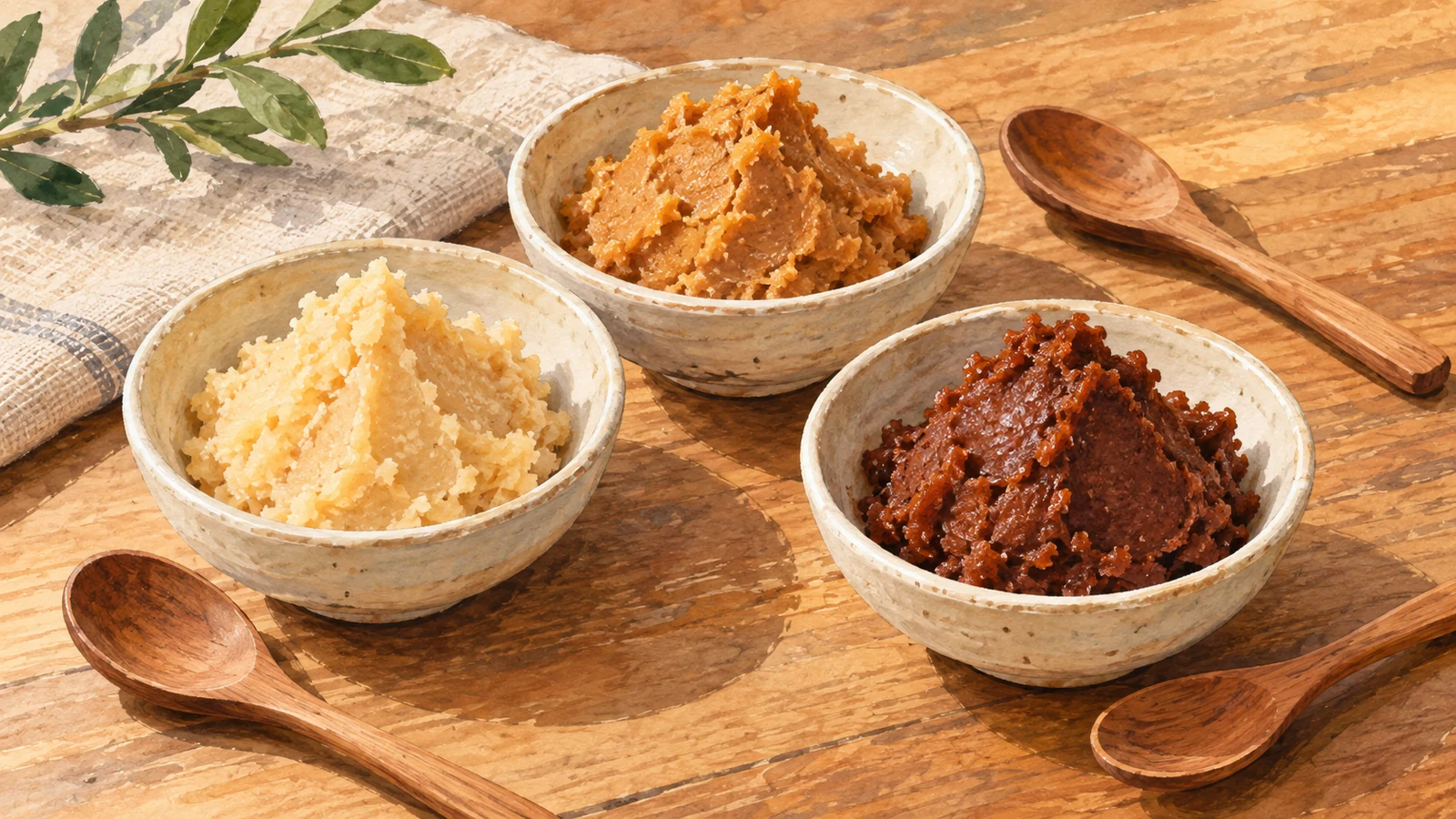
Buy a small tub for the food you want to make, not the biggest container with the most impressive-looking label. For a first purchase, a plain white or blended miso gives you several places to begin: soup, a dressing or a savory glaze. A recipe that specifically calls for red miso is a reason to choose that instead.
Three questions at the shelf
Is it plain miso or already seasoned?
Some tubs contain dashi seasoning. That can be useful for soup, but it changes what you are adding to a dressing or another stock. Read the ingredient list, not just the large word “miso.” Fish-derived dashi also matters if the dish must be vegetarian.
Which grain is part of the paste?
Miso commonly combines soybeans, salt and koji made with rice or barley; soybean-based varieties exist too. Barley contains gluten, so barley miso is not a gluten-free option. Soy is another relevant allergen, and added seasonings can introduce more. Namiko Hirasawa Chen’s guide to miso explains the grain, color and seasoning distinctions.
How much salt are you adding?
Compare sodium for the same serving weight. White and red describe broad families, not a dependable low-sodium versus high-sodium scale. A tablespoon in one nutrition panel may not weigh the same as a serving on the next tub.
Color helps, but it is not a recipe
White miso often leans milder and sweeter; red varieties can be more assertive. Blended, or awase, miso combines types. Fermentation, ingredients and proportions all affect the result, so those descriptions are a starting point rather than a promise about every package.
At home, dissolve a small dab in warm water and taste it before seasoning a whole pot. That tells you more about this particular tub than its color alone. If a dish already contains soy sauce or salted stock, hold back other salt until the miso is mixed through.
For a dressing, loosen the paste in a small bowl before adding it to the vegetables. For soup, stir it into a little hot broth first so you do not leave dense lumps at the bottom. Neither use requires buying several colors at once.
Give the rest of the tub a place in the fridge
Follow the package’s storage instructions and refrigerate after opening. Use a clean utensil, close the container promptly and note when you opened it. Manufacturer guidance varies by formulation; a single shelf-life promise does not fit every paste.
Hikari’s explanation of miso storage distinguishes gradual darkening from other changes. Darkening by itself does not settle whether miso is spoiled. Discard visibly moldy or otherwise spoiled paste, and do not taste a questionable tub to investigate it.
The useful first purchase is one you can identify, store correctly and finish. A second variety can wait until a dish gives you a reason to need it.