Kitchen skills
Jasmine Rice in a Saucepan and the Quiet Finish
Recipe
1 cup dry rice, about 3 cups cooked
Use white jasmine rice and US measuring cups. Allow time to rinse and bring the pot to a simmer, then about 12 minutes covered and 10 minutes off the heat.
Equipment: Medium saucepan with a close-fitting lid, fine sieve, measuring cup and tablespoon, and rice paddle or spatula.
Ingredients
- 1 cup dry white jasmine rice
- 1 cup plus 2 tablespoons water, after rinsing and draining the rice
Method
Rinse and drain
Measure 1 cup dry white jasmine rice. Swish it in water, drain, and repeat until the water is less cloudy. Drain in a fine sieve.
Convert a measurement for this stepMeasure the water
Put the drained rice in a medium saucepan with 1 cup plus 2 tablespoons water. This is the same as 1¼ cups minus 2 tablespoons. Use a close-fitting lid, but leave it off initially.
Convert a measurement for this stepBring to a simmer
Bring the surface to an active simmer over medium-high heat. Lower the heat to a gentle simmer and cover.
Convert a measurement for this stepLet the rice cook
Cook for about 12 minutes, until the water is absorbed. If necessary, briefly check beneath an opaque lid; do not keep opening it or stir the grains. Stay in the kitchen and keep an eye on the pot.
Convert a measurement for this stepRest off the heat
Turn off the burner and move the covered pan off the heat for 10 minutes. Keep the lid on while the rice rests.
Convert a measurement for this stepLoosen the grains
Lift the hot lid away from your face and hands. Loosen the rice gently with a paddle or spatula. Serve promptly, or keep it covered briefly while you finish the stir-fry.
Convert a measurement for this step
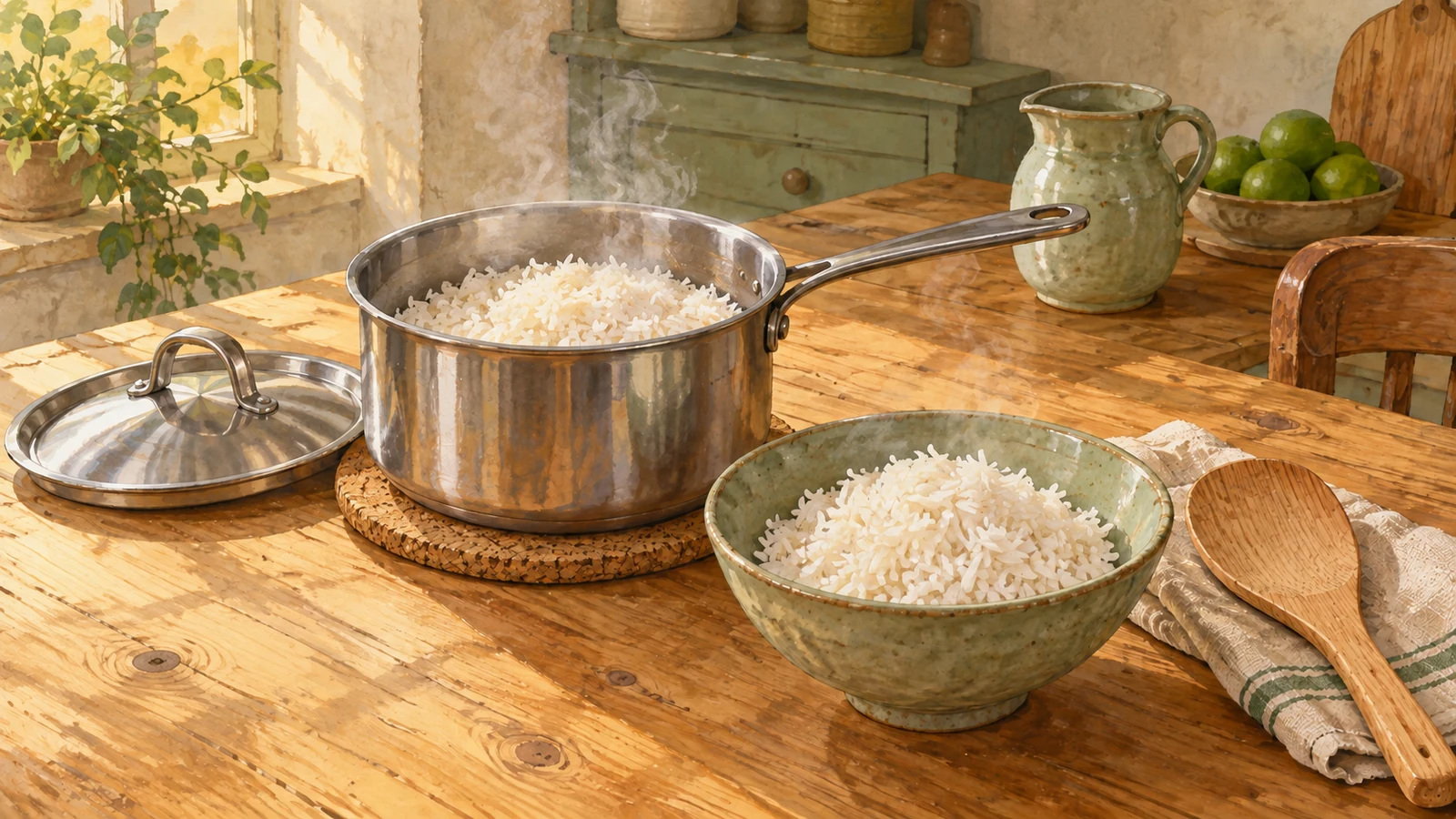
The most useful thing to do near the end of a pot of rice is often to leave it alone. Turn off the heat. Keep the lid closed. Set the table while the steam finishes its work.
That pause is easier to trust when the earlier decisions are settled: white jasmine rice, a measured amount of water, and a saucepan with a lid that fits. You do not need a special cooker, but you do need to keep the method together.
One small pot, from rinse to rest
This sequence follows Nagi Maehashi’s rinsed jasmine-rice method at RecipeTin Eats. Use ordinary US measuring cups and tablespoons, not the smaller cup supplied with a rice cooker.
Treat the cooking time as a guide and check that the water has been absorbed before resting. Burner strength, the lid and the rice can change the outcome. Lift a hot lid away from your face and hands.
Why another bag or recipe may ask for more water
A water ratio without its preparation steps is an incomplete instruction. Rinsed rice carries some water into the pot. Soaked rice has already absorbed more. A recipe that starts with dry, unwashed grains is making a different calculation.
For example, Sarah Leung’s saucepan method at The Woks of Life uses a 15–20-minute soak, then adds the same volume of fresh water as the original dry rice. That is a separate method, not a reason to change just the water in the sequence above. If you choose it, follow its soak and cooking instructions together.
Keep the package when you open a new bag. If its directions call for a substantially different approach, start there rather than assuming all jasmine rice behaves identically. Brown jasmine and instant rice need their own instructions; neither is a direct swap in this pot.
A rice-cooker cup is typically around 180 mL, considerably smaller than a US cup. Mixing one with an ordinary liquid measuring cup makes a careful-looking measurement surprisingly imprecise. Use the same measuring system for the whole batch.
Let the first spoonful tell you what to change
After the rest, look at the rice before adding sauce. Is there free water? Are the grains tender? Is the bottom scorched while the top is still firm? Those are different results, so they call for different adjustments next time.
Make a small note on the bag or in your phone: whether you rinsed or soaked, water added, pan used, and what happened. Change one of those details on the next attempt. If you change the water, pot and burner setting together, you lose the useful comparison.
For the current meal, do not scrape a blackened bottom into the unburned rice above it. If the texture is simply softer than you prefer, serve it that way and adjust the next batch; repeated stirring cannot turn it back into separate, firm grains.
The rice rests while dinner comes together
With the heat off and the lid still on, use the short rest to finish a quick dish or arrange bowls. Tomato and egg stir-fry is a natural partner because its juices have somewhere to go. Have the ingredients prepared before the rice reaches this stage, rather than leaving the finished pot waiting while you begin chopping.
The resting step is not an instruction to leave rice on the counter for the evening. For leftovers, the Food Standards Agency’s rice advice recommends cooling quickly, ideally within an hour, in smaller portions rather than in the cooking pan. Refrigerate, use within 24 hours, and reheat no more than once until steaming hot throughout. Spores can survive cooking, and prolonged room-temperature storage can make rice unsafe; reheating is not a substitute for prompt chilling.
Method adapted from the linked culinary sources; not personally kitchen-tested.