Ingredients
Coconut Milk and Cream Are Different Purchases
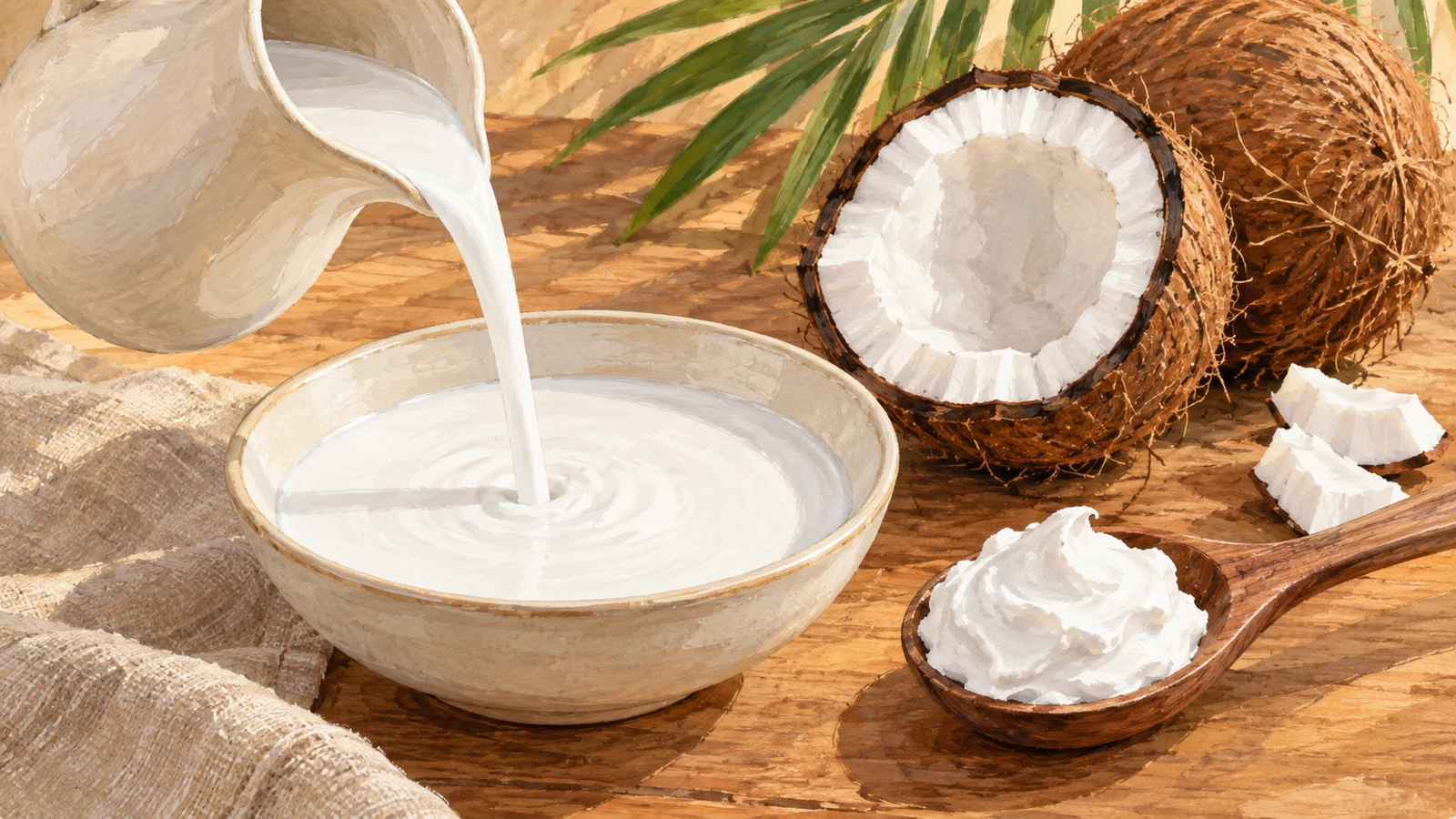
The coconut shelf is easier to read when the packages are treated as four separate ingredients. A cooking milk, a rich cream, a drink for cereal and a sweet cocktail mixer can all feature the same fruit on the front. Their jobs begin to diverge as soon as the can or carton opens.
Four packages on the counter
| Package | Best clue on the label | What it brings |
|---|---|---|
| Cooking coconut milk | Unsweetened; coconut and water are prominent ingredients | Liquid and enough coconut fat to give a curry, soup or sauce body |
| Coconut cream | Unsweetened and described as cream | More richness and a thicker consistency than cooking milk |
| Coconut milk beverage | Sold as a drink, often with added water and fortification | A light beverage consistency that may be flavored or sweetened |
| Cream of coconut | Sugar or syrup appears in a product intended for drinks or desserts | Pronounced sweetness as well as coconut flavor |
The Kitchn’s coconut ingredient comparison explains the same broad distinctions. The container material is not decisive: cooking coconut milk can come in cartons, and a carton can also hold a beverage. Read the whole product name and ingredients.
What to do with a separated can
A firm white layer over thinner liquid can be normal. Coconut fat firms when cool, and less-stabilized products separate more visibly. For a recipe that asks for the whole can, warm it gently and stir the layers together. Pouring away the thin portion changes both the quantity and richness.
Some Thai curry methods use the separation on purpose, cooking the thick portion until oil appears before frying curry paste. Pailin Chongchitnant’s coconut milk guide explains that technique and how stabilizers affect it. That is a recipe-specific step, not the desired finish for every coconut soup.
A bulging or leaking can, an off odor or other signs of spoilage are a different matter. Normal fat separation does not excuse damaged packaging.
Rescuing the shopping mistake
You bought unsweetened cream for a flexible soup. Whisk in water gradually and adjust the seasoning. Brands vary enough that a universal cream-to-water ratio would be misleading.
You bought a beverage for curry. Expect a thinner result. A measured recipe may need cooking coconut milk rather than extra reduction, which can overcook the other ingredients before the sauce gains enough body.
You bought cream of coconut for savory food. Save it for a drink or dessert designed around its sugar. Removing a spoonful of sugar elsewhere cannot reliably turn it into unsweetened coconut milk.
The recipe is a set dessert, bake or measured rice dish. Use the named ingredient. Fat and liquid balance may determine whether the recipe sets or bakes properly.
After opening, move leftovers to a clean, covered container, refrigerate promptly and follow the label’s use-within period. Thai Kitchen specifies four refrigerated days for its opened coconut milk and cream, while another brand may differ. Freezing small portions can be practical when the label permits, though thawed milk may look grainier and work better in a cooked dish than a smooth cold drink.