Ingredients
Gochujang Needs Room to Move
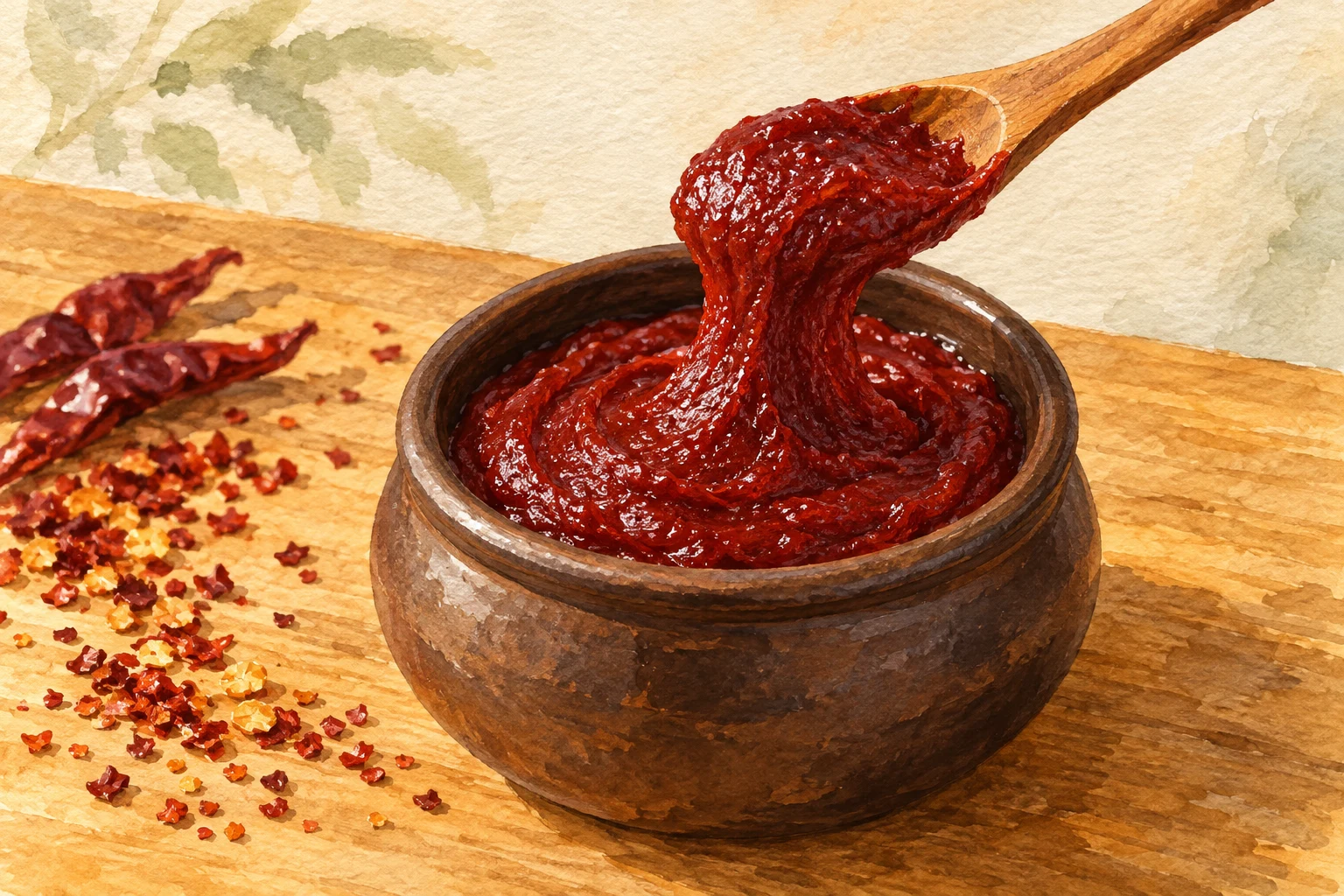
Open a tub of gochujang and it becomes clear why “add hot sauce” is poor shorthand. The paste sits heavily on the spoon. It carries chile, fermented grain and soybean, salt and sweetness all at once. The Codex regional standard for gochujang describes that fermented grain-and-soybean base; the balance inside it varies by maker.
The useful question is not how to make gochujang behave like a pourable sauce. It is where the spoonful is going next.
Bowl, brush or pot
For a dipping sauce or dressing, put the paste in a bowl and stir in a small amount of liquid. Vinegar gives it a sharper edge; water loosens it without adding another strong flavor. A little toasted sesame oil can round the mixture, although it also makes it richer.
For a glaze, add liquid only until the paste can move across a brush or spoon. Keep it thick enough to cling. Check the label before reaching for sugar or honey, because many tubs are already sweetened and a glaze becomes sweeter as it reduces.
For a stew or simmer, whisk the paste with a ladleful of warm broth first, then return that mixture to the pot. This avoids concentrated red lumps and makes it easier to judge how much the whole pot needs.
There is no single dilution ratio for all three jobs. Start with one spoonful of paste and add liquid by the teaspoon until its movement matches the job: flowing for a dressing, clinging for a glaze, freely dispersed for a broth.
The neighboring red packages
- Gochugaru is dried Korean red pepper in flakes or powder. It provides chile and color without gochujang’s moisture or fermented body.
- Ssamjang is a seasoned dipping paste commonly built from fermented pastes with aromatics and other flavorings. It is already composed for a different purpose.
- Gochujang is the thick fermented chile paste described above.
Maangchi’s Korean ingredient directory lists hot pepper paste, hot pepper flakes and seasoned soybean paste separately. That distinction matters in the bowl: flakes cannot supply the body of a paste, while ssamjang may bring garlic, sesame or other seasoning that the recipe never called for.
Before the tub reaches the cart
Read the ingredient list on the particular package. Wheat, soy, sweeteners and alcohol may appear, and a familiar lid color does not settle an allergy or dietary question. The same check tells you how much sweetness and salt are already present before you season the dish.
At home, follow the maker’s storage instructions, keep the rim clean and use a clean, dry spoon. Some pastes darken at the surface through oxidation. Visible mold or an off odor is different: discard the paste rather than scooping around the affected area.
The easiest way to learn a new tub is to loosen one measured spoonful in a bowl. Taste that mixture, then decide whether dinner needs more heat, more tang or simply more liquid. The tub stays concentrated; the cook chooses its reach.