Ingredients
The Tablespoon of Shaoxing Behind the Steam
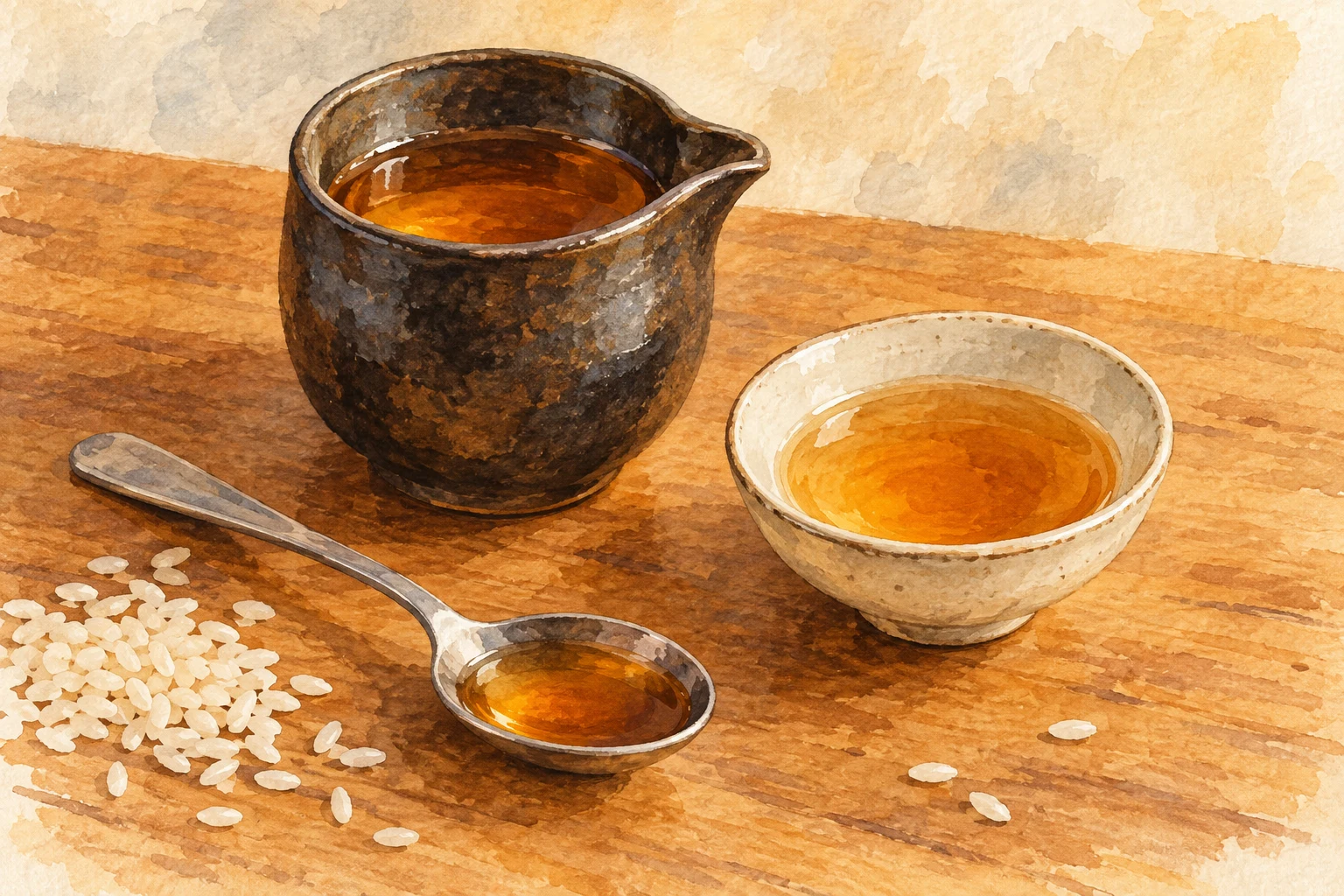
The same tablespoon of Shaoxing wine can do three different jobs. It can sit with meat before cooking, hiss against the side of a stir-fry pan or mellow inside a braise. The bottle has not changed; time and heat decide what remains in the dish.
Shaoxing wine is a fermented Chinese rice wine from Shaoxing in Zhejiang, part of the broader family of huangjiu, or yellow wine. The Woks of Life’s Shaoxing wine guide describes its use in marinades, stir-fries, braises and fillings.
One measure, three routes
Into a marinade: the wine disperses through the other seasonings before the ingredient reaches the heat. Measure it with the marinade rather than splashing from the bottle, especially if the wine contains added salt.
Around a hot pan: some stir-fries direct the wine down the side of the pan, where it heats quickly and its aroma rises through the food. Measure first, keep your face clear of the steam and use the recipe’s method. A crowded pan or spattering oil is no place for a dramatic free-pour.
Into a braise: the wine joins a larger volume of liquid and has time to soften into the sauce. Here, changing the wine can alter more than a passing aroma because the quantity may be substantial.
Cooking changes the wine, but a brief simmer does not guarantee the removal of all alcohol. Someone avoiding alcohol needs a recipe built around that requirement.
The salted-bottle check
Some cooking Shaoxing wines include added salt. Before seasoning the rest of the dish, read both the ingredient list and nutrition panel. Hold back part of the soy sauce or salt when necessary, cook as directed, then taste a safely cooled spoonful. Another brand may contribute a different amount.
An unsalted drinking-quality wine and a salted cooking wine can both belong in a kitchen. They simply require different seasoning decisions. This is also why the full label matters more than the amber color of the liquid.
Names that sound closer than they taste
Rice vinegar supplies acidity; Shaoxing wine supplies alcohol and aroma. Mirin is a sweeter Japanese cooking wine or wine-style seasoning, depending on the bottle. Dry sherry is a common practical substitute when alcohol is acceptable, although it has its own flavor.
For one spoonful in a stir-fry, dry sherry may keep the dish moving in the intended direction. For a braise built around Shaoxing wine, the substitution becomes a rewrite of the dish. TaKaRa’s culinary overview likewise treats Shaoxing wine as an aromatic seasoning for meat and seafood, not as generic cooking liquid.
Keep the bottle tightly closed and use the storage direction on its label; many cooking wines keep in a cool, dark cupboard, while a producer may specify otherwise. The wine rarely announces itself on the plate. Its work is the aroma carried through the food.