Recipes
Gyeran Mari with Scallions
A Korean rolled egg side dish made in a 10-inch nonstick skillet, with thin scallion-speckled layers and a fully cooked center.
Jump to recipe ↓Recipe
- Total time
- About 20 minutes
- Method
- Skillet
- Difficulty
- Moderate
- Allergens
- Egg
3 to 4 side servings
Allow roughly 20 minutes. Keep the heat medium-low and make each layer thin enough to roll. This version uses only scallions and cooks the egg to 160°F (71°C) rather than leaving a liquid center.
Equipment: Medium bowl, fork or whisk, 10-inch nonstick skillet, small heatproof bowl, pastry brush or folded paper towel held with tongs, broad spatula, clean instant-read thermometer, cutting board, and knife.
Ingredients
- 4 large eggs
- 2 scallions, trimmed and very finely sliced
- 1/4 teaspoon kosher salt
- Pinch of ground black pepper
- 2 teaspoons neutral cooking oil, divided as needed
Method
Make a pourable egg mixture
Beat the eggs until the whites and yolks are fully combined with no long strands of white. Stir in the finely sliced scallions, salt and pepper. Pour the oil into the small heatproof bowl so you can apply only a thin film between layers.
Convert a measurement for this stepSet the first thin layer
Heat the skillet over medium, then lower it to medium-low. Brush on a thin film of oil. Pour in about one quarter of the egg mixture and tilt the skillet into an even layer. When the surface is mostly set and no longer sloshes, fold one edge over itself with the spatula and continue rolling into a loose log.
Convert a measurement for this stepAdd and roll the remaining layers
Move the roll to one side. Brush the exposed skillet lightly with oil and pour in another quarter of the egg, lifting the existing roll so new egg runs beneath its edge. When the new layer is mostly set, roll the log back across it. Repeat with the remaining mixture, lowering the heat if the bottom browns before the top sets.
Convert a measurement for this stepConfirm the center is cooked
Turn the roll seam-side down and gently turn it to cook every face. Check through the thickest part with a clean thermometer. Keep turning over medium-low heat until the center reaches 160°F (71°C) and no liquid egg escapes. Turn off the burner.
Convert a measurement for this stepRest briefly and slice
Move the roll to the clean cutting board and let it firm for a few minutes. Slice crosswise with a clean knife. If a seam opens, set the pieces cut-side up and serve them as they are; the layers do not need to look identical.
Convert a measurement for this step
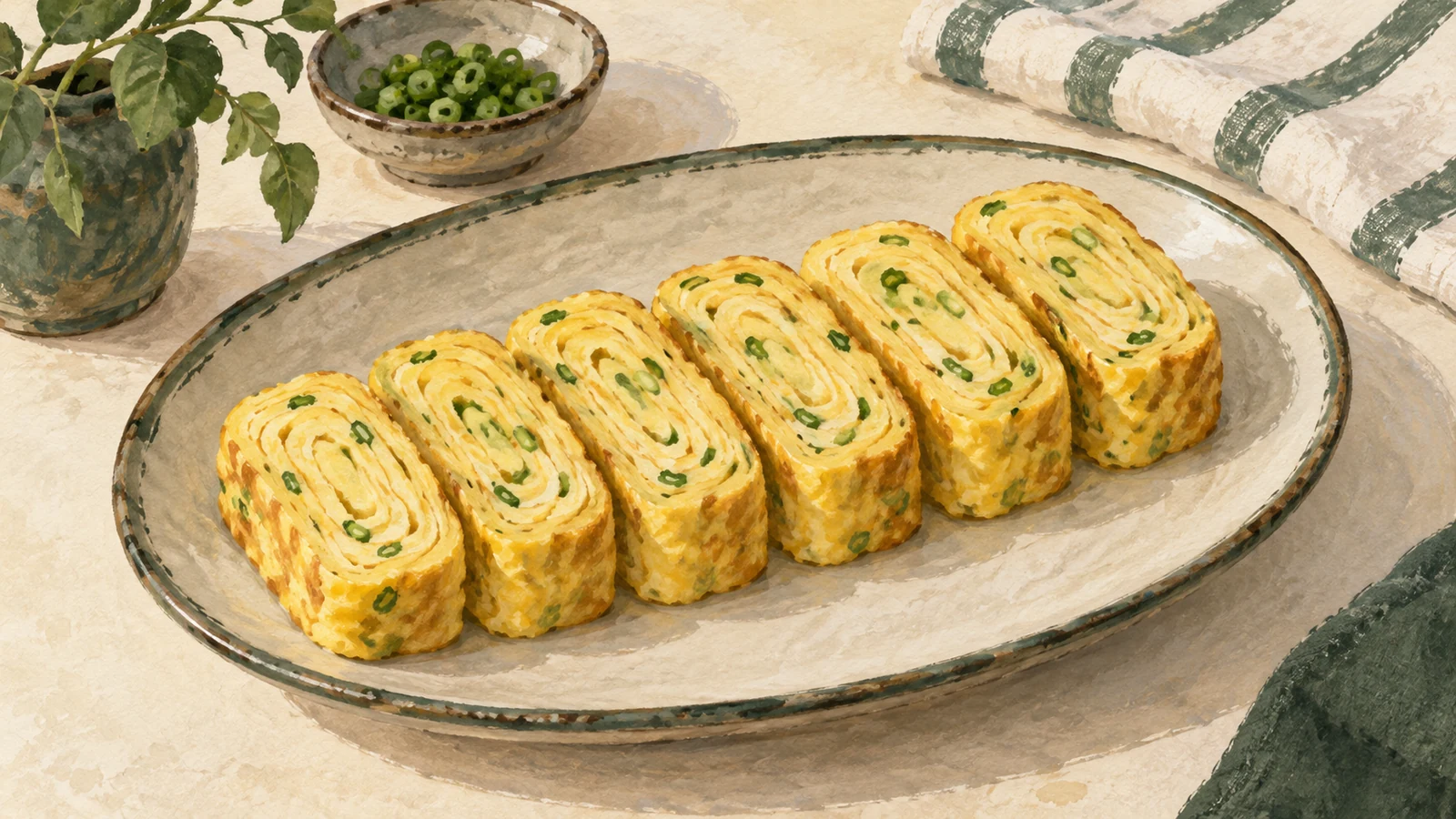
Gyeran mari is a Korean rolled omelet served as banchan, a side dish, and often packed into dosirak lunch boxes. Thin egg layers wrap around one another in the skillet, so the cut face shows the work that happened one pour at a time.
This source-based scallion version draws its layer-and-roll method from Maangchi’s gyeran-mari and its 9-to-10-inch pan guidance from Hyosun’s Korean Bapsang recipe. Both place the dish in Korean home cooking. This version uses no carrot, cooks the center to 160°F (71°C), and makes no claim of personal testing or process photography.
Thin layers need lower heat
Medium-low heat gives the upper surface time to lose its liquid shine before the underside colors deeply. If the egg browns before it can roll, lower the heat and wait for the skillet to settle before the next pour.
Slice the scallions very finely. Large wet pieces interrupt the thin sheet and can make a seam separate. Four eggs make a manageable roll in a 10-inch nonstick skillet. A much larger pan spreads each quarter too thin; a smaller pan builds a thicker log that needs more time at the center.
Roll the seam into the next layer
The first roll does not need to be tight or perfectly rectangular. Move it to one side, let the new egg run underneath its edge, then roll the existing log back across the new layer. That overlap is what joins the layers.
Use a broad spatula and work close to the pan rather than lifting the roll high. If a seam tears, continue with the next layer. The new egg can hold a broken section together. A finished roll that opens while slicing is still food, not a failed photo shoot; arrange the pieces cut-side up and serve them.
Confirm the center, then make clean slices
Egg dishes need to reach 160°F (71°C), according to FoodSafety.gov. Check the thickest part with a clean thermometer instead of relying on the browned outside. Let the cooked roll firm briefly on a clean board before cutting it crosswise.
Refrigerate leftovers within two hours. Keep them at 40°F (4°C) or below and use within three to four days. Reheat leftovers to 165°F (74°C) throughout.