Recipes
Teriyaki Salmon with a Light Soy Glaze
Pan-cooked salmon with a soy, mirin and sake glaze, separating sauce reduction from the fish's doneness for better control.
Jump to recipe ↓Recipe
- Total time
- About 25 minutes
- Method
- Skillet
- Difficulty
- Easy
- Allergens
- Fish · Soy · Wheat may be present in soy sauce · Sesame when garnish is used
2 servings
Allow roughly 25 minutes. Choose two similarly thick fillets; thin tail pieces finish sooner. Have any rice or vegetables ready before starting the fish.
Equipment: Lidded nonstick skillet, fish spatula, small bowl, clean plate, paper towels and instant-read food thermometer.
Ingredients
- 2 skin-on salmon fillets, 170–200 g each, roughly 2–3 cm thick, fully thawed if frozen
- 2 tablespoons Japanese soy sauce
- 2 tablespoons mirin
- 2 tablespoons sake
- 2 teaspoons neutral cooking oil
- 2 tablespoons water, plus a little extra if the glaze needs loosening
- 1 sliced scallion and 1 teaspoon toasted sesame seeds, optional
- Cooked rice and vegetables, to serve
Method
Mix the sauce and dry the fish
Mix the soy sauce, mirin and sake in the small bowl. Check the salmon for pin bones and blot its surface dry with paper towels. Discard the towels and wash hands after raw fish contact. Keep a clean serving plate ready; do not use the raw-fish plate for the finished fillets.
Convert a measurement for this stepBegin skin-side down
Warm the oil in the skillet over medium heat, without smoking. Lay in the salmon skin-side down, away from you to reduce splashes. Press gently with the spatula just long enough to keep the skin flat. Cook until the skin firms and releases, checking after about 3 minutes. Turn carefully and lower the heat to medium-low.
Convert a measurement for this stepFinish the center before the glaze
Add the 2 tablespoons water carefully at the side of the skillet and cover. Stay at the stove; begin checking after 2 minutes. Lift the lid away from your face and check each fillet's thickest center for 145°F (63°C), inserting the thermometer from the side. Continue cooking gently and checking as needed, adding a little water if the pan becomes dry. Move each cooked fillet to the clean plate as it reaches temperature.
Convert a measurement for this stepReduce the sauce without overcooking the fish
With the fish out, lower the heat and pour the sauce into the skillet. Let it bubble gently, stirring, until lightly glossy and able to coat a spoon. Do not reduce it to a sticky candy-like syrup. If it thickens too far, loosen with water a teaspoon at a time. Turn off the burner.
Convert a measurement for this stepSpoon on a thin coating
Spoon the hot glaze over the salmon. Add the optional scallion and sesame seeds, and serve promptly with the prepared rice and vegetables. A small amount of glaze is enough; the fish need not sit in a pool of sauce.
Convert a measurement for this step
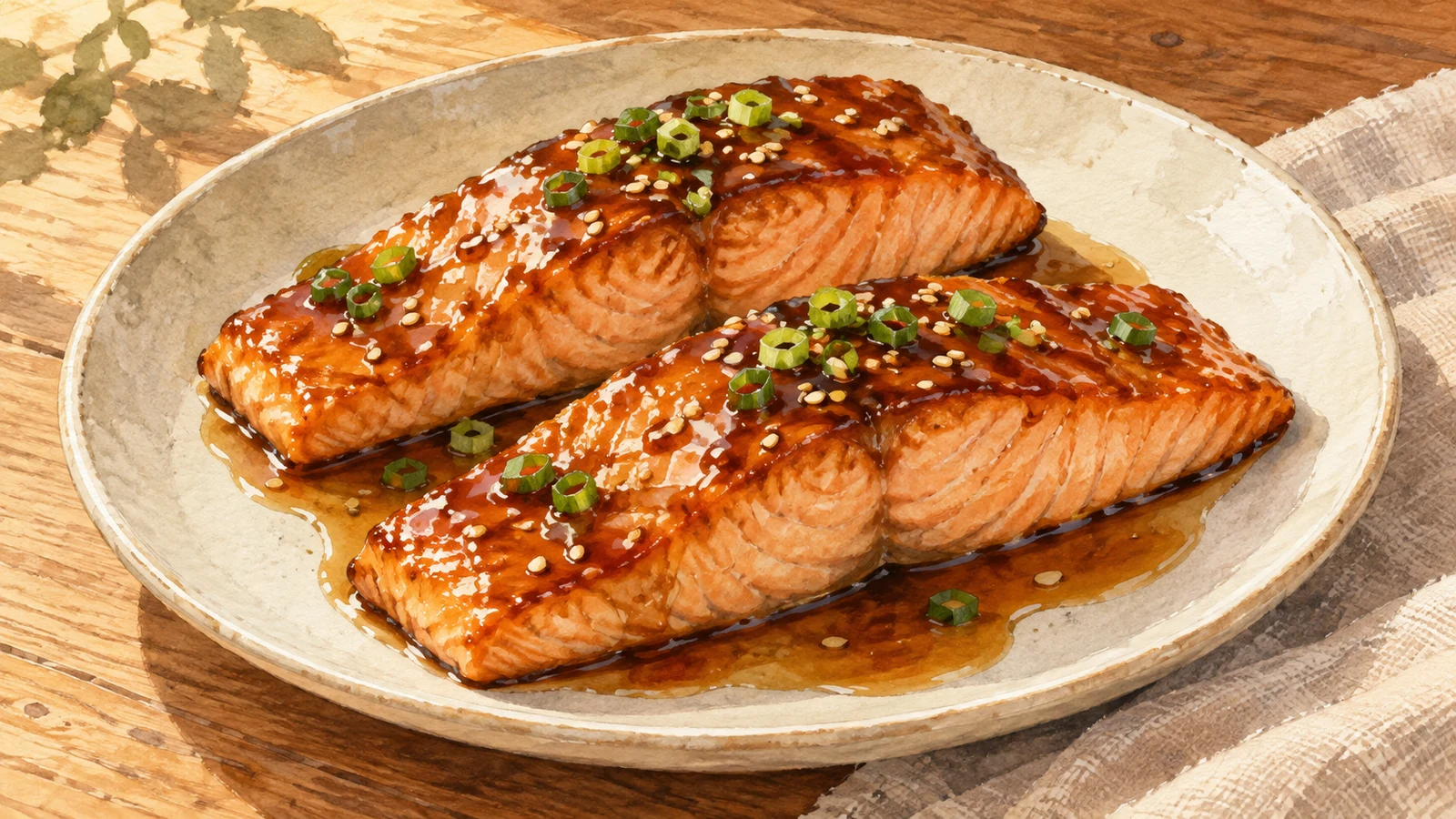
The shine belongs on the fish, not stuck to the pan
Teriyaki is a glaze here, not a bottle of thick sauce poured over a fillet before cooking. The salmon reaches its temperature first. Reducing the seasoning afterward lets you stop the fish cooking while you decide how much body the glaze needs.
Adapted from teriyaki salmon recipes by Yumiko and Namiko Hirasawa Chen.
Choose shape as well as weight
A long, thin tail and a thick center-cut fillet may weigh the same but will not finish together. If that is what you have, remove the thinner piece when it reaches temperature instead of waiting for the larger one. There is no benefit to drying out one serving so both leave the skillet at the same instant.
The FDA’s seafood guidance supports the 145°F check. White protein appearing on the surface does not tell you the center’s temperature.
If you avoid alcohol
Sake and mirin contain alcohol; brief cooking does not guarantee that none remains. For an alcohol-free variation, replace their combined 4 tablespoons with 4 tablespoons water and 2 teaspoons sugar. The sauce will taste different and may need a little longer to reduce. Check the soy sauce label too if strict alcohol avoidance matters to you.
Do not replace mirin with the same volume of rice vinegar. That creates a sour sauce rather than supplying the sweetness this glaze needs.
Save sauce and fish together
Refrigerate leftovers within two hours, or one hour above 90°F (32°C), in a shallow covered container. Use within 3–4 days and reheat to 165°F (74°C), following USDA leftover guidance. A little water helps loosen the chilled glaze during reheating.
This dish contains fish and soy, usually wheat from soy sauce, and sesame if you use the garnish. Keep any rice on the shorter rice-specific storage plan.