Recipes
Steamed Salmon with Ginger and Scallions
Steam two salmon portions, check the center temperature, and finish with a warm ginger-scallion soy sauce. Includes a complete guided cooking card.
Jump to recipe ↓Recipe
- Total time
- About 30 minutes with thawed fish
- Method
- Steamer and saucepan
- Difficulty
- Easy
- Allergens
- Fish · Soy · Wheat may be present in soy sauce
2 servings
Allow roughly 30 minutes with thawed fish; thickness and your steamer affect cooking time. Finish the fish before heating the sauce. Contains fish and soy; soy sauce commonly contains wheat.
Equipment: Lidded pot or wok, stable steaming rack, shallow heatproof plate that fits with space around it, small saucepan, cutting board, knife, bowl, measuring spoons, dry oven mitts or a secure plate lifter, spatula and food thermometer.
Ingredients
- 2 boneless salmon fillets, about 170 g (6 oz) each and roughly 2.5 cm (1 inch) thick, fully thawed; skin may stay on
- 15 g fresh ginger, peeled
- 2 scallions, rinsed and trimmed
- 1 tablespoon light soy sauce
- 2 tablespoons water for the sauce, plus enough for your steamer
- 1/4 teaspoon granulated sugar
- 1 tablespoon neutral cooking oil
Method
Prepare the aromatics and sauce mixture
Wash hands. Cut the ginger into thin matchsticks and the scallions into slender strips, keeping the white and green parts separate. Mix the soy sauce, 2 tablespoons water and sugar in a bowl. Set the small saucepan and serving utensils ready before handling the fish.
Convert a measurement for this stepArrange the thawed salmon
If starting with frozen fish, thaw it in the refrigerator first; remove vacuum packaging before thawing. Pat the thawed fillets dry and check for pin bones. Place them skin-side down if skin-on, with a gap between them on the heatproof plate. Scatter one-third of the ginger over them. Wash hands, tools and surfaces after raw-fish contact; keep the remaining aromatics and sauce bowl clean.
Convert a measurement for this stepBring the steamer to a steady boil
Set the rack securely in the pot with water below the plate's future base and enough to sustain steaming without running dry. Bring to a boil. Carefully lower the fish plate onto the rack using a secure lifter or dry mitts, then cover. Leave space around the plate for steam. Adjust heat to maintain steady steam without water splashing onto the fish.
Convert a measurement for this stepSteam, then check the center
Start the eight-minute first-check timer once the covered pot is steaming steadily. Stay nearby and monitor the steamer; this is not a signal to start another burner. At the check, open the lid away from your face and measure each fillet in its thickest center, avoiding the plate. Continue steaming and recheck as needed until both reach at least 145°F (63°C). Check sooner if the pieces are thinner than specified.
Convert a measurement for this stepTurn off the steamer and lift out the plate
Once both centers reach 145°F (63°C), turn off the burner. Lift the hot plate securely onto a heatproof surface, keeping it level. Use a clean spatula to transfer the fish to a serving plate; leave the steaming liquid behind. Keep the cooked fish away from raw-fish tools.
Convert a measurement for this stepSoften the ginger and scallions
Heat the oil in the small saucepan over medium heat until fluid and warm, not smoking. Add the remaining ginger and stir until fragrant, about 30–60 seconds. Add the scallion whites, stir briefly, then add the greens. Lower the heat and carefully stir in the soy mixture; it may sputter. Let it bubble gently until the scallions soften, about 30 seconds, then turn off the burner. Stay at the pan throughout.
Convert a measurement for this stepSpoon over the fish and serve
Spoon the warm sauce and softened aromatics over the salmon and serve promptly. Refrigerate leftovers in shallow containers within two hours, or one hour above 90°F (32°C), at 40°F (4°C) or below. Use within 3–4 days and reheat leftovers to 165°F (74°C).
Convert a measurement for this step
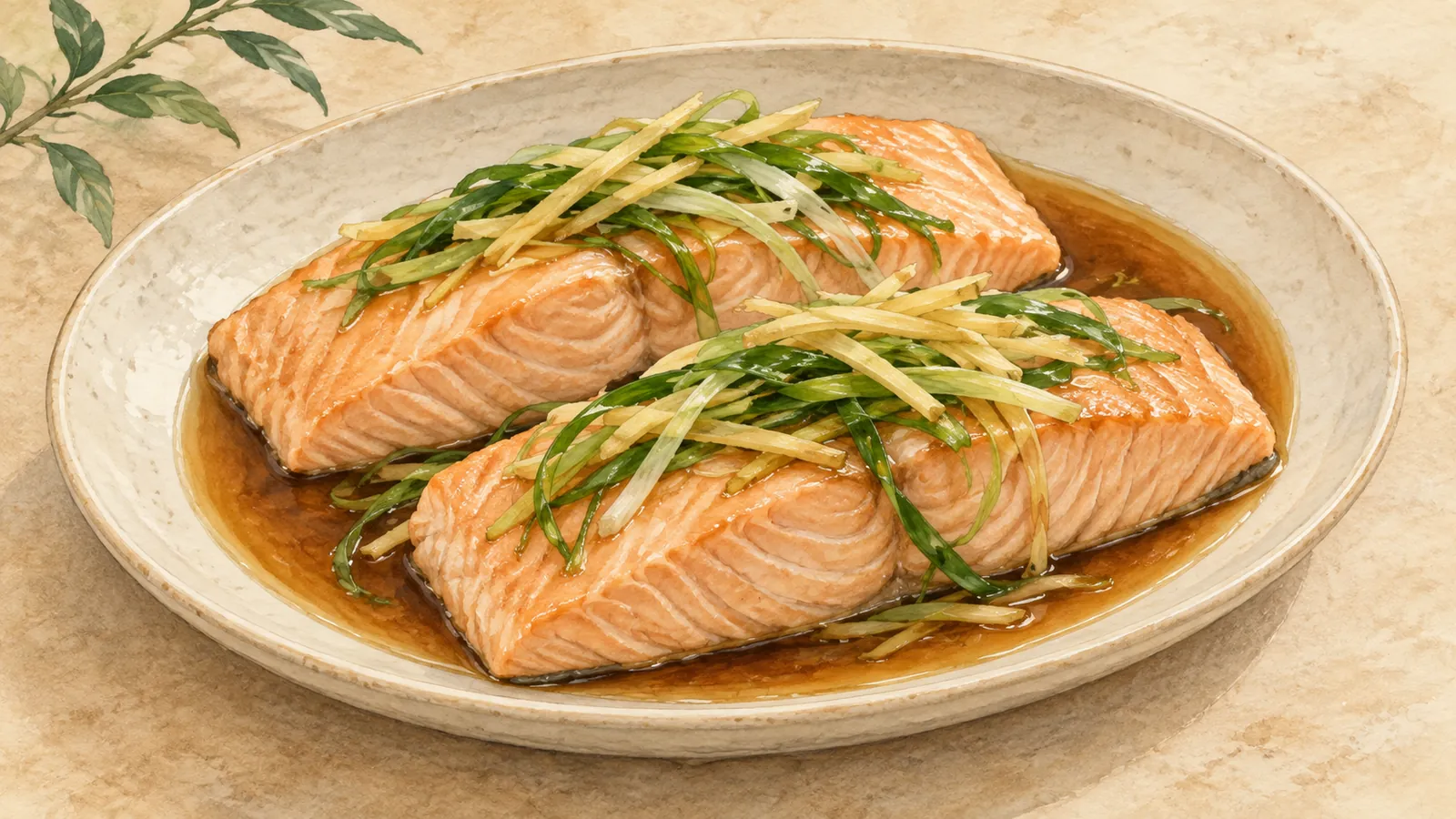
Ginger and scallions do most of the work here. The salmon steams on a plate while a small bowl of soy sauce, water and sugar waits beside the stove. Once the fish is ready, a brief turn in warm oil softens the aromatics before the sauce goes over the fillets.
The sauce stays thin enough to spoon around the fish. Serve with rice and a vegetable you have already prepared; this is an easier meal to finish when the salmon is the last thing needing your attention.
Give the plate room
Choose two portions of similar thickness. A thin tail piece and a thick center piece will not necessarily finish together, even when they weigh the same. The card’s first check assumes roughly one-inch-thick fillets; the thermometer decides when each is ready.
Test the plate and lid in the cold pot before cooking. The plate should sit securely above the water, with room around its edge for steam and a safe way to lift it out. A plate wedged tightly against the pot wall is awkward to retrieve when everything is hot. The steamer setup guide helps you check that fit.
A gentle sauce finish
Light soy sauce means the usual thin Chinese seasoning sauce, not necessarily reduced-sodium soy sauce. Dark soy sauce will change the color and balance. Start with the listed tablespoon; the sauce can be spooned over each portion at the table rather than poured on all at once.
Cut the ginger finely enough to eat with a bite of salmon. Keep the scallion greens out of the pan until the whites have had their brief start. If the ginger darkens rapidly, lower the heat before adding anything else. The aim is softened aromatics in a little oil, followed by a short bubbling sauce.
This recipe draws on Made With Lau's steamed salmon and Bill Leung's Cantonese steamed fish at The Woks of Life. Here, two salmon portions receive a smaller, gently cooked ginger-scallion sauce. There is no smoking-oil pour over the finished plate.
Start cold, finish with a temperature check
Keep raw salmon refrigerated until preparation. The FDA’s seafood guidance recommends refrigerator thawing and separating raw seafood from ready-to-eat food. For vacuum-packed fish, Maine Extension advises removing the packaging before thawing.
Insert the thermometer so its sensing area reaches the center of the thickest flesh. FoodSafety.gov lists 145°F for fish and 165°F for reheated leftovers. Steam, color and an elapsed timer are useful observations, but the card still requires the center-temperature check.
For leftovers, put each portion into a shallow container promptly instead of leaving the serving plate out until it feels cool. Maryland Extension’s food-safety guidance supports prompt refrigeration and using leftovers within three to four days. Reheat only what you plan to eat, and spoon the saved sauce over the portion when serving.