Recipes
Zaru Soba with a Cold Dipping Sauce
Cook, rinse and drain soba for two cold noodle portions, with label-diluted tsuyu, crisp nori and scallion on the side.
Jump to recipe ↓Recipe
- Total time
- About 20–25 minutes
- Method
- Boil and chill
- Difficulty
- Easy
- Allergens
- Buckwheat · Wheat · Soy · Fish
About 2 noodle portions
Allow about 20–25 minutes, including heating the water; timing and yield are estimates. Contains buckwheat; noodles and sauce may contain wheat, soy and fish. Check every label, including optional wasabi. The sauce quantity is ready-to-dip volume after any required dilution. Stay at the stove while noodles cook.
Equipment: Large saucepan or stockpot, fine-mesh sieve or colander, measuring jug, knife or kitchen scissors, cutting board, chopsticks or tongs, two plates and two dipping cups.
Ingredients
- 200 g (about 7 oz) dried buckwheat soba noodles
- 200 ml cold prepared soba dipping sauce (tsuyu), ready-to-use or diluted to the bottle’s cold-dipping directions
- 1 scallion, thinly sliced
- ½ sheet plain toasted nori, cut into thin strips
- Wasabi to taste, optional
- Water as directed on the noodle packet for boiling, plus cold drinking water for rinsing and any sauce dilution
Method
Prepare a clear draining space
Wash hands with soap for 20 seconds. Rinse the scallion under running water without soap, dry and slice thinly. Cut the nori into narrow strips. Put the sieve securely in a clean sink and set out two plates and dipping cups before heating the noodle water. Keep the garnishes separate.
Convert a measurement for this stepMeasure the finished dipping sauce
Read the sauce label. Use 200 ml if it is ready to serve, or mix concentrate with cold drinking water according to the cold-noodle dipping directions to make 200 ml total. Do not use the hot-soup dilution. Taste and divide between two cups; refrigerate until serving. For a label that specifically says one part sauce to three parts water, use 50 ml sauce and 150 ml water.
Convert a measurement for this stepCook the soba while watching the pot
Bring the packet’s recommended quantity of water to a full boil in a pot with room for foaming; do not add salt unless the packet directs it. Add the soba and stir gently to separate the strands. Cook for the packet’s stated time, watching the foam and reducing heat if it rises toward the rim. Stay at the stove. Cool and taste a strand: the center should be tender, with a little chew rather than a hard core. Continue briefly and check again if needed.
Convert a measurement for this stepCool thoroughly and drain
Turn off the burner. Use both hands and appropriate heat protection to drain the pot carefully into the waiting sieve, keeping clear of the steam. Run cold drinking water over the noodles. Once cool enough to handle, gently loosen and rub the strands to wash away surface starch. Continue until the noodles are cool throughout and no longer feel slick with starch, then drain thoroughly.
Convert a measurement for this stepServe noodles and sauce separately
Divide the drained noodles between the plates and top with nori. Bring out the cold sauce, scallion and optional wasabi. Add condiments to your own dipping cup and dip a small bundle of noodles at a time. Refrigerate extra noodles and unused sauce separately at 40°F (4°C) or below within two hours, or one hour above 90°F (32°C); discard food left out longer. Discard used dipping sauce. Use refrigerated noodles within three to four days and follow any shorter sauce-label limit.
Convert a measurement for this step
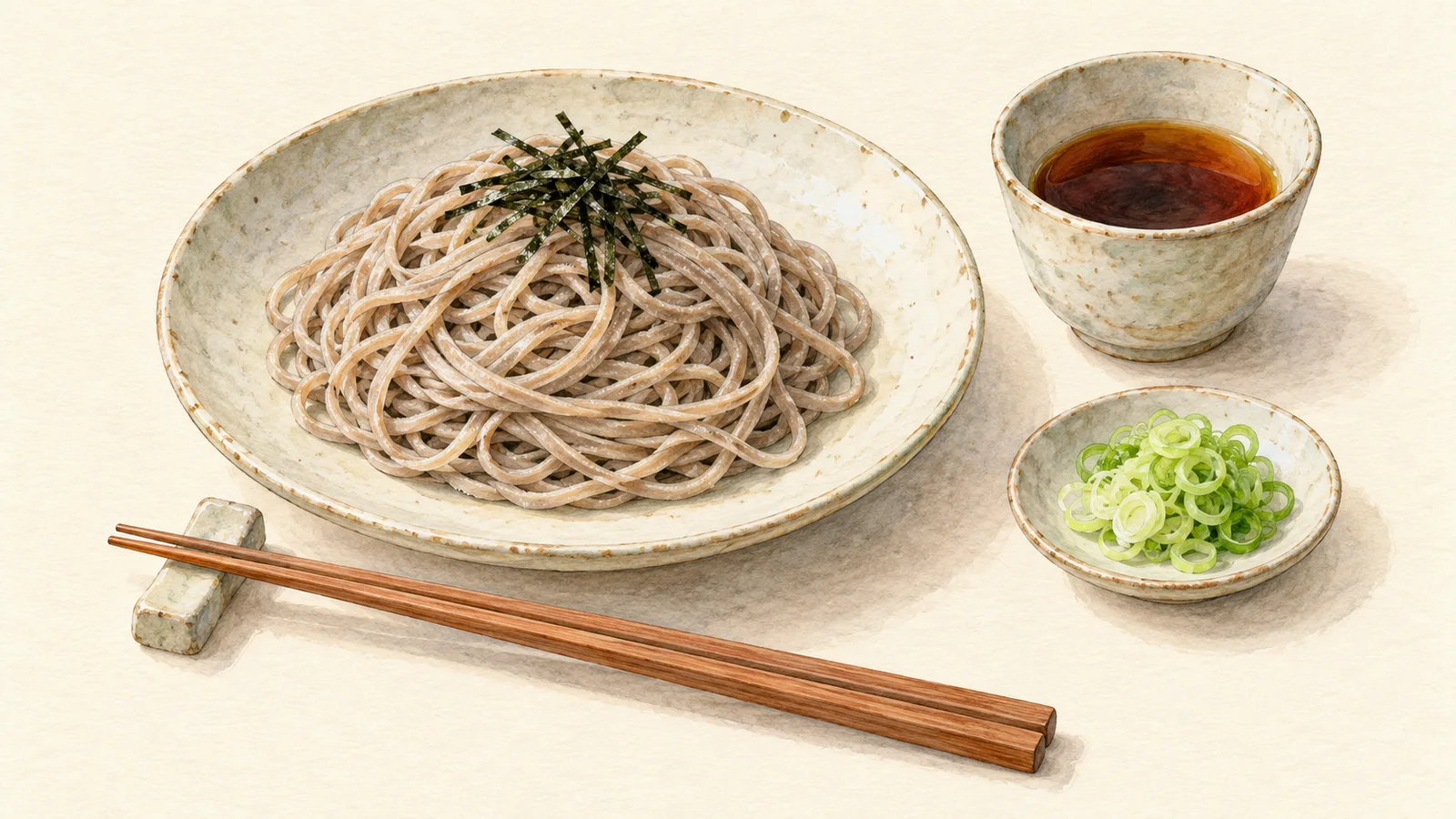
A good plate of cold soba needs a thorough rinse and a good drain. Leave too much surface starch and the noodles cling together; leave too much water and each dip weakens the sauce. Get the dipping cups and garnishes ready before the noodles go into the pot, so you can eat as soon as they are cool.
Zaru soba is buckwheat noodles served cold with a separate savory dipping sauce, usually finished with thin strips of nori. A bamboo tray is traditional, but an ordinary plate works. This version uses prepared tsuyu, so there is no separate stock to simmer and chill.
Buy the sauce for dipping
Look for a noodle sauce labeled for cold soba or cold-noodle dipping. Some bottles are ready to use; others are concentrated. Follow the bottle’s cold dipping directions, which may differ from its hot-soup directions. The quantity in the card is the finished diluted amount, not the amount of concentrate.
As Just One Cookbook’s mentsuyu guide explains, straight and concentrated sauces need different treatment. For a label that specifically says one part sauce to three parts water, 50 ml sauce plus 150 ml cold water makes the 200 ml used here. That arithmetic is an example, not a universal dilution for every bottle. Taste a little of the prepared sauce before dividing it between the cups.
Check both noodles and sauce for dietary needs. Soba contains buckwheat, a recognized allergen, and many versions also contain wheat. Tsuyu commonly contains soy, wheat and fish-derived dashi; some products contain alcohol. GO TOKYO’s dietary guidance highlights buckwheat allergy and the fish broth that can be present in an otherwise meatless-looking meal. Do not assume this dish is gluten-free or vegetarian from its appearance.
Cool the noodles, then lose the rinse water
Use the cooking instructions on your packet. Thin soba is active stove work: stir to loosen the strands and watch the foam so the pot does not boil over. Check a cooled strand for a tender center while it still has some bite. A fixed timer cannot account for every noodle blend and thickness.
This version draws on the rinse-and-drain method in Kikkoman's zaru soba lesson and the cold serving approach in Just One Cookbook's zaru soba, using prepared dipping sauce. It has not been kitchen-tested for this site; serving size and planning time are estimates.
After cooling, let water drain through the sieve rather than carrying a wet bundle straight to the plate. Add the nori at the table so it has less time to soften. Put a little scallion or optional wasabi into your dipping cup and dip a small bundle of noodles at a time. Keep the rest of the noodles out of the sauce until you eat them.
Cook only the noodles you plan to serve
You can prepare and refrigerate the sauce and sliced scallion first, but cook the soba close to the meal. The noodles lose their separate, springy texture as they sit. If you want a side, the ginger-soy mushrooms can be cooked beforehand so the noodle pot has your attention.
Refrigerate extra noodles and unused sauce promptly in separate covered containers at 40°F (4°C) or below. FoodSafety.gov sets a two-hour limit out of refrigeration, shortened to one hour above 90°F (32°C). Discard portions left out longer and discard sauce used for dipping rather than pouring it back into the bottle. Use refrigerated noodles within three to four days, following Illinois Extension’s leftovers guidance; follow any shorter sauce-label limit. Freshly cooked and chilled noodles will have the better texture.