Recipes
Egg Fried Rice with Scallions
Make a small skillet batch of egg fried rice with separate golden curds, scallion greens and safely chilled rice.
Jump to recipe ↓Recipe
- Total time
- About 20 minutes, with chilled cooked rice ready
- Method
- Skillet
- Difficulty
- Easy
- Allergens
- Egg · Soy · Wheat in regular soy sauce
About 2 light-meal servings or 3 side portions
Allow about 20 minutes with cooked, chilled rice already available. Rice cooking and chilling are additional. Stay at the stove throughout frying; use the texture and temperature checks rather than a countdown. Cook separate batches if increasing the yield.
Equipment: 12-inch skillet, heat-safe spatula, cutting board, knife, mixing bowl, clean plate, measuring cups and spoons, and an instant-read food thermometer.
Ingredients
- 2 US cups cooked long-grain white rice, rapidly cooled and refrigerated; see the rice storage check below
- 2 large eggs
- 2 scallions
- 2 tablespoons neutral cooking oil, divided
- 2 teaspoons regular or Chinese light soy sauce
- 1/8 teaspoon ground white pepper, optional
Method
Prepare before heating
Wash and trim the scallions, then slice the pale and green parts separately. Measure the oil, soy sauce and optional pepper. Set out a clean plate for cooked eggs. Keep the rice refrigerated until the remaining preparation is done.
Convert a measurement for this stepBeat the eggs and loosen the rice
Beat the eggs until blended. Wash hands, utensils and surfaces after raw-egg contact. Use rice kept at 40°F (4°C) or below, within 24 hours of cooking and never previously reheated. Take out the measured cooked rice and gently separate its clumps with a clean fork. Do not use rice left out overnight or rice whose storage history is unknown.
Convert a measurement for this stepScramble broad curds
Warm half the oil in the skillet over medium heat. Add the eggs and draw the setting egg together with the spatula. Once the curds are set and no longer runny, transfer them to the clean plate. Continue directly with the rice.
Convert a measurement for this stepMove the rice across the pan
Add the remaining oil and pale scallion pieces. Stir briefly until fragrant without browning, then add the rice. Cook over medium-high heat, lowering it if anything scorches. Use the spatula edge to ease apart clumps and scoop from the bottom repeatedly so all the grains heat. Keep attending the pan.
Convert a measurement for this stepSeason and check the whole dish
When the rice is loose and hot, distribute the soy sauce and optional pepper over it. Fold in the cooked eggs and scallion greens, breaking large curds into spoon-size pieces. Keep stirring until the combined dish reaches 165°F (74°C) in several places, with no cold clumps; keep the thermometer tip off the pan.
Convert a measurement for this stepTurn off the heat and serve
Turn off the burner and divide between plates. Serve promptly. This step has reheated the rice: make only the amount you will eat, and do not reheat the finished batch again.
Convert a measurement for this step
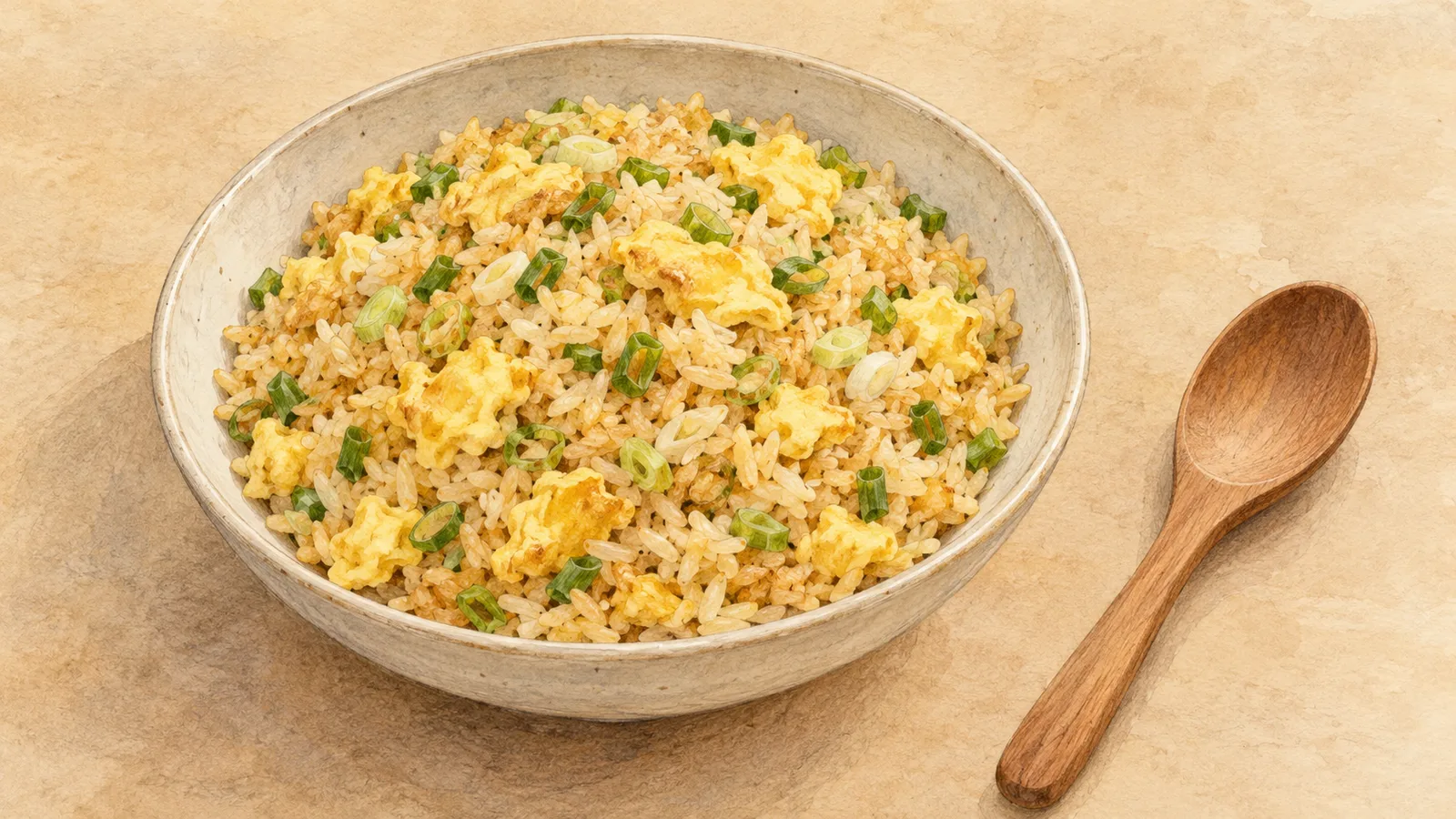
A bowl of egg fried rice needs distinct grains, soft yellow curds and enough scallion to make each spoonful fragrant. It does not need a refrigerator’s worth of additions. This small batch keeps the pan manageable, with the eggs cooked separately so they remain visible in the finished rice.
Have everything cut and measured before turning on the burner. Once the rice goes in, stay with the pan. The few minutes you save by chopping a scallion during frying are easily lost to a scorched patch on the bottom.
Start with rice you handled well
Use plain cooked long-grain white rice that was cooled quickly, refrigerated promptly and kept at 40°F (4°C) or below. For this recipe, use it within 24 hours of cooking and only if it has not already been reheated. Keep it cold while you prepare the other ingredients.
Food Standards Scotland’s rice guidance recommends chilling rice as quickly as possible, ideally within an hour, and using it within 24 hours. Small, shallow portions cool more readily than a full pot. Do not leave a pot on the counter overnight to make “day-old rice.” If you do not know how the rice was stored, choose another meal; frying cannot reliably rescue mishandled rice.
Our rice cooling and storage guide covers planning rice ahead. The amount in the card is cooked rice, not dry rice. Two cups of uncooked rice would produce far too much for this skillet batch.
A small batch with a light seasoning
The separate-egg method draws on Bill Leung's fried-rice guidance and Namiko Hirasawa Chen's yakimeshi method. This version uses long-grain rice, two eggs and scallions, without meat or a vegetable mixture.
The soy sauce should lightly season the grains rather than turn the bowl dark brown. Use regular or Chinese light soy sauce; dark soy sauce is a different ingredient. The soy-sauce guide helps with those labels. Ground white pepper gives the rice a gentle peppery finish. If you dislike it, leave it out rather than replacing it with a large shake of another spice.
A broad skillet lets you fold the rice across the cooking surface. Press apart a stubborn clump with the edge of the spatula, then loosen it with a scooping motion. Avoid mashing the whole pan into a flat paste. If you want to double the recipe, cook two batches; doubling the bowl size is easier than doubling the skillet’s useful surface.
Finish hot, then serve
The FDA advises cooking scrambled eggs until they are no longer runny. Here the final combined dish also needs to reach 165°F (74°C), following the USDA reheating guidance. A steaming edge does not tell you the temperature of a cold lump in the center; stir thoroughly and check several places without resting the probe on the hot pan.
Make the quantity you plan to eat and serve it promptly. This frying step reheats the rice, so follow the rice guidance’s once-only reheating rule and do not plan another hot meal from this finished batch. A plate of gai lan can sit alongside it when you want vegetables; prepare that separately instead of crowding them into this pan.