Recipes
Kongnamul Muchim: Soybean Sprouts with Garlic and Sesame
Cook soybean sprouts thoroughly, drain them well and finish with garlic, scallion and sesame. A mild Korean side dish with a complete recipe and storage guidance.
Jump to recipe ↓Recipe
- Total time
- About 25 minutes
- Method
- Covered-pot cooking
- Difficulty
- Easy
- Allergens
- Soy · Sesame
About 4 small side portions
Allow about 25 minutes. The 10-minute timer begins only after the covered pot boils and is a first check, not a guarantee of doneness. Stay near the stove; no parallel preparation is scheduled. Contains soy and sesame.
Equipment: Medium saucepan with a fitted lid, colander, mixing bowl, tongs, knife, cutting board and measuring spoons; a food thermometer for reheating leftovers.
Ingredients
- 450 g (1 lb) fresh soybean sprouts (kongnamul), kept refrigerated
- ½ US cup (120 ml) water, plus a little more if needed to keep the pot from drying; running water for rinsing
- ½ teaspoon fine salt for the pot, plus up to ⅛ teaspoon to taste after cooking
- 2 garlic cloves, finely minced
- 1 scallion, finely sliced
- 2 teaspoons toasted sesame oil
- 1 teaspoon toasted sesame seeds
Method
Rinse and prepare before heating
Wash hands with soap for 20 seconds. Discard spoiled sprouts; rinse sound sprouts and the scallion under running water without soap. Do not taste raw sprouts. Slice the scallion, mince the garlic and measure everything. Set a clean colander in the sink and a mixing bowl nearby.
Convert a measurement for this stepBring the covered pot to a boil
Put the sprouts, 120 ml water and ½ teaspoon fine salt in the saucepan. Cover and heat over medium-high heat until the water boils and the pot produces steady steam. Adjust the heat to maintain cooking without boiling over. Start the next timer only once this point is reached.
Convert a measurement for this stepCook thoroughly and check the bean heads
Keep the pot covered and cook for 10 minutes before checking. Stay near the stove and add a little hot water carefully if the pot is drying out. Open the lid away from your face. The sprouts must be steaming hot throughout and the yellow bean heads tender when pressed with a fork. If any remain firm and raw inside, continue cooking and check again; do not serve lightly cooked sprouts.
Convert a measurement for this stepTurn off, drain and season
Turn off the burner. Drain carefully through the colander, keeping clear of steam. Transfer to the clean mixing bowl and toss with garlic, scallion, sesame oil and sesame seeds using clean tongs. Let a small cooked bite cool before tasting; add up to ⅛ teaspoon salt only if needed.
Convert a measurement for this stepServe and refrigerate the extra portions
Serve about four small side portions. Refrigerate leftovers promptly in a shallow covered container at 40°F (4°C) or below, within two hours or one hour above 90°F (32°C). Discard portions left out longer. Use within three to four days; if reheating, reach 165°F (74°C) throughout, checked with a food thermometer.
Convert a measurement for this step
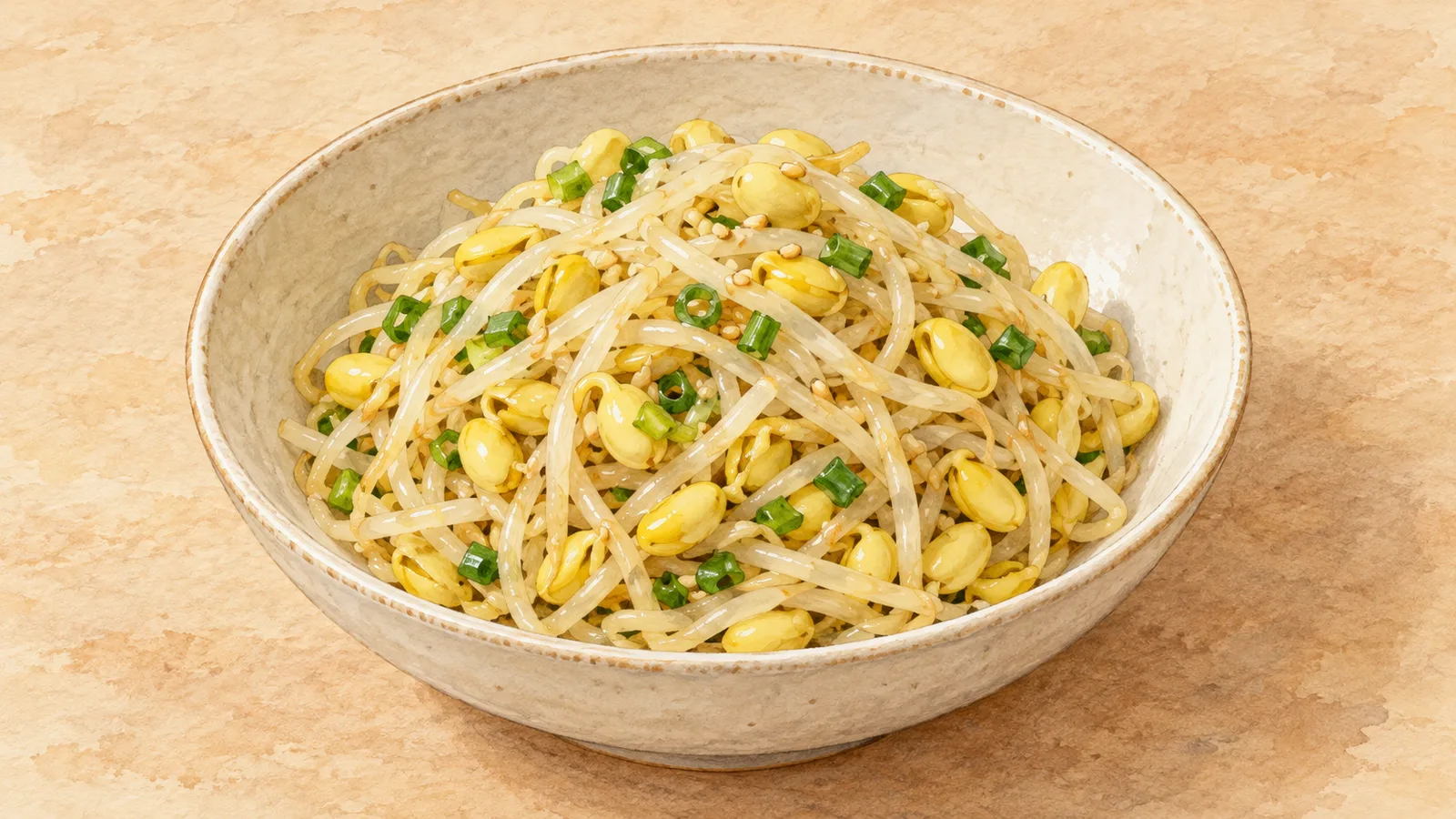
Kongnamul muchim (콩나물무침) puts the yellow soybean heads at the center of a small, savory side dish. The pale stems bend and tangle together; garlic, scallion and toasted sesame oil season them without a heavy sauce. Serve a small bowl with rice and a main dish, or tuck a portion beside dubu jorim.
Buy soybean sprouts, usually labeled kongnamul in a Korean grocery. Their substantial yellow heads distinguish them from the smaller-headed mung bean sprouts often sold in the same produce area. Use soybean sprouts for this recipe. Keep them refrigerated and plan to cook them promptly.
Cook the sprouts before dressing them
Raw sprouts can carry harmful bacteria even when they look clean. Rinsing is useful preparation, but it does not make them safe to eat raw. The FDA recommends thorough cooking, and says children, older adults, pregnant people and people with weakened immune systems should avoid raw or lightly cooked sprouts.
Let the covered pot come to a boil before starting the card’s first-check timer. Stay nearby, maintain steam and make sure the pot does not boil dry. The bean heads need to cook through along with the stems; a brief warm-up in dressing is not the same thing. Do not taste a raw sprout to decide whether the package is fresh.
This mild version adapts the covered-pot method in Maangchi's kongnamul-muchim. It leaves out the gochugaru and uses salt rather than fish sauce for the final seasoning. The four small side portions and roughly 25-minute planning allowance are estimates.
Drain well, then add the sesame
Set the colander where you can empty the hot pot without reaching across another burner. Open the lid away from your face. Lift and turn the drained sprouts with clean tongs so the garlic and scallion reach the whole bowl, not just its surface. A puddle of cooking water left underneath will dilute the seasoning.
Toasted sesame oil belongs in the finished bowl here. There is no frying stage. If your sesame seeds are raw, toast them separately before starting the sprouts, then let them cool. Taste only a cooled bite of the fully cooked dish before deciding whether it needs the optional pinch of salt.
The recipe contains soy and sesame. Salt keeps fish sauce out of this version, but it does not make the dish suitable for someone with a soy or sesame allergy. Check packaged ingredients and cross-contact information for the people eating it.
Put the extra portion away promptly
Use a clean utensil to move leftovers into a shallow covered container. Refrigerate at 40°F (4°C) or below within two hours, or within one hour if the surroundings are above 90°F (32°C). Do not wait for the entire bowl to cool on the counter, and discard portions left out beyond those limits.
Use refrigerated leftovers within three to four days. If reheating, heat throughout to 165°F (74°C), checked with a food thermometer. These limits follow USDA’s leftovers guidance. Portioning before serving also means you can take out only what you need for the next meal.