Recipes
Gaji Namul: Steamed Eggplant with Garlic and Sesame
Steam slender eggplants until tender, cool and tear them, then fold through a garlic, scallion and sesame dressing for a small Korean side dish.
Jump to recipe ↓Recipe
- Total time
- About 25 minutes
- Method
- Steam
- Difficulty
- Easy
- Allergens
- Sesame · Soy · Wheat in regular soy sauce
About 4 small side portions
Allow about 25 minutes, depending on your steamer and the thickness of the eggplant. Contains sesame and soy; regular soy sauce also contains wheat.
Equipment: Lidded pot with a secure steamer basket or rack, knife, cutting board, mixing bowl, measuring spoons, skewer, tongs, oven mitts and a wide heatproof plate.
Ingredients
- 450 g (about 1 lb) slender Korean or other Asian eggplants
- 3 garlic cloves, finely minced
- 2 scallions, finely chopped
- 4 teaspoons regular soy sauce
- 1 teaspoon gochugaru (Korean red pepper flakes)
- 2 teaspoons toasted sesame oil
- 1 tablespoon toasted sesame seeds, lightly crushed
- Water for washing and for the steamer, below the basket and replenished as needed
Method
Wash and cut the eggplant
Wash hands with soap for 20 seconds. Rinse the eggplants and scallions under running water; do not use soap on produce. Trim the eggplant caps. Cut into lengths of about 6 cm (2½ inches), then halve thick pieces lengthwise so the pieces have similar thickness. Mince the garlic and chop the scallions.
Convert a measurement for this stepMix the dressing before heating
In a bowl large enough for the cooked eggplant, mix the garlic, scallions, soy sauce, gochugaru and sesame oil. Keep the crushed sesame seeds nearby for the finish.
Convert a measurement for this stepBring the steamer to a steady boil
Fit the basket securely in the pot and add water below its base, enough for a short steam without touching the food. Bring the water to a boil. Use mitts to place the eggplant in the basket without compressing it into a dense pile, leaving room for steam to circulate. Cover; wait for steady steam to return.
Convert a measurement for this stepSteam and test the thickest piece
Once steady steam has returned, start a five-minute first-check timer. Stay at the pot. Lift the lid away from your face and test the thickest flesh with a skewer: it should enter easily while the piece still holds together. If resistant, cover and continue briefly, checking every minute.
Convert a measurement for this stepTurn off the heat and cool on a plate
Turn off the burner. Using mitts and tongs, transfer the eggplant to a wide heatproof plate, opening the lid away from your face. Let it cool for at least five minutes, then check that the pieces are comfortable to handle. Allow longer if they remain hot.
Convert a measurement for this stepTear, dress and serve
Pour away liquid from the cooling plate. With clean hands, tear the cooled eggplant lengthwise into bite-size strips. Fold gently into the dressing, add the crushed sesame seeds and divide into about four small side portions. Serve now or refrigerate promptly in a shallow covered container at 40°F (4°C) or below. Refrigerate within two hours of cooking, or one hour above 90°F (32°C); discard portions left out longer. Use refrigerated leftovers within three to four days.
Convert a measurement for this step
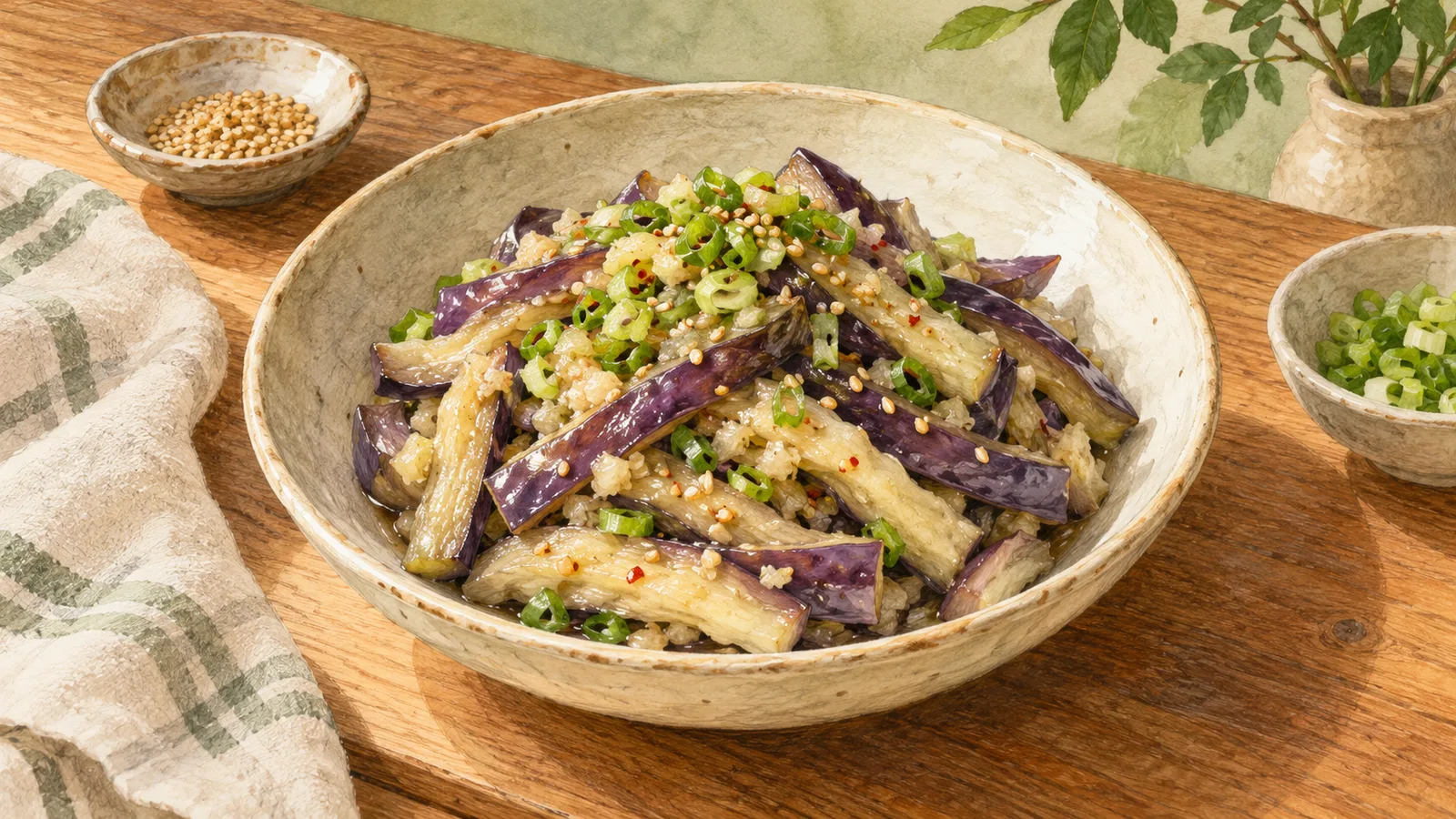
Steamed eggplant has a softness that a browned, glazed half does not. Torn into short strips, it catches garlic, scallion and sesame dressing in its folds. A small bowl of gaji namul (가지나물) belongs beside rice and other dishes, where its juicy texture has room to stand out.
Use slender Korean or other Asian eggplants for this version. Choose firm fruit with glossy skin and no soft patches. A large globe eggplant changes the thickness of the pieces and the skin-to-flesh balance; it is not a direct swap for the five-minute first check in the recipe card.
Tender enough to tear, still able to hold together
Have the dressing mixed before the steamer goes on. Once the pieces soften, the next job is to get them out of the heat. A short cooking time leaves little room to find a bowl, mince garlic and watch the pot at once.
The skewer check matters more than a purple skin. It should enter the thickest flesh easily, while the piece still holds its shape when lifted. If a center feels spongy or resistant, continue briefly and check again. Use tongs and lift the lid away from your face; escaping steam can burn even when the food is almost done.
This card adapts Maangchi's gaji-namul, using her soy-sauce option in place of fish sauce. Hyosun's version offers a useful comparison: smaller, pre-cut pieces cook more quickly. The roughly 25-minute allowance and four small portions are planning estimates, not measured results.
Dress gently and serve a small bowl
Let the cooked pieces become comfortable to handle before tearing them. Pour away any liquid collected on the cooling plate so it does not dilute the dressing. Fold the strips through the seasoning with a spoon rather than pressing them into a paste.
The card uses toasted sesame seeds and oil. If your seeds are raw, toast them separately before starting. Sesame and soy are allergens, and regular soy sauce usually contains wheat; check every label for anyone with an allergy. FDA’s allergen guidance explains why changing one condiment does not settle every ingredient concern.
Serve with rice and dubu jorim for a vegetable-and-tofu meal. For a browned eggplant dish on another day, use the miso-glazed eggplant recipe.
Keep the remaining portions cold
Follow FDA’s produce preparation advice: wash hands, rinse the vegetables under running water and keep clean produce away from raw meat and its utensils. Soap belongs on hands and equipment, not the eggplant.
For a later meal, refrigerate the dressed eggplant promptly in a shallow covered container and serve it cold. USDA’s leftovers guidance supports the storage limits in the card. Take out only the portion you plan to eat; soy sauce and sesame oil do not make this a shelf-stable preserve.