Recipes
Miso-Glazed Eggplant with a Tender Center
Bake slender eggplant until soft, then finish it under the broiler with a thin miso glaze, scallion and sesame.
Jump to recipe ↓Recipe
- Total time
- About 35–45 minutes
- Method
- Oven and broiler
- Difficulty
- Moderate
- Allergens
- Soy · Sesame · Check miso for wheat or barley
About 3 side-dish servings
Allow roughly 35–45 minutes, including preparation and oven heating. Eggplant thickness and broiler strength change the timing; tenderness and surface color decide when to stop. Prepare any rice separately.
Equipment: Conventional oven with broiler, broiler-safe rimmed metal tray, foil if permitted by the tray maker, oven mitts, knife, board, small bowl, spoon, brush and spatula. Do not use parchment under the broiler.
Ingredients
- 3 slender Japanese eggplants, about 500 g total
- 1 tablespoon neutral cooking oil
- 3 tablespoons plain white miso, without added dashi
- 1 tablespoon granulated sugar
- 1 tablespoon mirin; for an alcohol-free alternative, use 1 tablespoon water plus 1 teaspoon extra sugar and check all ingredient labels
- 1 1/2 teaspoons water, plus a few drops if needed to loosen the glaze
- 1 scallion, rinsed, trimmed and thinly sliced
- 1 teaspoon toasted sesame seeds
Method
Heat the oven and mix the glaze
Heat a conventional oven to 425°F (220°C). Position a rack near the middle; for the later broiling stage, use the oven maker’s safe rack position, approximately 7 inches below the element where suitable. Use a broiler-safe metal tray, bare or lined with permitted foil, never parchment. Mix the miso, sugar, mirin and water until smooth. If avoiding alcohol, use the listed water-and-extra-sugar alternative. The glaze should spread from a spoon rather than run like broth. Slice the scallion now.
Convert a measurement for this stepPrepare six eggplant halves
Wash hands and rinse the eggplants under plain running water; dry them. Trim off the stem caps and halve lengthwise. Make shallow diagonal cuts across each cut face in both directions, without cutting through the skin. Brush the cut surfaces with the oil and arrange cut-side down on the tray, with space between halves. Put the tray into the fully heated oven.
Convert a measurement for this stepBake until the centers soften
Start a 15-minute first-check timer when the tray enters the hot oven. Stay nearby. At the check, use mitts to pull out the tray and carefully test the thickest flesh with a fork or knife tip. It should yield easily, with slightly wrinkled skin. If the centers still resist, continue baking in short intervals and check again before glazing.
Convert a measurement for this stepTurn and coat the tender flesh
Keep the tray out of the oven on a heat-safe surface while you heat the broiler. Use a spatula to turn the halves cut-side up. Spread a thin, even layer of glaze over the flesh. Leave excess glaze in the bowl rather than building thick pools or spilling it onto the tray.
Convert a measurement for this stepWatch the glaze bubble and brown
Put the tray under the hot broiler, following the oven maker’s instructions. Stay at the oven and watch continuously. Begin checking color immediately; the surface may take roughly 3–5 minutes, but remove it sooner if it bubbles and develops brown patches. Do not wait for a timer or let the glaze turn black. Use oven mitts to remove the tray.
Convert a measurement for this stepFinish with scallion and sesame
Turn off the broiler and oven. Transfer the soft halves carefully to a serving plate and scatter with scallion and sesame. Let a small bite cool before tasting. Serve as a side dish with rice and other food. Refrigerate leftovers in a shallow covered container within two hours, or one hour above 90°F (32°C), at 40°F (4°C) or below.
Convert a measurement for this step
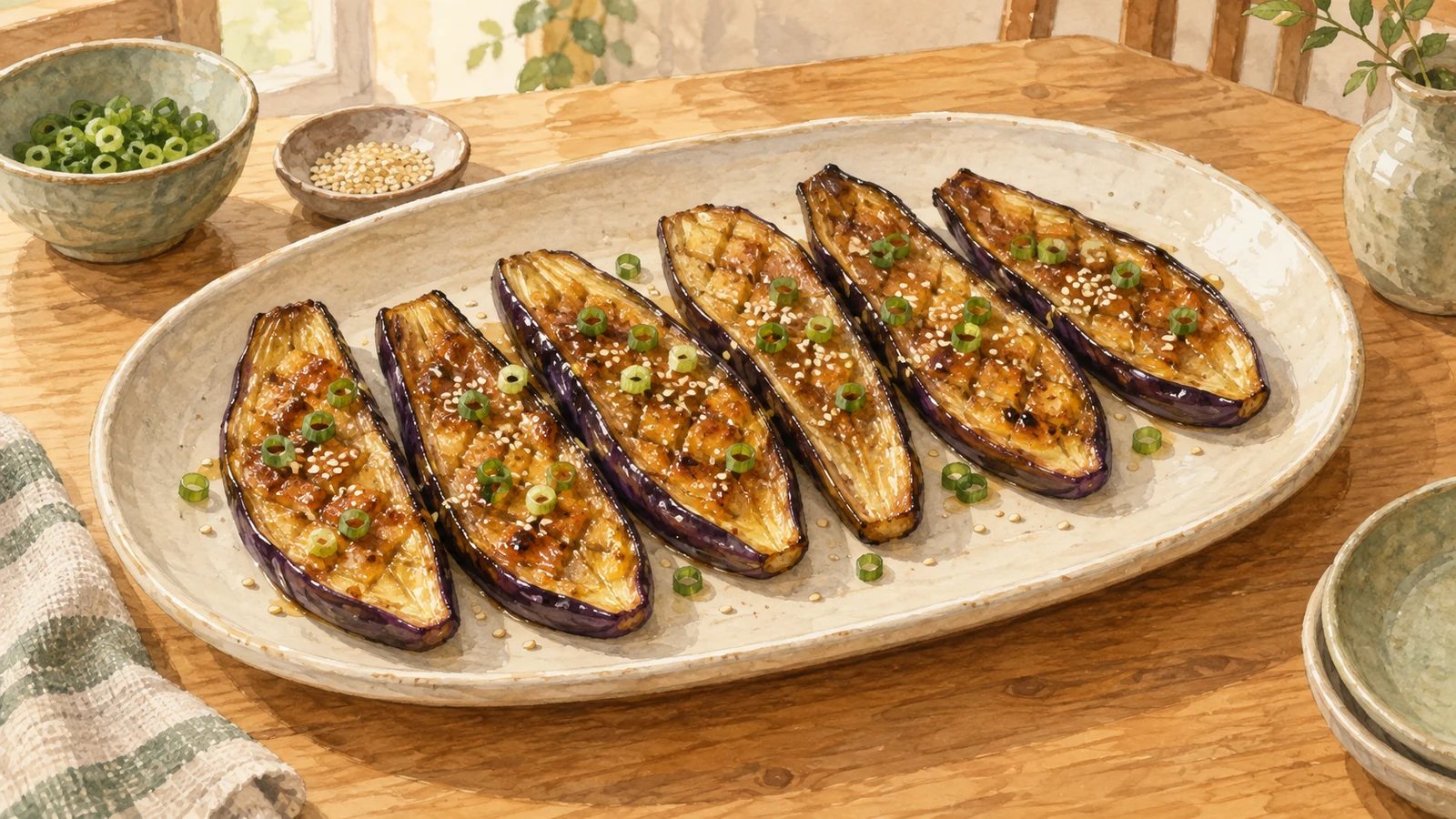
The fork should slide into the eggplant before the glaze goes anywhere near the broiler. That order gives you a soft center under a sweet, salty surface, instead of a dark crust covering firm flesh. A thin coat of miso is enough; the eggplant should still be the main mouthful.
This oven version of nasu dengaku is adapted from Namiko Hirasawa Chen’s miso-glazed eggplant, with the roast-then-glaze approach also described by Marc Matsumoto.
Choose eggplants that can finish together
Use slender Japanese eggplants of similar thickness for this card. A large globe eggplant changes the size of each half and the baking time; do not assume its center will soften at the first check. If your tray contains unequal halves, test each one and give the firmer pieces more time before glazing.
Rinse the whole vegetables before cutting, then dry them. The FDA’s produce guidance recommends running water, without soap or produce wash. The scallion is a finishing ingredient, so prepare it with clean hands, a clean board and a clean knife.
Keep the topping thin enough to taste the vegetable
Plain white miso provides the starting flavor here. Check the tub before adding anything else: a paste with dashi already mixed in can bring fish and additional seasoning. The miso buying guide explains the label distinctions if you are choosing your first tub.
Stir the glaze thoroughly, scraping the bowl’s bottom. It needs to spread over the cooked flesh, not pour away as a watery puddle. A few drops of water can loosen an unusually stiff paste. Resist the urge to use every last spoonful just because it is in the bowl; a heavy layer can overwhelm a small eggplant half.
Matsumoto’s version also finishes the miso after the eggplant has roasted and cautions that the glaze burns easily. Keep that final stage separate in your attention: have the plate ready, stop other kitchen jobs and watch the surface. Browning patches are useful; a blackened coating is a reason to remove the tray, not give it another minute.
Fit it into dinner
These are side-dish portions. Put the eggplant alongside rice and a simply seasoned main, or serve it with several small dishes. The glaze already supplies a strong sweet-salty note, so taste the meal before adding another sauce over everything.
Mirin contains alcohol, and a short broil does not establish that all of it is gone. The card includes a water-and-sugar alternative drawn from Chen’s substitution guidance. It changes the flavor. For strict avoidance, check the miso and every other ingredient too. This dish contains soy and sesame; some miso also contains wheat or barley.
For leftovers, follow FoodSafety.gov’s cooling guidance: use a shallow covered container, refrigerate promptly and do not wait for the tray to sit at room temperature until completely cold. Use refrigerated portions within three days. When reheating, check for 165°F (74°C) in the center with a food thermometer; warm glaze alone does not tell you whether the middle is hot. The texture will be softer than the newly broiled surface.