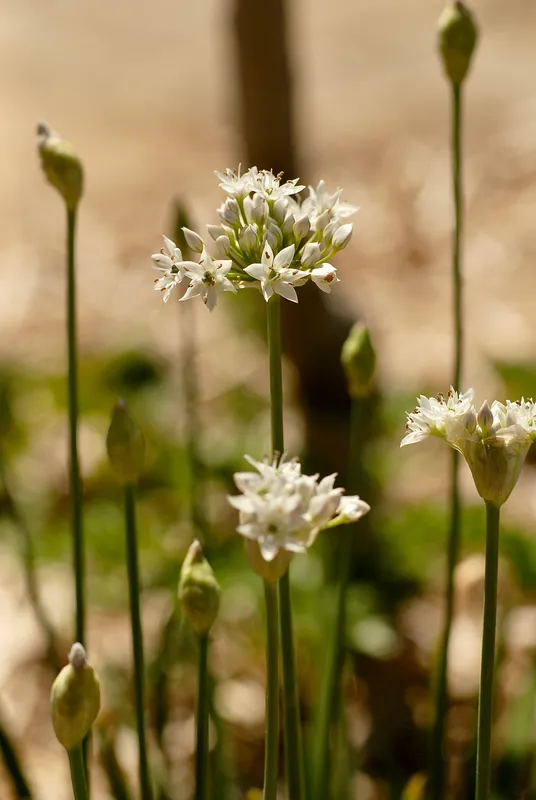
Garlic chives grow as a perennial clump of flat, narrow leaves with a mild garlic-onion flavor. A container keeps the clump accessible, makes self-sown seedlings easier to manage, and works for a patio, balcony, or a bright indoor growing area. Seed is inexpensive but slow to build into a harvestable clump; a rooted division starts with established leaves and roots.
The accepted botanical name is Allium tuberosum, according to the Royal Botanic Gardens, Kew. It is different from common chives, Allium schoenoprasum. Garlic chives have flat leaves and white flower clusters, while common chives typically have hollow, round leaves and purple flowers. Check the botanical name when buying seed or a transplant rather than relying on “chives” alone.
Start with the growing site
Garlic chives perform best with substantial light. Outdoors, use a location with full sun or some afternoon shade where summers are hot. Indoors, place the container at the brightest suitable window and observe the actual growth: long, pale, weak leaves indicate that the available light is not supporting compact growth.
University of New Hampshire Extension recommends full sun to partial shade, fertile soil, consistent moisture, and good drainage. In a container, those needs translate into a bright site, regular moisture checks, and a potting mix that drains while retaining enough water for a leafy herb.
Window direction alone cannot guarantee adequate light because buildings, screens, seasons, and distance from the glass all change intensity. If natural light is insufficient, use the indoor grow-light guide to choose placement and duration. Do not move tender indoor leaves abruptly into intense outdoor sun; acclimate the plant over several days.
Choose a container and mix
Use a food-safe planting container with at least one unobstructed drainage hole. A broad pot gives a clump room to expand and is less likely to tip as leaves and flower stalks develop. No single diameter suits every starting plant, so size the container to the current root mass while leaving space for additional shoots.
Fill it with fresh commercial container mix rather than garden soil. The mix should wet evenly and allow excess water to leave.
NC State Extension Gardener Plant Toolbox lists garlic chives for containers and small spaces and describes the plant as clump-forming. That habit makes eventual division more useful than repeatedly moving one intact clump into a much larger pot.
Set the crown at the same depth it was growing previously. Buried leaf bases are more likely to remain wet, while exposed roots dry too quickly. Leave a modest gap below the rim so water can spread across the mix instead of spilling over the side.
Option 1: sow seed
- Moisten the medium before sowing. It should be evenly damp, not dripping.
- Sow about one-quarter inch deep. The University of New Hampshire Extension gives this depth and a typical germination range of 7 to 14 days under suitable conditions.
- Label the container. Include the species name and sowing date; grasslike allium seedlings are easy to confuse with weeds.
- Keep the seed zone evenly moist. A gentle spray or bottom moisture can avoid washing seeds into a corner, but remove any cover once seedlings emerge and do not leave the pot standing in water.
- Provide strong light immediately after emergence. Weak light produces stretched seedlings that flop before their bases strengthen.
- Thin or transplant deliberately. Retain several seedlings for a clump, but do not leave a dense mat with no room for air movement or root growth.
Germination ranges are planning estimates, not deadlines. Temperature, seed age, depth, and moisture affect emergence. Keep checking the mix instead of adding water simply because seedlings have not appeared. Avoid heavy harvest while the young clump establishes.
Option 2: divide an established clump
Division is the faster route when a healthy garlic-chive plant already has multiple rooted sections. University of Minnesota Extension recommends dividing established chives every three to four years in spring, both to make new plants and to renew crowded clumps.
To divide:
- Water only if needed so the root ball is workable rather than saturated.
- Slide the clump from its container and remove enough loose mix to see natural groups of shoots and roots.
- Pull sections apart gently or cut through the dense crown with a clean, sharp knife.
- Keep several healthy shoots and a useful root system on each division.
- Discard soft, foul-smelling, or severely damaged tissue instead of placing it in fresh mix.
- Replant each section at its original depth and water until excess drains.
- Keep the divisions evenly moist while disturbed roots reestablish, without leaving the pots in runoff.
Wait until there are enough shoots and roots for every section to recover. Divide when growth or water penetration becomes difficult to manage.
Manage water and fertilizer
Check moisture below the surface and water when the root zone begins to dry. Water across the mix until some drains, then empty the saucer or outer pot. Frequency changes with pot size, weather, leaf growth, and season. Because wilting can also signal root damage or heat, confirm moisture before watering.
If growth remains pale after checking light, moisture, root space, and pests, use a fertilizer labeled for edible container plants at its stated rate. More fertilizer cannot replace light, and excess salts can injure roots. Refresh depleted mix or divide a crowded clump instead of continually increasing fertilizer.
Grow indoors with realistic expectations
An indoor container can produce leaves when it receives adequate light, but winter growth may slow. University of Minnesota Extension notes that potted chives brought indoors may provide a winter supply, while also recognizing their perennial cycle. Treat any off-season harvest as conditional on light, temperature, and the plant’s vigor rather than as a guaranteed year-round crop.
Keep the pot away from heating vents and cold glass, and inspect it for pests before bringing it inside. The indoor herb garden guide covers arranging culinary herbs together, but each pot still needs its own moisture check.
Harvest without exhausting the clump
Wait until plants are established and producing multiple leaves. Use clean scissors and cut leaves rather than pulling them from the crown. University of Illinois Extension advises cutting chives about one inch above the soil so the plant can regrow from the base.
Harvest a limited portion, then allow fresh leaves to develop before cutting the clump heavily again. A small indoor division cannot sustain the same schedule as a mature outdoor container. Wash harvested leaves under clean running water and follow every pesticide or fertilizer label for edible crops, including any preharvest interval.
Flower stalks are firmer than the flat leaves and appear later in the season. Their white flower clusters attract pollinators outdoors, but plants can scatter seed if spent heads mature. University of Wisconsin-Madison Extension notes that garlic chives can self-seed readily and recommends removing flowers before seed forms when spread is unwanted.
For leaf production, remove stalks as they appear. To support pollinators outdoors, allow some flowers and cut the heads before seed disperses. Check regional guidance if garlic chives begin spreading beyond the container.
Seasonal care and division
University of Wisconsin-Madison Extension describes garlic chives as hardy in USDA Zones 3 through 9, but a container exposes roots more directly to temperature swings than garden soil does. A zone rating for an in-ground plant is not a promise that an unprotected pot will overwinter anywhere in that range.
In a cold climate, follow local Extension advice for overwintering container herbs. Indoors, reduce watering as growth slows and do not keep a dormant clump saturated. In spring, clear dead leaves, confirm drainage, and divide if water no longer penetrates the root ball or the center declines while the edges remain vigorous.
Troubleshoot by pattern
| Observation | Check first | Practical response |
|---|---|---|
| Long, pale, floppy leaves | Light intensity and distance | Increase usable light gradually |
| Brown, crisp tips with dry mix | Moisture consistency and wind | Water thoroughly when needed; shelter from drying exposure |
| Yellow leaves with wet mix | Drainage, root condition, and low light | Pause watering and inspect the root zone |
| Few new shoots in a packed pot | Crowding and depleted mix | Divide and refresh the container medium |
| Seedlings appearing nearby | Mature flower heads | Deadhead earlier and remove unwanted seedlings |
| No indoor winter growth | Light, temperature, and seasonal rest | Stabilize conditions; do not force growth with excess fertilizer |
Garlic chives are durable perennials, but “durable” does not mean unaffected by poor drainage, inadequate light, or repeated overharvest. A healthy container comes from ordinary checks: enough light, evenly managed moisture, room for the clump, and time to regrow after cutting.
Container-growing checklist
- Verify the label says Allium tuberosum, not common chives.
- Use a clean container with open drainage and fresh potting mix.
- Provide full sun to partial shade outdoors or strong usable light indoors.
- Sow seed about one-quarter inch deep, or begin with a rooted division.
- Keep establishing plants evenly moist without standing water.
- Harvest established leaves with clean scissors above the crown.
- Remove flower heads before seed matures if self-sowing is unwanted.
- Divide an older crowded clump instead of endlessly enlarging its pot.
- Adjust winter expectations to the available light and local climate.
Seed, division, and harvest are stages of one cycle. Start with correctly identified material, give the clump enough light and drainage to expand, and take leaves only at a pace the plant can replace.
Sources
- How to Grow Garlic Chives (Allium tuberosum) (University of New Hampshire Extension). Accessed August 25, 2026.
- Growing Chives (University of Minnesota Extension). Accessed August 25, 2026.
- Chives (University of Illinois Extension). Accessed August 25, 2026.
- Garlic Chives, Allium tuberosum (University of Wisconsin-Madison Extension). Accessed August 25, 2026.
- Allium tuberosum (NC State Extension Gardener Plant Toolbox). Accessed August 25, 2026.
- Allium tuberosum Rottler ex Spreng. (Royal Botanic Gardens, Kew). Accessed August 25, 2026.