Recipes
Corn and Egg Drop Soup with Soft Ribbons
Make a light corn soup with whole-egg ribbons, a smooth starch slurry and scallion, with the egg added after the broth thickens.
Jump to recipe ↓Recipe
- Total time
- About 20 minutes
- Method
- Soup pot
- Difficulty
- Easy
- Allergens
- Egg · Sesame · Check broth for other allergens
About 4 starter bowls
Allow roughly 20 minutes. Prepare everything before heating the broth; the short simmer and egg-pouring stages need your attention. Contains egg and sesame; check the broth label for other allergens.
Equipment: Medium saucepan with room for stirring, cutting board, knife, sieve, two small bowls, fork, tablespoon, ladle and food thermometer.
Ingredients
- 4 US cups (950 ml) low-sodium chicken or vegetable broth
- 1 cup (about 165 g) drained canned sweetcorn kernels, not creamed corn
- 2 large eggs
- 2 tablespoons cornstarch
- 3 tablespoons cool water, plus a little hot water if needed to thin the soup
- 1 scallion, rinsed and trimmed
- 1/2 teaspoon toasted sesame oil
- 1/8 teaspoon ground white pepper
- Up to 1/4 teaspoon fine salt, only as needed after tasting the broth
Method
Prepare the corn, egg and slurry
Wash hands. Drain and measure the corn, then thinly slice the scallion. In one bowl, lightly beat the eggs until the yolks and whites loosen together. In the other, stir the cornstarch with 3 tablespoons cool water until smooth. Wash hands after handling raw egg; keep its bowl and fork separate from serving utensils.
Convert a measurement for this stepBring the corn and broth to a simmer
Put the broth and drained corn in the saucepan over medium heat. Bring to a gentle simmer, stirring occasionally, until the corn is hot throughout. Stay at the stove. Add the white pepper; taste a cooled spoonful and add salt only if needed, up to the listed amount.
Convert a measurement for this stepThicken before adding egg
Stir the slurry again to lift any settled starch. Pour it gradually into the simmering soup while stirring. Keep stirring gently for about 1–2 minutes, until the broth has a light gloss and slightly more body. It should still pour easily from the ladle. If it is too thick, stir in a little hot water before adding the egg.
Convert a measurement for this stepPour slowly to form ribbons
Keep the soup gently simmering. Move a clean ladle slowly around the pan in one direction while pouring the beaten egg in a thin stream. Once all the egg is in, stop vigorous stirring and let the ribbons set. Continue heating until the egg is fully set and the soup reaches at least 160°F (71°C), checked with a food thermometer away from the pan's base. Appearance alone does not replace that temperature check.
Convert a measurement for this stepFinish and serve hot
Turn off the burner. Stir in the sesame oil and scallion gently, then ladle into bowls with clean utensils. Refrigerate leftovers promptly in shallow containers, within two hours or one hour above 90°F (32°C), at 40°F (4°C) or below. Use within 3–4 days; reheat to a rolling boil and at least 165°F (74°C).
Convert a measurement for this step
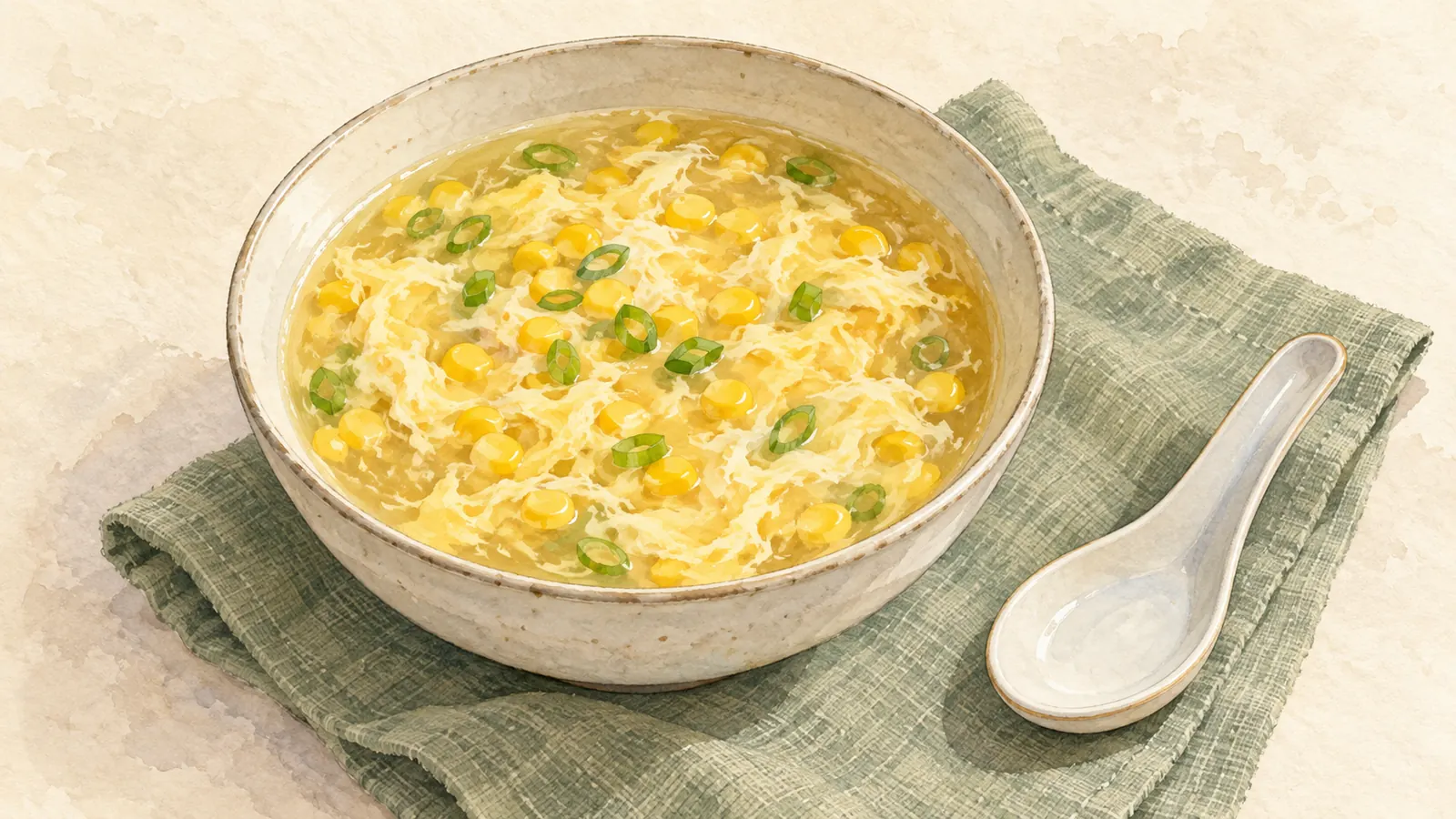
The egg goes in last. By then, the corn should be hot and the broth should flow smoothly from the ladle with a little more body than plain stock. A slow pour gives you pale ribbons between the yellow kernels; a fast stir breaks them into finer flecks.
This is a light soup for the start of a meal or alongside another dish. The canned corn keeps the preparation short, and two whole eggs give both white and yellow strands. Use a broth you enjoy on its own, because its flavor will still be easy to taste.
Corn, broth and the salt already in the pot
Choose plain canned kernels and measure them after draining. Creamed corn brings a different texture and additional liquid, so it is not an equal swap here. There is no need to add sugar before tasting: corn already contributes sweetness, and brands vary.
Chicken broth gives a savory base; vegetable broth works when you want a meat-free soup. Check the label if allergens matter, and remember that the recipe also contains egg and sesame. “Vegetable” on the carton does not tell you everything about its seasonings.
Start with low-sodium broth and hold back the salt until it is hot. Taste a small, cooled spoonful before reaching for the salt measure. A full measure is a limit for this batch, not a step to complete automatically.
Decide on the broth before the ribbons
The starch is there to give the soup a little body. If the ladle lifts a heavy, sauce-like coating, loosen it with hot water before pouring the eggs. It is easier to judge the broth while you can still see it clearly.
For a lumpy slurry, stop and mix it smooth in the bowl. Dry cornstarch stirred straight into hot soup is difficult to distribute. Our cornstarch-slurry guide explains how to make small adjustments without committing a whole extra spoonful of starch to the pan.
Bill Leung’s egg drop soup and chicken corn soup at The Woks of Life inform this adaptation. This version uses canned kernels, omits the chicken pieces and keeps the seasoning short. The important sequence is the same: settle the broth’s consistency before the egg enters.
If the egg forms small flecks
Small flecks are still egg drop soup. Do not keep stirring in an attempt to gather them into larger ribbons. Finish cooking the egg, then serve the texture you have. For broader ribbons next time, slow the ladle and the pour.
Keep the thermometer handy even though the egg changes appearance quickly. The FDA recommends 160°F for dishes containing eggs, along with clean hands and utensils after raw-egg contact. Use a clean ladle for serving rather than the fork used to beat the eggs.
Save a bowl for later
Transfer leftover soup to shallow containers and refrigerate promptly; do not leave the whole saucepan out to cool completely. The USDA’s leftovers guidance supports the storage and reheating limits in the card above. Stir during reheating so the corn and egg warm throughout, and check the temperature before serving.