Recipes
Curry Udon with Mushrooms and Carrots
A warming bowl of thick udon, mushrooms and carrot in Japanese curry broth, with a complete recipe that keeps the stovetop work on one burner at a time.
Jump to recipe ↓Recipe
- Total time
- 35–45 minutes
- Method
- Saucepan
- Difficulty
- Easy
- Allergens
- Wheat · Soy · Milk may be present in curry roux
2 generous noodle bowls
Allow roughly 35–45 minutes. Prepare the broth first, then cook the noodles. Japanese curry roux varies in salt, heat and ingredients; check for meat or fish ingredients if avoiding them. Udon and most roux contain wheat.
Equipment: Large saucepan for the broth, separate noodle pot, colander, ladle, heat-safe small bowl, knife, board and two deep serving bowls.
Ingredients
- 400–500 g frozen udon, about 2 portions, plus water for boiling according to the packet
- 1 tablespoon neutral cooking oil
- 150 g onion, thinly sliced
- 200 g brown button mushrooms, cleaned and sliced about 5 mm thick
- 75 g carrot, cut into thin matchsticks
- 750 ml unsalted vegetable broth or vegetable dashi, plus a little water to loosen if needed
- 50 g Japanese curry roux, chopped; choose a mild or hot version to suit you
- 1–2 teaspoons soy sauce, only as needed after tasting
- 1 scallion, washed, trimmed and thinly sliced
Method
Prepare everything before heating the pan
Slice the onion and mushrooms, cut the carrot finely, chop the roux and slice the scallion. Measure the broth. Read the roux's cooking directions and the udon's boiling directions; leave the noodles frozen until their turn.
Convert a measurement for this stepSoften the vegetables
Heat the oil in the broth saucepan over medium heat. Add the onion and stir until it starts to soften. Add the mushrooms and carrot. Cook, stirring regularly, until the mushrooms release moisture and shrink, roughly 6–8 minutes altogether. Lower the heat if the onion begins to scorch.
Convert a measurement for this stepSimmer until the carrot is tender
Pour in the broth carefully. Bring to a gentle simmer and cook until a carrot matchstick bends and tastes tender, checking after about 5 minutes. Stay at the stove and adjust the heat to prevent a hard boil.
Convert a measurement for this stepDissolve the curry roux
Turn off the heat. Ladle some hot broth into the heat-safe small bowl, add the chopped roux and stir until smooth. Return it to the saucepan. Bring back to a gentle simmer, stirring along the bottom, and cook for the roux packet's finishing time, commonly about 5 minutes. The broth should coat a spoon lightly but still pour easily; stir in small splashes of water if it becomes too thick. Taste a cooled spoonful, then add soy sauce only if it needs salt. Turn off the burner and cover the saucepan.
Convert a measurement for this stepCook the udon separately
Use the now-free burner to bring the noodle pot's water to a boil. Add the frozen udon and cook for the packet's time, easing the strands apart as they loosen rather than pulling at the frozen block. Turn off the burner and drain carefully. Divide the noodles between two deep bowls.
Convert a measurement for this stepBring the broth back to the bowls
Put the broth saucepan back on the burner. Uncover and return to a gentle simmer, stirring so the thickened broth does not catch. Add a splash of water if needed. Turn off the heat, then ladle the hot broth and vegetables over the noodles.
Convert a measurement for this stepFinish with scallion
Scatter the scallion over both bowls and serve straight away with a spoon as well as chopsticks or a fork. The curry broth is hot and can cling to the noodles, so let each lifted mouthful cool before eating.
Convert a measurement for this step
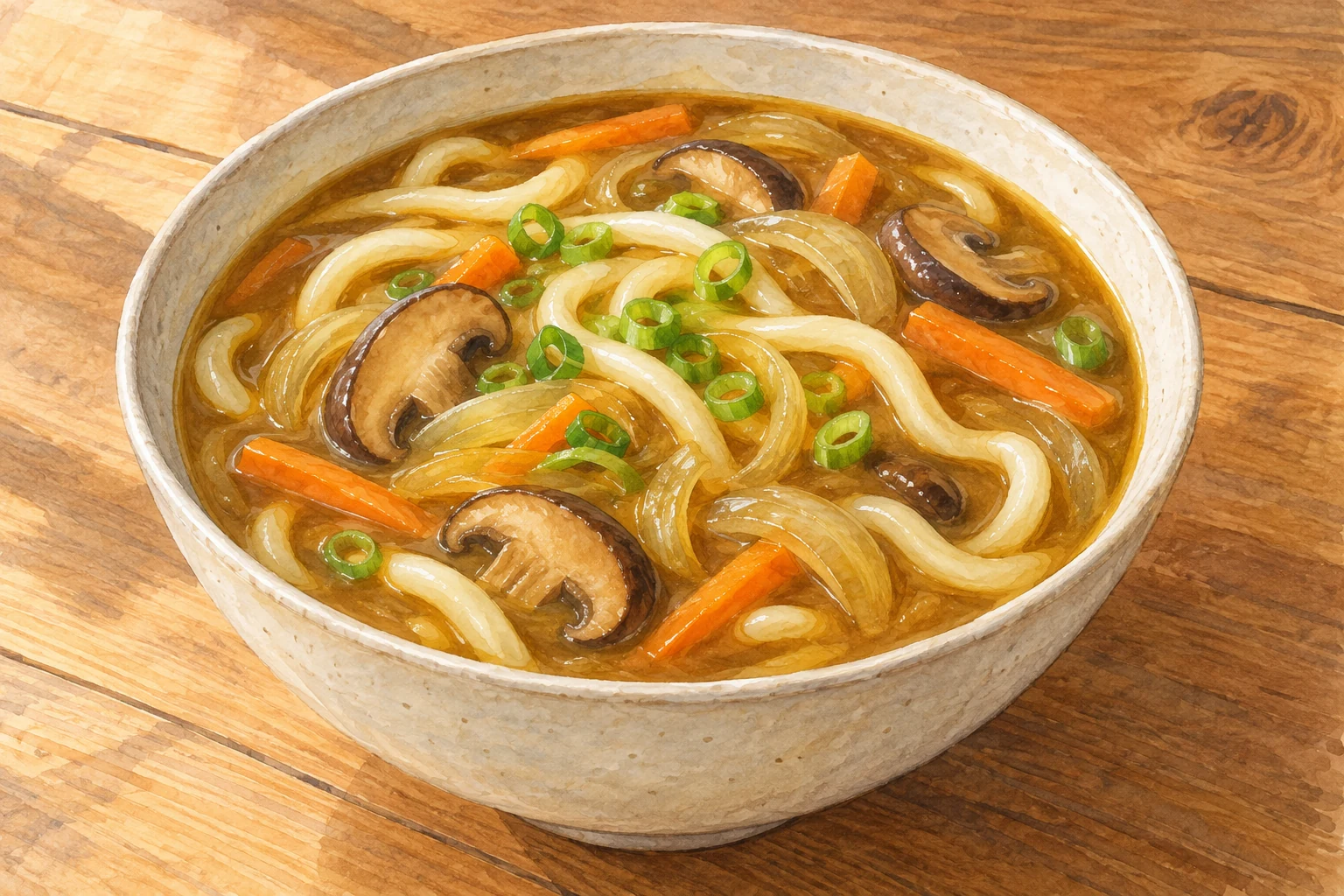
Curry udon needs a spoon. The noodles should sit in broth, not under a mound of sauce meant for rice. Here, mushrooms and fine carrot strips fill out the bowl while a little Japanese curry roux gives the liquid enough body to cling to each thick strand.
The roux-based broth and separate noodle cooking are adapted from Namiko Hirasawa Chen's curry udon. This vegetable version uses brown mushrooms, carrot and unsalted vegetable broth in place of the pork and fish-based dashi.
Before the curry goes in
Cut the carrot thinner than you would for a long-simmered stew. Thick chunks would leave you waiting for their centers while the other vegetables soften. The mushrooms can stay in recognizable slices; they are part of the bowl, not something to disappear into the sauce.
Use unsalted broth if you can. Curry roux already supplies seasoning, and the final spoonful of soy sauce is optional. A dark, heavily salted stock makes that adjustment harder to control.
Vegetable broth does not guarantee a vegetarian bowl. Check the roux for meat or fish ingredients and the dashi for bonito. For allergies, check the whole ingredient list: wheat is common in roux, and other allergens vary. This recipe is not gluten-free simply because it has vegetables instead of meat.
A ladleful should move
Lift some finished broth and pour it back. It should fall freely, carrying vegetables with it. If it drops in heavy folds like a thick gravy, loosen it with a little water and taste again. Yumiko’s curry udon also distinguishes this noodle broth from thicker Japanese rice curry, though her thickening method differs from the roux used here.
Do not add extra roux merely because the broth looks thinner before the noodles go in. Roux changes seasoning as well as thickness. Let it finish cooking first, then judge the texture.
The last pot is for noodles
The broth can wait, covered and off the heat, during the short noodle-cooking step. The cooked noodles are less patient. Get the bowls ready before draining them, then finish the assembly without a long pause.
Cooking udon separately also keeps its boiling water out of the measured broth. Drain well, but do not leave the noodles sitting in a colander while you start another dish. If dinner needs a cold side, smashed cucumber salad can already be chilling, ready for its dressing.