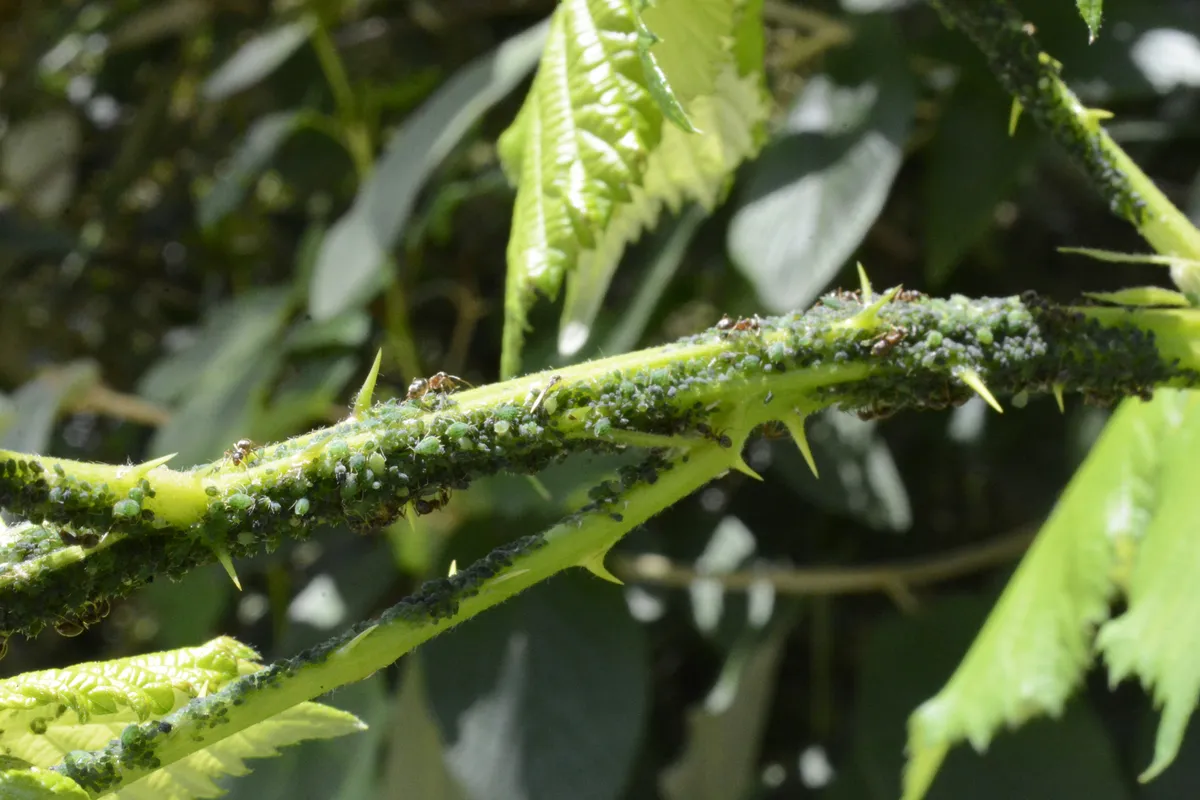
Early pest detection begins with evidence, not a spray bottle. Yellow leaves, wilt, sticky surfaces, pale speckles, distorted growth, and flying insects can point toward a pest, but each clue also has look-alikes. Watering trouble, root damage, low light, temperature stress, mineral residue, and ordinary plant structures can produce similar signs.
The UC Statewide Integrated Pest Management Program notes that unfavorable care and environmental conditions cause many houseplant problems. A useful inspection therefore asks two questions: is a living pest present, and does its location fit the newest damage? Identify the pest before choosing a treatment; no single remedy fits every pest.
Assemble a small inspection kit
Most checks require only a few reusable items:
- a bright flashlight or movable lamp;
- a 10-power hand lens or similar magnifier;
- plain white paper or a white card;
- a phone or camera for close, dated photographs;
- a clean soft brush or fine probe for examining a suspicious structure; and
- a note with the plant name, inspection date, affected locations, and recent care changes.
Clemson Cooperative Extension recommends magnification and close attention to leaf undersides because small and immature stages are easily missed. Good light matters as much as magnification. Move the leaf, not only the lens, so that bumps, wax, webbing, and cast skins are visible from several angles.
Do not carry the same brush, cloth, or fallen plant debris from one pot to another. Wash hands after handling a suspect plant, and clean reusable tools before inspecting the next plant. Photograph a finding before scraping or removing it; the original position may help an Extension specialist identify it later.
Inspect in a repeatable order
Start with the entire plant from a short distance. Compare the upper and lower canopy, the side facing the window, and the side facing the room. Note whether damage is limited to one branch, concentrated on new growth, or distributed across several plants. A one-sided scorch pattern may support an environmental cause, while a cluster of sticky, distorted new leaves may justify a closer pest search.
Then inspect each zone:
- New leaves, buds, and flowers: Look inside folds and between petals for live insects, shed skins, dark fecal spots, scarring, or distorted tissue.
- Leaf undersides: Follow the main veins and margins. Search for moving dots, pale stippling, waxy bodies, eggs, webbing, or fixed bumps.
- Leaf axils and stem joints: Examine protected crevices where cottony material, scales, or other sap-feeding insects may collect.
- Stems and petioles: Compare suspicious bumps with the same structure on healthy growth. Lenticels, scars, glands, and corking are normal on some plants.
- Potting-mix surface and pot rim: Check for small flies, larvae, shed material, persistent dampness, algae, fallen leaves, and blocked drainage.
- Drainage holes and outer pot: Look for standing water, insects, roots, or debris without tearing apart a healthy root ball solely to search for pests.
- Nearby surfaces and neighboring plants: Sticky residue, cast skins, fallen frass, or insects on a windowsill can help map how far a problem extends.
Iowa State University Extension and Outreach advises checking whether light, water, humidity, temperature, soil, and fertilizer suit the plant before assigning symptoms to an insect. Record those conditions alongside pest evidence. Several stresses can occur at the same time.
Separate direct evidence from supporting clues
A single symptom rarely proves a diagnosis. Sort observations into three evidence levels:
| Evidence level | Examples | What it can establish |
|---|---|---|
| Direct | A live insect or mite, attached scale body, larva in the mix, or identifiable eggs | A pest is present at the sampled location |
| Supporting | Fresh stippling, silver scars, honeydew, sooty mold, webbing, cast skins, or fecal spots | A pest diagnosis is plausible and deserves targeted inspection |
| Context | Wet mix, dusty leaves, a recent plant arrival, open flowers, or time outdoors | Conditions or pathways that may affect risk, but not proof of a pest |
Use a white-paper test for tiny mobile pests: hold paper beneath suspect foliage, tap the leaf gently, and inspect anything that falls with the hand lens. Moving specks justify a closer mite or thrips comparison; dust and potting particles do not. Sticky cards can show that winged insects are active and help compare counts over time, but they cannot identify every captured insect or sample eggs and nonflying stages. Colorado State University Extension cautions that trapping alone does not eliminate an infestation because much of a pest population may remain on the plant or in the potting mix.
Match the evidence to the right guide
Use these clue groups as routes, not final diagnoses:
- Fine pale stippling, moving dots on a white-paper test, and webbing close to foliage support checking the spider-mite identification guide.
- Segmented insects beneath cottony or powdery wax in axils, folds, or around stems support checking the mealybug guide.
- Tan, brown, gray, or waxy bumps fixed along stems or veins require comparison with the scale-insect guide. A bump alone may be normal plant tissue or an old empty cover.
- Slender live insects found in folded growth or flowers, especially with fresh silver scarring and dark fecal spots, support checking the thrips guide.
- Delicate dark flies centered on moist potting mix, with larvae confirmed in the root zone, support checking the fungus-gnat plan.
Aphids, whiteflies, springtails, leafminers, caterpillars, and other organisms can also occur indoors. The University of Maryland Extension indoor-insect directory links current identification material for several of these groups. A county Extension office or diagnostic clinic can assess clear photographs or a safely contained sample when the organism remains uncertain.
Check look-alikes before escalating
Sticky leaves can indicate honeydew from a sap-feeding pest, but spilled drinks, guttation, nectar, and plant sap are possible alternatives. White material may be wax from a mealybug, mineral residue, mildew, dried sap, or a normal hairy surface. Brown bumps may be scale, corking, leaf scars, glands, or fern sori. Webbing can come from a spider rather than spider mites.
Plant decline is equally nonspecific. UC IPM’s houseplant diagnostic guide lists water, drainage, fertilizer salts, light, temperature, humidity, root disease, and pests among overlapping causes of yellowing, wilting, and leaf injury. If no pest is found, inspect moisture and roots rather than repeatedly applying a product to a symptom. The site guides to brown leaf tips and root-rot identification provide diagnosis-first next steps for those patterns.
Triage a confirmed or strongly suspected pest
Move a suspect plant far enough from nearby foliage that leaves do not touch and routine care will not brush from one plant to the next. Also inspect the closest plants and any shared tray, shelf, tool, or watering equipment. The appropriate separation period depends on the identified pest, its life stages, the response used, and what repeated inspections show; a fixed calendar cannot prove that a plant is clear.
Create a baseline before removing evidence:
- photograph the organism and newest damage;
- mark or record which leaves, stems, and pots are affected;
- estimate whether the finding is isolated, repeated, or widespread;
- record any captured insects or fresh injury at each follow-up; and
- decide whether the plant can be handled without exposing people, pets, or other plants.
Avoid jumping from an unidentified speck to a household remedy. Different pests occupy different sites and life stages, and plant species vary in sensitivity. The pest-specific guides explain the relevant evidence and integrated-pest-management options without assuming that alcohol, neem, detergent, or insecticidal soap is suitable for every plant or pest.
If a pesticide is considered, the exact product label must allow indoor use, list the target pest and applicable plant or site, and be followed for dose, protective equipment, ventilation, reentry, storage, and disposal. The U.S. Environmental Protection Agency recommends nonchemical methods where possible, using only recommended quantities, increasing ventilation for indoor use, and never using a pesticide in a way that conflicts with its label. More product is not more protection.
Use the checklist during routine care
Inspection works best when attached to watering, cleaning, or another regular task, with extra checks after a new plant arrives, a plant returns from outdoors, flowers or cuttings enter the room, or fresh damage appears. Frequency should reflect evidence and risk: a newly suspect plant needs closer observation than a stable collection with no new findings.
For each inspection, answer five questions:
- Is there a live organism, and can it be photographed or sampled?
- Where is the newest damage, and does the organism occupy that tissue?
- Are neighboring plants or shared surfaces affected?
- Could water, roots, light, temperature, residue, or normal anatomy explain the sign?
- Which pest-specific guide or Extension resource owns the next decision?
Early detection does not mean treating every dot. It means noticing change, preserving enough evidence to identify the cause, limiting avoidable spread, and choosing the narrowest appropriate next step.
Sources
- Houseplant Problems (University of California Statewide Integrated Pest Management Program). Accessed August 25, 2026.
- Diagnosing Houseplant Problems Caused by Insect Pests (Iowa State University Extension and Outreach). Accessed August 25, 2026.
- Common Houseplant Insects & Related Pests (Clemson Cooperative Extension). Accessed August 25, 2026.
- Managing Houseplant Pests (Colorado State University Extension). Accessed August 25, 2026.
- Indoor Plant Insects (University of Maryland Extension). Accessed August 25, 2026.
- Pesticides' Impact on Indoor Air Quality (U.S. Environmental Protection Agency). Accessed August 25, 2026.