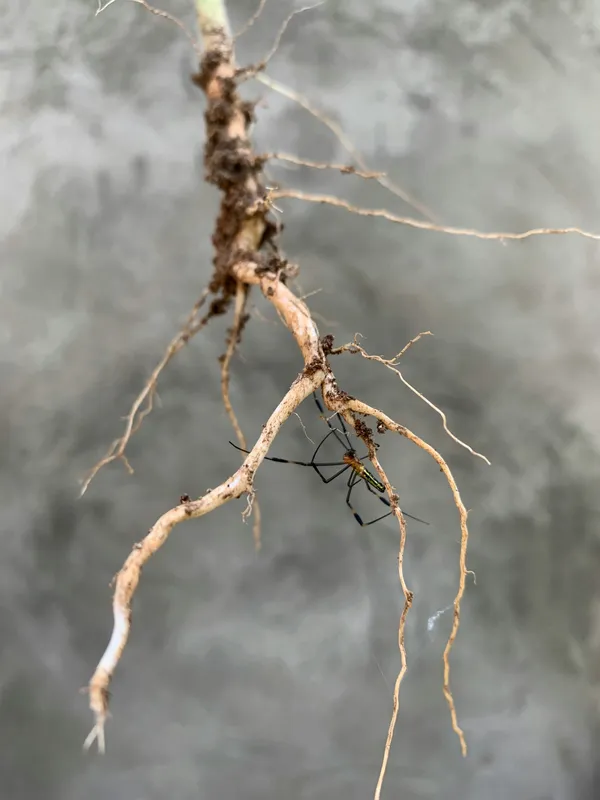
“Root rot” describes damage and decay in a plant’s root system; it is not a diagnosis of one single organism. Roots can first be stressed by saturated, poorly aerated potting mix, and several fungi or fungus-like organisms can then produce similar symptoms. Because yellowing and wilting also have many non-disease causes, the leaves alone cannot confirm root rot.
The most useful first move is to stop guessing from the watering calendar. Check the potting mix, drainage, and recent care changes. When the evidence justifies disturbing the plant, inspect the roots themselves.
Signs that justify a closer inspection
Possible above-ground signs include:
- wilting even though the potting mix is still moist;
- lower leaves yellowing or dropping;
- stalled or weak growth;
- dark, soft tissue near the base of the stem; and
- a pot that stays wet much longer than expected.
None is conclusive on its own. A thirsty plant can wilt. A newly moved plant can lose leaves. Low light, cold damage, pests, fertilizer injury, and a severely root-bound pot can also produce poor growth.
Before unpotting, check simple explanations:
- Is the mix actually wet below the surface? A dry top layer can hide moisture deeper down.
- Does the container have an open drainage hole?
- Is the inner nursery pot standing in water inside a decorative outer pot?
- Was the plant recently moved, chilled, fertilized, or repotted?
- Are there visible insects, webbing, scale bumps, or sticky residue?
If the plant is wilting in persistently wet mix or the stem base is soft, a root inspection is warranted.
What healthy and damaged roots look like
Slide the plant from its pot while supporting the root ball. Do not pull hard on the stems. Loosen only enough mix to inspect several areas, including the center and bottom.
Healthy roots vary by species, so color is not the only test. They are generally firm and hold together when handled. The University of Maryland’s indoor-plant diagnostic guide describes healthy roots as light-colored and firm, while diseased roots appear dark and soft.
The university’s more detailed root-rot guide lists these warning signs:
- roots that are brown to black and soft or mushy;
- an outer root layer that slips away, leaving a thin core;
- darkened, soft root tips;
- brown, collapsed lower stems; and
- much of the root system remaining behind in the old medium when the plant is lifted.
One brown root does not automatically mean the entire plant is lost. Assess how much firm root and healthy stem tissue remains.
Decide: correct care, salvage, or discard
Use the least disruptive response that fits the evidence.
| What you find | Sensible next step |
|---|---|
| Roots are firm; mix is merely too wet | Improve drainage and watering practice without cutting healthy roots |
| A limited section is soft, but substantial firm roots and stem remain | Remove decayed tissue and repot the healthy remainder in clean conditions |
| Most roots and the stem base are soft or blackened | Discard the plant, or take a cutting only from clearly healthy tissue if that species can be propagated that way |
| The plant is valuable and the cause is unclear | Ask a local Extension office or plant diagnostic lab before applying a pesticide |
Severely affected plants often do not recover. Keeping one beside healthy plants can also preserve contaminated potting mix and drainage water. Maryland Extension advises separating infected plants and discarding severely infected specimens.
How to salvage a plant with limited damage
- Isolate the plant. Work away from healthy plants and do not allow old mix or runoff to contact them.
- Remove the old medium. Gently tease or rinse enough away to see the affected roots. Do not reuse it.
- Cut only decayed tissue. With a clean, sharp tool, remove roots that are unmistakably soft, collapsed, or mushy. Keep firm tissue. Clean the tool before using it on another plant.
- Choose a clean container. Use a new pot or clean a reusable one thoroughly. The pot needs an unobstructed drainage hole.
- Use fresh, packaged houseplant mix. Maryland Extension recommends sterile potting medium rather than garden soil. Choose a mix suited to the species.
- Repot without oversizing. A container only slightly larger than the remaining root system is easier to manage than a large volume of wet mix.
- Water to settle the mix, then drain it fully. Empty the saucer or outer pot. Do not leave the root ball standing in runoff.
- Return the plant to suitable light and temperature. Avoid adding fertilizer while roots are damaged and growth is stalled.
Do not automatically soak roots in household peroxide, cinnamon, bleach, or an unlabeled pesticide. A product that is not labeled for the plant and problem may damage remaining roots without controlling the actual pathogen. If a confirmed disease needs chemical control, follow local Extension or diagnostic-lab guidance and the product label.
Prevent the conditions that favor root damage
Use real drainage
The University of Illinois Extension’s container-drainage guidance explains that a bottom hole lets excess water leave so air can reach roots. Gravel at the bottom does little to prevent the potting mix above it from remaining saturated. A better setup is a plant in a draining nursery pot placed inside a decorative cover pot; remove it to water, let it drain, and empty the cover pot before replacing it.
Check attached saucers, cachepots, and self-watering reservoirs. A pot can have a hole and still sit in collected water.
Match the pot to the root system
More potting mix is not automatically safer. The University of Illinois houseplant-starting guide warns that placing a small plant in a much larger pot can keep the mix wet too long and increase root-rot risk. When a healthy plant truly needs repotting, move up gradually rather than jumping several sizes.
After removing rot, size the new pot for the remaining roots, not the canopy the plant had before damage.
Water from evidence, not weekdays
Plant species, pot material, root mass, light, temperature, humidity, and season all change how fast a container dries. Check moisture before watering. For a small pot, a finger test may be enough; for a deeper container, use a wooden skewer, the pot’s weight, or a moisture check lower in the mix.
When the plant is ready, water thoroughly enough to moisten the root ball, allow excess to drain, and discard the runoff. Frequent small sips can leave part of the root ball dry while keeping another part continually damp.
Use the right medium and light
Use fresh potting mix formulated for containers and appropriate for the species, not dense outdoor garden soil. Make sure the plant receives enough light for healthy growth: a plant in very low light generally uses water more slowly. Do not compensate for poor light with extra fertilizer or a rigid watering schedule.
Avoid three common misdiagnoses
“The leaves wilted, so it needs more water.” Wilting can happen when damaged roots cannot supply the leaves even though the mix is wet. Check moisture first.
“Every dark root is rotten.” Root color differs among species and ages. Texture, integrity, distribution of damage, and plant-specific knowledge matter.
“A drainage layer fixes a pot without a hole.” It does not provide an exit for excess water. Use a container with a functioning hole or a removable inner pot.
Recovery checklist
- The diagnosis is based on inspected roots, not leaf color alone.
- Soft, collapsed tissue and old potting mix have been removed.
- The replacement pot is clean, appropriately sized, and drains freely.
- Fresh container mix matches the plant type.
- Runoff is emptied after watering.
- Watering responds to actual moisture and growing conditions.
- The recovering plant is kept separate while its condition is monitored.
- Professional diagnosis is sought when a valuable plant continues to decline.
Root rot is easier to prevent than reverse. Good drainage, appropriately sized containers, clean potting medium, enough light, and moisture checks based on the plant’s actual condition address the factors a houseplant owner can control.
Sources
- Root Rots of Indoor Plants (University of Maryland Extension). Accessed August 5, 2026.
- Diagnose Indoor Plant Problems (University of Maryland Extension). Accessed August 5, 2026.
- Get Started With Houseplants (University of Illinois Extension). Accessed August 5, 2026.
- Container Drainage Options (University of Illinois Extension). Accessed August 5, 2026.