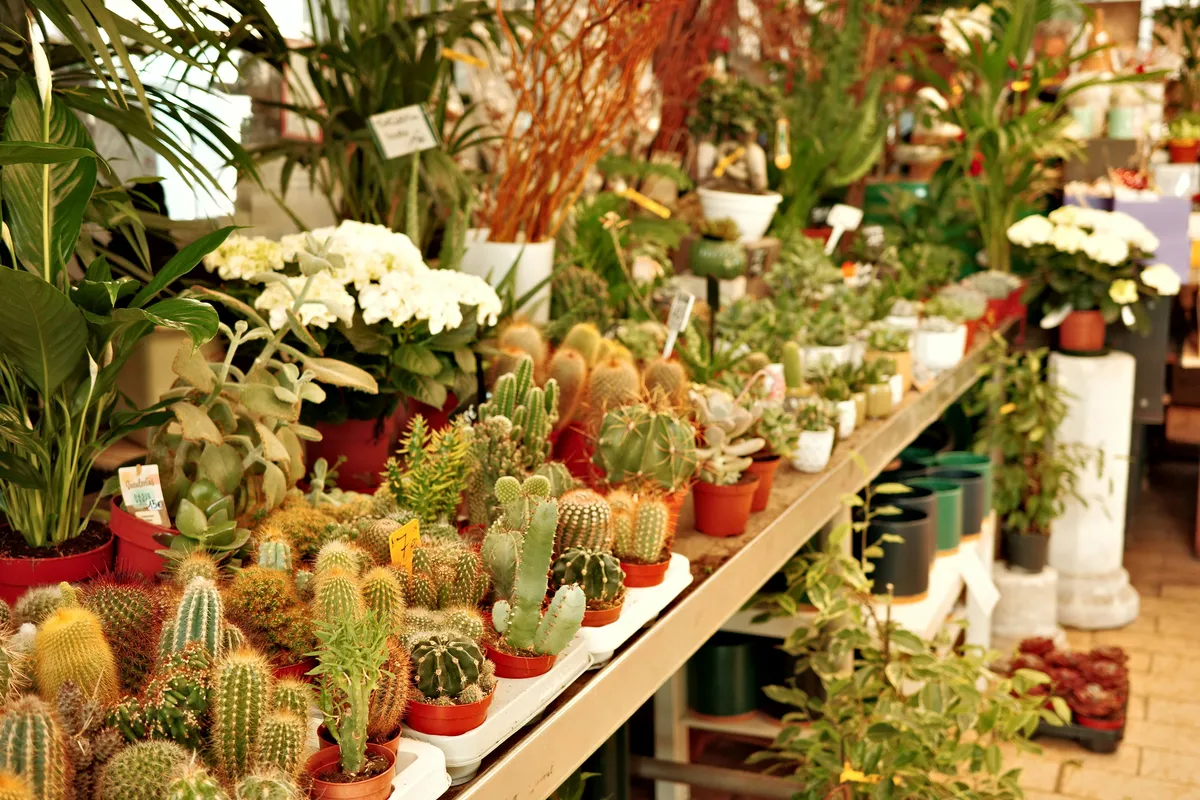
I have selected plants at nurseries, and I try not to let retail lighting or one perfect leaf make the decision for me. An attractive plant can still bring home damaged roots, pests, or requirements my space cannot meet. Conversely, one torn leaf or old flower does not make an otherwise healthy plant a bad purchase.
My nursery inspection separates three questions:
- Is this the right species or cultivar for the intended location?
- Is this individual structurally and biologically sound?
- Can any known defect be managed without risking other plants?
I can usually complete this process in about ten minutes for a houseplant or container-grown ornamental. Trees, shrubs, orchids, bulbs, cacti, and dormant plants need additional species-specific checks. The pest, disease, root, and siting criteria below remain checked against the cited horticultural sources.
Do the fit check before the health check
A healthy plant becomes a poor purchase when its needs conflict with the destination. Before comparing specimens, read the botanical name on the tag and verify:
- mature height and spread;
- indoor or outdoor use and, for perennials, local hardiness;
- light requirement at the intended location;
- temperature and humidity tolerance;
- pet or child toxicity;
- whether the plant needs a pollination partner, support, dormancy, or another special condition.
“Low light” and “full sun” are not decorative labels. Estimate the actual hours and intensity at home, including seasonal changes. The University of Minnesota indoor-pest guide emphasizes choosing a plant whose light, humidity, and temperature needs match the environment because stressed plants are less able to withstand pests.
If the tag is vague or uses only a trade name, ask staff for the botanical name. Do not base a long-term plant choice on a generic label such as “tropical foliage.”
Use the batch as your reference
Compare several plants of the same labeled species. The batch provides a baseline for normal color, variegation, habit, and seasonal stage. A pale ‘Neon’ pothos, spotted begonia, fern with spore-bearing structures, or dormant perennial can be normal even though it fails a generic “dark green leaves” rule.
Prefer a specimen with a balanced form, intact growing points, and foliage typical of its cultivar. New growth is encouraging during an active season, but its absence is not proof of poor health; a recently shipped, slow-growing, or dormant plant may be sound.
Cosmetic damage and systemic decline look different. One creased leaf or a scar from handling is usually limited. Repeated yellowing, wilting across the plant, distorted new leaves, spreading spots, branch dieback, or a collapsing crown calls for a closer check.
Inspect in a fixed order
1. Scan the top, then the underside
Stand back first. Is the canopy reasonably balanced, or is the plant sparse, leaning, and stretched? The University of Illinois houseplant guidance recommends foliage of the correct color, shape, and size, without widespread blemishes or pale lower leaves, and a plant that is balanced rather than leggy or top-heavy.
Then inspect several leaves from different parts of the plant, including the newest growth and the oldest lower leaves. Turn them over. Check leaf axils, petioles, stems, the pot rim, drainage holes, and the shelf beneath the plant. A phone flashlight and a small 10-power hand lens reveal far more than overhead store lighting.
Look for:
- fine webbing, stippling, or moving dots;
- white cottony clusters;
- attached tan or brown bumps;
- insects, cast skins, eggs, or black fecal specks;
- sticky honeydew or black sooty growth;
- serpentine mines, chewed edges, or clusters of holes;
- distorted or mottled new growth.
The University of Minnesota Extension inspection protocol specifically calls for checking both leaf surfaces, webbing, holes, eggs, discolored leaves, containers, rims, and crevices. One pest sign is enough to pause the purchase. Do not assume a spray at home will be simple or risk-free.
2. Check stems, crown, and trunk
Stems should be firm for that species and attached at sound nodes. Reject a plant with soft, water-soaked, sunken, or expanding dark areas on stems, the crown, or the root collar. Minnesota Extension’s disease-prevention guidance advises rejecting transplants with dark, discolored, or soft sunken spots on leaves, stems, or roots.
For woody plants, inspect the whole trunk rather than accepting wrap or ties that hide it. Look for splits, cankers, severe abrasions, weak branch unions, and a trunk that disappears unusually deep into the container. Penn State Extension warns that nursery wrapping can conceal wounds, bark damage, cankers, or insect injury.
A gentle stability test can reveal a problem, but interpret it carefully. A loose plant may have a small or damaged root system, or it may simply have been potted recently. Ask staff rather than shaking or pulling the plant.
3. Read the potting medium
The medium should be appropriate to the plant, not necessarily uniformly dark or moist. Note these warning patterns:
- water standing in a sleeve, cachepot, or saucer;
- a sour or rotten smell;
- a crown buried beneath fresh mix;
- heavy algae plus persistently saturated media;
- abundant fungus gnats rising when the pot is moved;
- weeds, mushrooms, or pests emerging from drainage holes.
Fungus gnats do not automatically mean the plant is dying, but they indicate a pest is already present and commonly accompany wet organic media. That changes the purchase from a clean addition to a quarantine-and-management project.
Mineral crust on the pot or medium is evidence of salt accumulation, not a complete diagnosis. It may be manageable, but ask how the plant has been watered and fertilized and inspect the roots before deciding.
4. Inspect roots with permission
Ask a staff member before sliding a root ball from its pot, especially with large, brittle, or expensive plants. Support the stem base and root ball; do not pull on foliage.
A good container-grown root system generally holds the medium together and has a network of firm roots near the outside without being a solid, circling mass. The University of Illinois nursery inspection guide describes healthy roots as light-colored and roots with problems as darker, possibly mushy, or foul-smelling. Color is species- and media-dependent, however, so texture, odor, and distribution matter more than “white equals healthy” by itself.
Avoid a plant with soft, slimy, collapsing roots or a strong rotten odor. Also note the degree of root binding:
- Lightly rooted: The root ball holds together, with fine roots reaching its edge. Usually a good sign.
- Moderately pot-bound: Roots are visible around the edge or through a few drainage holes, but much of the medium remains visible. Often manageable for an herbaceous houseplant with timely repotting.
- Severely root-bound: A dense mat circles repeatedly, the container is distorted, or there is little visible medium. Choose another specimen when possible.
- Poorly rooted: The medium falls away from a small root system or the plant is unstable. Ask whether it was just potted; otherwise, pass.
The distinction matters most for trees and shrubs. Penn State Extension warns that dense circling roots can later become girdling roots and reduce plant quality and lifespan. A discounted woody plant with major root defects is rarely a bargain.
Make a buy, caution, or reject decision
| Finding | Decision | Reason |
|---|---|---|
| Species-appropriate color, balanced growth, firm stems, clean foliage, sound roots | Buy | No major defect found, though quarantine still applies |
| One torn mature leaf or spent flower; rest of plant is sound | Usually buy | Local cosmetic damage does not imply systemic disease |
| A few roots at drainage holes, otherwise firm and distributed | Buy with a repot plan | Likely outgrowing the pot but not necessarily unhealthy |
| Severe circling roots, distorted pot, or buried/defective trunk base | Choose another | Establishment and long-term structure may be compromised |
| Sticky residue, webbing, cottony masses, scale-like bumps, eggs, or active insects | Reject | High risk of bringing pests to other plants |
| Soft sunken lesions, rotten odor, mushy roots, collapsing crown | Reject | Evidence supports active rot or disease |
| Widespread mottling or distorted new growth with no clear physical cause | Reject | Could be pest, chemical, or infectious damage; visual diagnosis is uncertain |
| Clearance plant with simple drought wilt but clean, firm roots and stems | Optional project | Recovery is possible but not guaranteed; isolate it |
Leave plants with uncertain pest or disease problems at the store. A low purchase price does not offset treatment time, diagnostic cost, or exposure of an established collection.
Ask four questions before checkout
Ask staff:
- What is the exact species and cultivar?
- When did this shipment arrive, and was the plant grown indoors, in a greenhouse, or outdoors?
- Has the plant recently been repotted or treated for a pest or disease?
- What is the return or plant-health guarantee?
Answers add context, but the inspection remains the deciding evidence.
Protect the plant and your collection after purchase
Avoid temperature extremes during transport. Do not leave a plant in a parked vehicle, and cover tropical foliage during cold-weather movement. At home, place it in conditions close to its documented needs rather than immediately subjecting it to the brightest possible window.
Keep the new plant separate from existing plants for two to three weeks. Illinois Extension recommends two to three weeks, while Minnesota Extension recommends at least one to two weeks so concealed pests have time to appear. Separation means enough distance that leaves do not touch and crawling pests cannot simply cross the shelf.
During quarantine:
- inspect both leaf surfaces, stems, and the pot every few days;
- use a sticky card to monitor flying insects if appropriate;
- water according to the root zone, not the store’s prior schedule;
- avoid fertilizing while the plant adjusts;
- repot immediately only when drainage, active rot, or a severe root defect requires it.
Some leaf drop or yellowing can occur as a plant adjusts to different light and humidity. That does not excuse progressive collapse, pests, soft roots, or spreading lesions. If a problem appears, keep the plant isolated and identify it before treating.
The limit of a store inspection
No visual checklist can certify that a plant is pathogen-free. Eggs can be microscopic, roots are partly hidden, and environmental and infectious problems can look alike. Inspection reduces risk; it does not create certainty.
For an expensive specimen, regulated plant, or plant with unexplained symptoms, ask the nursery for provenance and health documentation or send clear photos and a sample to a local Extension diagnostic service. Walking away from an uncertain plant is a valid horticultural decision. A healthy collection is worth more than one irresistible pot.
Sources
- Get Started: Houseplants (University of Illinois Extension). Accessed August 5, 2026.
- Managing insects on indoor plants (University of Minnesota Extension). Accessed August 5, 2026.
- Buyer Beware: Inspect Plant Material Closely Before Purchase (University of Illinois Extension). Accessed August 5, 2026.
- Planting Ornamentals (Penn State Extension). Accessed August 5, 2026.
- Managing plant diseases in the home garden (University of Minnesota Extension). Accessed August 5, 2026.