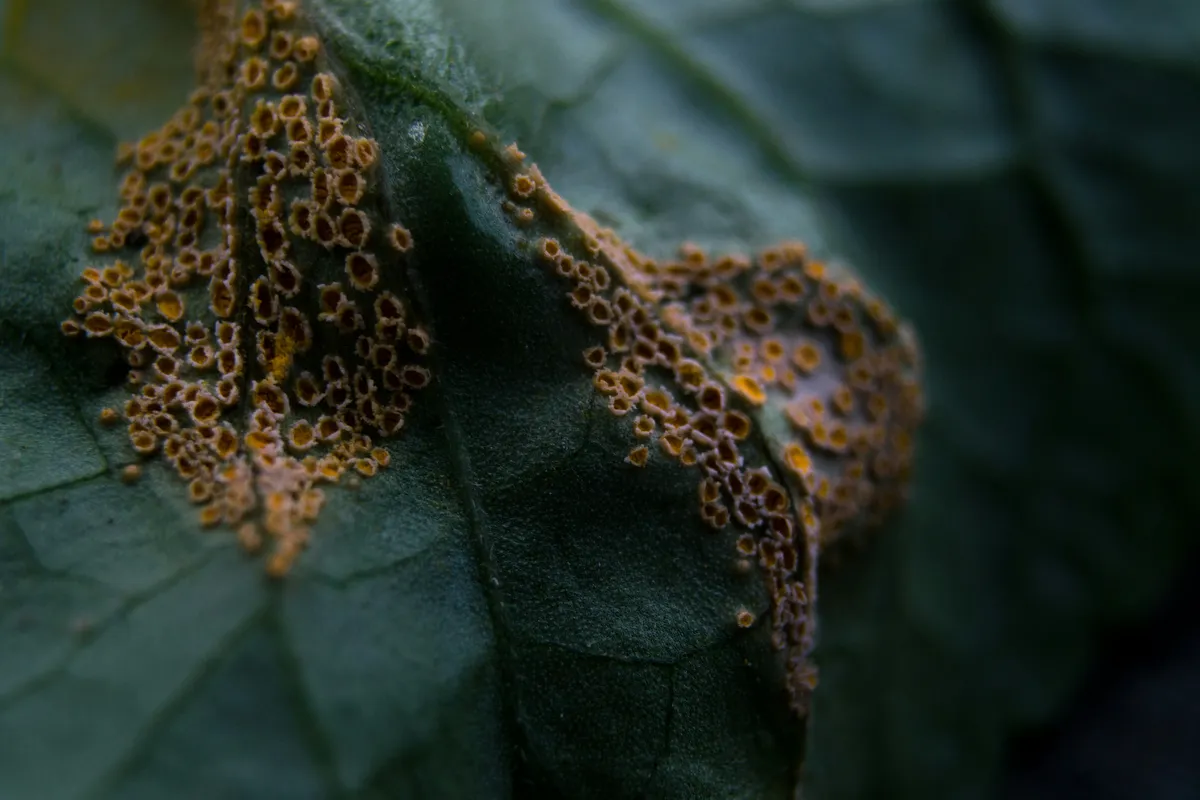
Thrips are tiny, narrow insects that feed on leaves, buds, flowers, and other plant tissue. Their feeding can leave irregular silvery scars, pale stippling, distorted new growth, streaked petals, and small dark fecal spots. Those marks remain after the insects leave, so visible damage does not prove an active infestation.
Some thrips feed on plants, some are predators, and a thrips species found on a plant may not damage that host. Positive species identification generally requires microscopic expertise. A houseplant response should therefore begin with live-pest monitoring and fresh injury, not a photograph of an old silver patch.
Confirm activity, not just damage
Inspect unfolding leaves, buds, flowers, and protected folds as well as mature leaf undersides. Adult and immature thrips are slender and usually tan, yellowish, brown, or dark. Adults have narrow fringed wings but may run before they fly. The University of Minnesota indoor-pest guide describes the characteristic irregular silvery streaks or splotches, flower distortion, and shiny dark excrement associated with feeding.
Gently tap suspect foliage or flowers over white paper and examine what falls with a hand lens. A narrow insect that moves quickly supports the diagnosis. Sticky cards placed near the canopy can capture flying adults, but they do not sample eggs inside tissue or immature stages on the plant.
The UC Statewide IPM thrips guide makes two important distinctions: color cannot reliably identify thrips to species, and finding thrips does not automatically mean they are causing unacceptable damage. Evaluate the insect, its location, and new symptoms together.
| Evidence | Meaning | Limitation |
|---|---|---|
| Slender live insects fall from damaged tissue | Active thrips are likely | Species and pest status remain uncertain |
| Fresh silver scarring plus dark fecal dots | Feeding is likely continuing | Mites and other causes can overlap |
| Adults on a sticky card | Flying thrips are present nearby | The trap cannot locate the host or measure the entire population |
| Distorted bud opens with old scars but no insects | Damage may predate inspection | Do not spray based on the scar alone |
| Rings, mosaic, necrotic patches, or severe unexplained distortion | Possible disease or another disorder | Viral infection requires laboratory diagnosis |
Photograph several reference leaves and the newest growth. Record trap location and capture count at each check. Replace a card when dust, insects, or lost tack makes comparisons unreliable; follow its manufacturer instructions and keep it where children, pets, and hair cannot contact the adhesive.
Understand why control is difficult
Thrips pass through egg, feeding larval, nonfeeding prepupal and pupal, and adult stages. Females of many plant-feeding species insert eggs into leaves or buds. For many species, later immature stages move to soil, litter, crevices, or galls; other species remain on leaves. The Colorado State University houseplant-pest review explains that eggs within plant tissue and immature stages in soil can be inaccessible to foliar sprays.
That biology does not justify automatically replacing soil or spraying on a fixed weekly calendar. It means one contact application cannot be assumed to reach every stage. Species, temperature, hiding site, product persistence, and label restrictions determine what follow-up is appropriate.
Isolate and inspect the exposure zone
Move the plant so its leaves and flowers cannot touch other plants. Adult thrips can fly, so inspect the full nearby group rather than relying on a small distance rule. Use white-paper taps on plants with fresh damage and place monitoring cards where they can show whether adults are moving through the area.
Bag removed flowers, buds, leaves, and fallen debris before carrying them away. Clean tools and hands after handling the isolation group. Do not reuse potting debris or move drainage water from an infested plant into clean pots.
If only one branch or flower cluster is active, pruning it can remove protected feeding and egg-laying sites. Avoid indiscriminate defoliation: green tissue is needed for recovery, and pruning can stimulate susceptible new growth on some plants.
Build an IPM response
Keep the plant capable of recovery
Provide light, irrigation, drainage, and temperature appropriate to the species. A stressed plant can show more severe injury, but extra fertilizer is not a thrips treatment. Do not overfeed a damaged plant or keep its root zone wet in an attempt to control soil stages.
Remove spent flowers and dead material that interfere with inspection. On durable plants, rinse foliage, shoot tips, and leaf undersides with a firm but non-damaging stream of water, shielding the potting mix from flooding. Washing can reduce exposed stages; it does not reach every egg or hidden thrips.
Use sticky cards as an early-warning system
Yellow or blue cards can monitor flying adults. Place and number them consistently, then compare captures over time. A falling count supports progress only when plant inspections also find less live activity and clean new growth. A card alone is not control: much of the population can remain in tissue, on the plant, or in the growing medium.
Treat only when injury or spread justifies it
Low numbers on a stable woody plant may be tolerable, while active injury to a small herbaceous plant, developing flower, or vegetable seedling may justify faster intervention. Consider plant value, rate of new damage, ability to isolate, proximity of susceptible plants, and whether the crop is edible.
Commercial insecticidal soap or horticultural oil can suppress exposed thrips when the exact product label permits indoor use on the plant and lists thrips. UC IPM notes that contact materials require thorough coverage of buds, shoot tips, and other sites where thrips feed. Some pesticide active ingredients perform better on particular thrips, but resistance and species differences make a generic product recommendation unreliable.
Do not substitute dish detergent, essential-oil mixtures, or a homemade neem recipe for a registered formulation. Do not assume a systemic product will solve an unidentified infestation, and never apply an ornamental-only product to herbs, fruiting plants, or edible leaves. If the plant will later go outdoors or flower, review all pollinator and environmental restrictions as well as indoor-use language.
Let the label and monitoring control repetition
Before an application, count live thrips on the reference leaves and cards and mark the newest undamaged leaf. Afterward, reinspect at the earliest interval the label allows; do not shorten that interval. Repeat only if the label permits and live thrips, fresh feeding, or continued spread shows a need.
| Monitoring result | Appropriate response |
|---|---|
| Traps decline and new leaves expand cleanly | Continue isolation and observation without automatic spraying |
| Old scars remain but no live stages or new injury appear | Record recovery; scars are not treatment failure |
| Live adults fall from buds but leaves are clean | Inspect and remove protected flower or bud sites before escalating |
| Larvae and fresh scars continue despite better coverage | Recheck the product label and obtain identification advice |
| Trap captures rise on nearby plants | Expand the exposure map and manage each confirmed host |
| Symptoms progress without live thrips | Stop treating and pursue a plant-disease or cultural diagnosis |
End isolation after repeated checks of new growth, flowers, paper samples, and traps find no live stages or fresh injury across more than one opportunity for concealed stages to emerge. A universal number of sprays or days is inappropriate because indoor temperature and thrips species alter development.
Virus concerns require laboratory help
Some thrips can transmit plant viruses, including tomato spotted wilt virus and impatiens necrotic spot virus. Symptoms overlap with nutritional, chemical, and other infectious problems. UC IPM states that suspected thrips-vectored viruses can be reliably diagnosed only through properly collected samples tested by a plant-pathology laboratory.
Keep a suspect plant isolated and contact an Extension office for sampling instructions. Do not propagate it or share cuttings. If a laboratory confirms a transmissible virus, follow the diagnostician’s disposal and sanitation directions; pesticides cannot cure an infected plant.
When disposal or professional help is the better decision
Discard in a sealed bag when a replaceable plant is badly damaged and still supporting active thrips, flowers and growing points are too dense to inspect or treat, a suspected virus threatens other plants, or isolation is not feasible. Avoid placing suspect viral or heavily infested material in compost near host plants.
Consult Extension, a plant clinic, or a licensed pest professional when species identity affects the plan, a valuable collection is exposed, a food crop is involved, a shared building limits legal treatments, symptoms suggest a virus, or correctly applied label-compliant tactics do not reduce live counts.
In the United States, the EPA states that pesticide labeling is legally enforceable and determines site, target, dose, frequency, protective equipment, and other conditions. Read the label before purchase as well as before use. Keep products in their original containers and follow ventilation, storage, disposal, and re-entry directions. The EPA’s pet protection guidance says to keep children and pets away as directed and to avoid spraying or storing pesticides near pet food or water. Preserve the product label so first-aid and emergency contacts remain available if exposure occurs.
Sources
- Thrips (University of California Statewide Integrated Pest Management Program). Accessed August 5, 2026.
- Managing insects on indoor plants (University of Minnesota Extension). Accessed August 5, 2026.
- Managing Houseplant Pests (Colorado State University Extension). Accessed August 5, 2026.
- Houseplant Problems (University of California Statewide Integrated Pest Management Program). Accessed August 5, 2026.
- Introduction to Pesticide Labels (United States Environmental Protection Agency). Accessed August 5, 2026.
- Read the Label First: Protect Your Pets (United States Environmental Protection Agency). Accessed August 5, 2026.