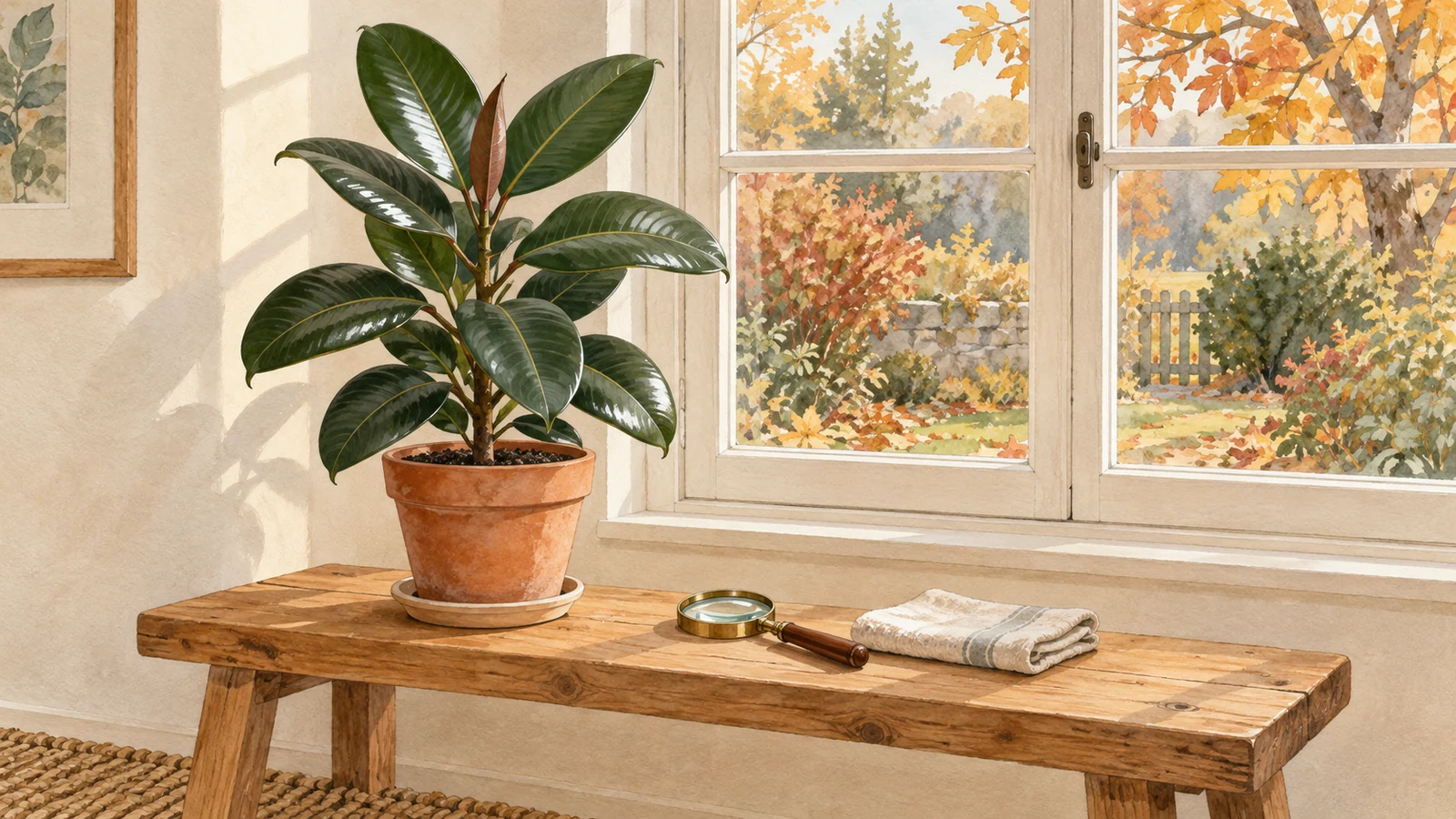
Before carrying the first pot across the threshold, choose where it will spend its first few weeks indoors. A sunny patio can hold more plants than a house has suitable windows, and a returning plant needs room for inspection as well as light.
This move is for houseplants that spent summer outdoors. Hardy garden perennials have different winter needs; a heated room is not their default destination. For those pots, use the outdoor perennial overwintering guide.
Let the night forecast set the deadline
A warm afternoon can hide a cold night. Check the coming overnight lows and the cold tolerance of each plant, rather than waiting for the first frost warning.
University of Illinois Extension uses 55°F (about 13°C) as a general trigger for bringing houseplants in. Treat that as a planning cue, not a promise that every species is safe down to the same temperature. Give especially cold-sensitive plants an earlier move, and identify an unfamiliar plant before relying on a generic temperature rule.
If the forecast leaves enough time, gradually reduce outdoor light over about a week by moving a plant into increasing shade, as Illinois recommends. This eases the change toward indoor conditions. If an unsafe cold night arrives first, bring the plant into suitable protection; completing an acclimation calendar is less important than avoiding cold injury.
Make a place that can support the plant
Look at the actual window and its obstructions. A tree, roof overhang, curtain or neighboring building can change how much light reaches the leaves. The brightest spot in one room may still be inadequate for a sun-loving plant.
Minnesota Extension’s indoor-light guide recommends matching the plant to the available light and adding suitable lighting when daylight is insufficient. Iowa State’s care guidance also cautions against temperature extremes near windows and heating vents. Keep foliage clear of cold glass. If you need a lamp, plan its safe placement and the plant’s light needs before filling the window with pots.
Set out a clean saucer and enough space to turn the pot. Keep plants that could harm a child or pet out of reach. An isolated spot still needs appropriate warmth and light; a dark, chilly garage is not automatically a useful holding room.
Inspect before the plants join the household
Work through one pot at a time. Look underneath leaves, around new growth and stem joints, along the pot rim, and beneath the pot and saucer. Remove fallen leaves and loose debris. A magnifier can help with small insects, eggs or webbing.
Minnesota’s indoor-pest guidance specifically recommends checking plants and containers before the winter move. Sticky deposits, cottony clusters, fine webbing or unfamiliar bumps deserve a closer look. Use the pest inspection guide to narrow down what you find.
Clean the outside of the pot. For suitable smooth foliage, a gentle plain-water rinse or damp cloth can remove dirt and some pests; let the pot drain. Handle fuzzy or delicate leaves according to the plant’s needs. The leaf-cleaning guide explains the difference. A tidy-looking plant has not necessarily lost every hidden pest.
Keep an observation space
Give returning plants a separate area away from plants that stayed indoors, preferably another suitable room. Minnesota’s September checklist recommends isolation for a couple of weeks. Use that time to inspect repeatedly, including when you check moisture. Mark the arrival date so the last pot through the door does not inherit the first pot’s completed observation period.
The end of two weeks is not a certificate of freedom from pests. Keep a plant separate if you see new damage or an unresolved infestation. Clean shared tools and avoid carrying the same dirty cloth from that plant to the rest of the collection.
Illinois Extension’s pest-management advice explains why a small outdoor population can become more troublesome indoors, away from many natural enemies. Identify the pest before choosing a treatment. Begin with suitable physical measures; if a pesticide is needed, follow a label that permits the target pest, plant and treatment location. An ornamental-plant product is not automatically suitable for an edible herb.
Do not spray every returning plant “just in case.” Household dish detergent is not interchangeable with a labeled insecticidal soap; Minnesota warns that homemade soap mixtures can burn plants. A badly damaged, heavily infested plant may be better discarded than brought into a crowded collection.
Reset the watering routine
Lower light can slow growth and water use. Check the potting mix and the plant’s needs before watering, and empty water that collects in a saucer or outer pot. Do not automatically repeat the patio schedule, halve every watering interval or wait for the same depth of dryness in every species. The winter watering guide helps you read the root zone.
Some yellowing or leaf drop can follow the change indoors. Note which leaves are affected and whether the problem continues. Before responding with fertilizer or more water, check light, moisture and pests. Keep the arrival date, indoor location and any observations together; those few notes make the next inspection more useful than guessing what changed.
Sources
- Bring houseplants indoors before the first frost (University of Illinois Extension). Accessed September 19, 2026.
- Managing insects on indoor plants (University of Minnesota Extension). Accessed September 19, 2026.
- September garden checklist (University of Minnesota Extension). Accessed September 19, 2026.
- Lighting for indoor plants (University of Minnesota Extension). Accessed September 19, 2026.
- Houseplant pests and how to manage them (University of Illinois Extension). Accessed September 19, 2026.
- How to Care for Houseplants (Iowa State University Extension and Outreach). Accessed September 19, 2026.