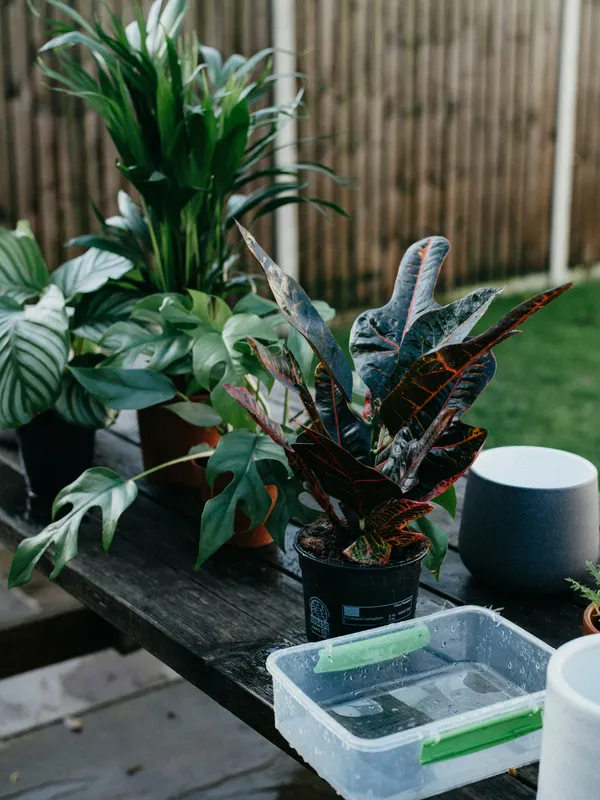
Winter does not create one universal watering schedule. It changes the conditions that control how quickly a pot dries: daylight, indoor temperature, plant growth, air movement, potting mix, and root mass. Many houseplants use water more slowly as natural light declines, but a plant under a strong grow light may remain active, and a pot beside a heating vent may dry faster than expected.
The safest winter adjustment is therefore not “water every two weeks” or “cut water by half.” It is to learn the plant’s changing dry-down time and water only when evidence from its root zone and species needs agrees.
Why the summer routine may stop working
Plants lose water through their leaves and use water during growth. Shorter days and lower indoor light can slow those processes. Cooler potting mix also dries more slowly. Iowa State University Extension and Outreach advises checking the potting mix rather than following a calendar and notes that most houseplants need less frequent watering during winter.
That is a tendency, not a percentage that fits every pot. Several factors can pull in different directions:
- A large pot with fine, moisture-retentive mix may stay wet for a long time.
- A small terracotta pot in moving, heated air may dry quickly.
- Roots that occupy most of a container can use available water faster than a small root system surrounded by unused mix.
- Supplemental light can support continued growth even when outdoor days are short.
- A species entering a genuine rest period may need a different approach from a tropical foliage plant that is still making leaves.
University of Vermont Extension emphasizes the combined effects of low light, temperature changes, drafts, dry indoor air, and watering. Reviewing the whole environment is more useful than assuming that every indoor plant becomes dormant.
Establish a winter baseline for each pot
Start with the plant’s normal moisture preference. A cactus adapted to drying between waterings and a moisture-sensitive fern should not share a schedule. If the identification is uncertain, confirm it before making a large seasonal change.
Then record the conditions around the pot:
- Light: Has a tree lost its leaves, or does a building now shade the window? Has the plant moved closer to glass or under a grow light?
- Temperature: Is the root zone cooler near a window, or is hot air from a vent crossing the foliage and pot?
- Container: Does it have an open drainage hole? Is a nursery pot hidden inside a cachepot that collects runoff?
- Mix and roots: Is the mix compacted, newly replaced, or mostly displaced by roots?
- Recent changes: Was the plant repotted, divided, purchased, moved, fertilized, chilled, or allowed to dry severely?
After watering, note how many days pass before the root zone reaches the dryness appropriate for that species. Repeat the check over several cycles. The interval can lengthen or shorten as weather, heating, and growth change; the record is a baseline, not a new calendar rule.
Check more than the soil surface
A dry-looking surface does not prove that the center and bottom of the pot are dry. Conversely, a cool surface is not always wet. Use two or more observations when the decision is uncertain.
- Insert a finger only as far as practical and safe, checking more than one location away from the stem.
- Slide a clean, unfinished wooden skewer into the root zone, then look for darkening or clinging damp mix.
- Lift a manageable pot after watering and again as it dries to learn its relative weight. Pot weight is one clue; container material and plant growth can change it.
- Look through an open drainage hole for dark, wet mix, but do not probe or tear visible roots.
- Use a moisture meter only as supporting information and clean it between pots. Salts, mix texture, and poor contact can affect readings.
No single depth, pot weight, or meter number works for every species and container. University of Wisconsin–Madison Extension recommends checking soil moisture and reducing frequency as growth slows, while also warning against allowing containers to stand in water.
Water completely when water is due
Less frequent watering does not have to mean tiny sips. When the plant has reached its appropriate dryness, apply water slowly over the potting surface until the root ball is evenly moistened and excess drains from the bottom. Empty the saucer or outer pot after drainage.
A badly dried peat-based mix can pull away from the container and shed water down the sides. If water exits immediately while the center stays dry, apply it in several slow passes. A small pot can also be soaked briefly from below, then removed and drained, provided the plant has no disease concern and the water is not shared between plants. Do not leave any container standing in water.
Room-temperature water avoids a sudden temperature shock to roots. The time of day is less important than complete drainage and correct moisture. Watering in the morning does not prevent root rot if the medium remains saturated, and evening watering does not cause root rot by itself.
Separate root moisture from air humidity
Indoor heating often lowers relative humidity. Leaf edges may brown, thin leaves may curl, and mite problems may become more noticeable. Adding extra water to the pot does not reliably raise room humidity and can leave roots saturated while foliage is still exposed to dry air.
University of Illinois Extension treats winter watering and humidity as related but distinct care issues. Penn State Extension likewise explains that houseplant humidity needs vary and describes grouping plants or using a humidifier as more practical approaches than relying on watering alone.
Measure relative humidity before trying to correct it. A clean, maintained humidifier can help in a dry room, but it should not blow continuously onto leaves or create condensation on windows and walls. Pebble trays have a limited local effect and must keep the bottom of the plant pot above the water. Grouping plants can modestly change the immediate microclimate, but crowded, wet foliage also reduces inspection and air movement.
There is no single humidity target for every houseplant. Use species-specific guidance and monitor the building for unwanted condensation or mold.
Read symptoms as combinations, not verdicts
Yellow leaves, brown edges, and wilt can result from more than one problem. The potting mix and recent history help narrow the possibilities.
| What is present now | What it may suggest | Next check |
|---|---|---|
| Wilt with dry mix and a very light pot | The root ball may need water | Confirm species needs, then moisten evenly |
| Wilt with persistently wet mix | Root oxygen stress, cold roots, or root damage | Check drainage, temperature, and root condition before watering |
| Yellow lower leaves with a pot that dries normally | Natural aging or several environmental stresses | Check whether yellowing is limited or progressing |
| Brown margins with dry air but moist mix | Humidity, salts, heat, or root injury | Do not add water automatically; review exposure and water quality |
| Mold or algae on a continually damp surface | Slow drying and persistent surface moisture | Improve light and air movement; reassess mix and watering |
| Tiny flies near wet mix | Fungus gnats may be using damp organic material | Confirm the insect and correct chronic surface wetness |
University of Maryland Extension catalogs winter problems that can overlap, including low humidity, low light, excess water, temperature injury, and pests. That overlap is why one leaf symptom should not trigger several treatments at once.
Know when root trouble needs a closer look
Root rot is not simply “a plant was watered twice.” Concern rises when the pot remains wet much longer than expected and the plant wilts, declines, develops a soft stem base, or produces an abnormal odor. Blocked drainage, a pot standing in runoff, dense mix, low light, cold roots, and an oversized container can all contribute to a poorly aerated root zone.
First correct obvious external problems: empty collected water, open a blocked drainage route, and stop calendar-based watering. If a plant continues to wilt in wet mix or has soft tissue at the base, inspect the roots rather than repeatedly drying and soaking the same failing system. The focused guide to identifying and treating houseplant root rot explains how to distinguish firm roots from decayed tissue and how to decide whether repotting or salvage is justified.
Avoid routine peroxide drenches, cinnamon, or an unlabeled fungicide. Those treatments do not diagnose the cause and can injure remaining roots. A local Extension office or plant diagnostic laboratory is the appropriate escalation point for a valuable plant, spreading disease, or an uncertain cause.
Account for genuine rest periods
Some cacti, succulents, bulbs, tubers, and other plants have seasonal cycles that call for especially dry or cool rest conditions. Others remain evergreen and actively grow indoors. Do not infer dormancy only because the calendar says winter.
Look for species-specific instructions and actual growth evidence. A plant that has naturally shed its above-ground growth may need minimal moisture to protect a dormant storage organ without keeping it wet. A leafy plant under supplemental light may keep using water and nutrients. When a plant arrives with commercial care instructions, reconcile those directions with an Extension or botanical-garden source for that exact species.
Reset the routine one watering cycle at a time
A controlled winter adjustment can be simple:
- Verify plant identity, drainage, and exposure to glass or vents.
- Check moisture below the surface before the next planned watering day.
- If the root zone is still too wet for that species, wait and check again rather than watering by habit.
- When water is due, moisten the entire root ball and drain it completely.
- Record the interval and any symptoms, then reassess after the next cycle.
- Change one environmental variable at a time unless active rot, freezing injury, or a serious pest requires prompt action.
Sources
- How often should houseplants be watered during the winter months? (Iowa State University Extension and Outreach). Accessed August 25, 2026.
- Houseplant Care During the Winter Months (University of Vermont Extension). Accessed August 25, 2026.
- Winter Care of Houseplants (University of Wisconsin–Madison Extension). Accessed August 25, 2026.
- Winter Indoor Plant Problems (University of Maryland Extension). Accessed August 25, 2026.
- Houseplants, winter watering, and humidity (University of Illinois Extension). Accessed August 25, 2026.
- Humidity and Houseplants (Penn State Extension). Accessed August 25, 2026.