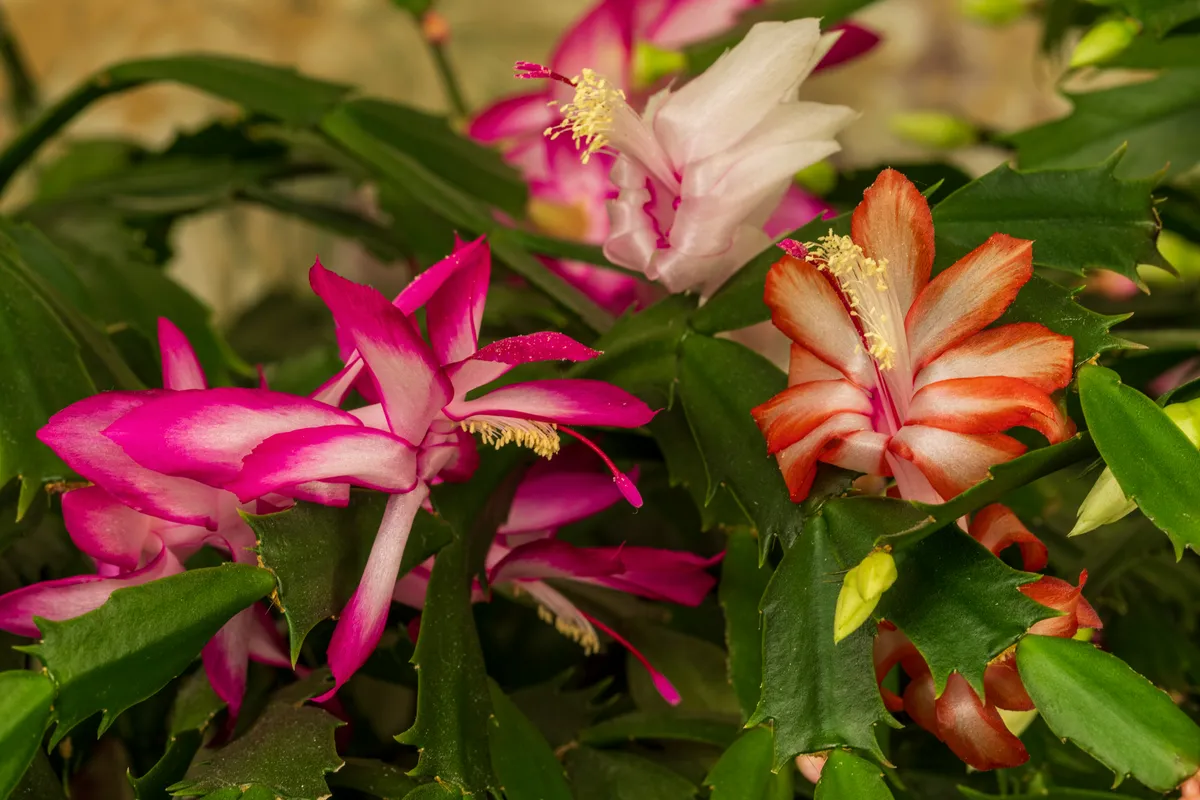
A holiday cactus can spend autumn beside a bright window and still miss the signal to flower. The room may stay warm after sunset, or a lamp may keep extending its day. Before buying fertilizer or moving the plant into a bigger pot, look at what happens around it at night.
Thanksgiving and Christmas cacti respond to the combination of day length and temperature. Your job is to give a healthy plant a suitable stretch of autumn conditions, then keep its developing buds comfortable. The name on the pot is not a promise of flowers on a particular holiday.
Start with the plant you have
The green, flattened pieces are stem segments, not leaves. Thanksgiving cactus (Schlumbergera truncata) usually has pointed teeth along their edges; true Christmas cactus (Schlumbergera × buckleyi) has rounder scallops. Hybrids can fall between those appearances. Iowa State’s holiday-cactus guide explains those distinctions and why a plant sold as Christmas cactus may actually be a Thanksgiving type.
This autumn routine is for those two groups. An Easter cactus has a different flowering cycle; do not judge it by the same fall deadline. If the label is uncertain, photograph the segments and flowers when they appear rather than assigning a cultivar from color alone.
Check that the plant is firm and growing in a pot that drains. Sticky patches, cottony insects or collapsing stems deserve attention before a flowering project. Use the houseplant pest inspection guide to examine it, especially if it spent summer outdoors.
Give the night a clear beginning and end
Choose a place with bright, indirect light during the day and no routine lighting after dark. A spare room can work better than a kitchen where lights stay on late. Check the actual spot after sunset: a hallway light through an open door or an outdoor light shining through the window may reach the plant.
Clemson Extension recommends at least 14 hours of continuous darkness each day for six weeks to establish buds. A practical example is darkness from 6 p.m. until 8 a.m., followed by a bright day. That schedule is an example you can adapt, not a requirement to use those particular clock times.
Do not leave the plant in a dark cupboard around the clock. The daytime part of the routine still matters. Pick an arrangement that is easy to maintain rather than relying on remembering several moves every evening. Note the start date and inspect the terminal segments in daylight for developing buds.
Different cultivars and temperatures change the response. Six weeks is a useful planning period, not a guarantee of an open flower on day 42.
Measure the cool spot, not just the thermostat
University of Minnesota Extension gives an indoor range of about 65–70°F by day and 55–65°F at night. Check the temperature near the plant; a shelf above a heater can be warmer than the rest of the room, while the glass beside it can become much colder.
Long nights and cool temperatures work together. A warm living room may be a poor bud-setting location even when the plant gets enough darkness. Conversely, some plants can form buds under cool conditions with less dependence on day length. Avoid treating one temperature or darkness threshold as universal across every hybrid.
Keep stems away from cold glass, heating vents and opening exterior doors. Cool does not mean frosty: Wisconsin Extension describes these forest cacti as frost-sensitive. Bring an outdoor plant inside before cold threatens it; do not leave it out to gamble on an extra night of bud induction. The indoor transition guide covers that move.
Water the roots without soaking or starving them
Holiday cacti come from forest habitats, so a desert-cactus drought routine is a poor fit. UConn’s care guidance calls for a moderately moist, freely draining mix and watering as the surface begins to feel dry. Check the mix before reaching for the watering can.
Water the medium, allow excess to drain, and empty the saucer or decorative outer pot. A cool room can change how quickly the pot dries; last summer’s watering interval may no longer suit it. Avoid repeatedly adding small splashes without checking whether water is trapped below.
A limp plant in wet mix needs investigation, not another drink. Wisconsin links poor drainage with damaged roots. Check the root condition and use the root-rot triage guide if the plant is declining. Stabilizing a sick plant takes priority over flowers.
UConn places routine repotting in spring when necessary. Keep a healthy plant in its current draining pot during this autumn setup rather than combining a flowering attempt with unnecessary root disturbance.
When buds appear, keep things steady
Once the tips carry small buds, resist rearranging the plant every few days. Minnesota identifies drafts and changes in temperature, humidity or light as possible reasons buds drop. Keep checking moisture; neither a waterlogged pot nor a thoroughly dried root ball helps a budding plant.
For a display elsewhere, Iowa State recommends waiting until the first flowers begin opening before moving it. Choose a similarly comfortable position rather than a hot mantelpiece or a cold entryway.
If buds do not appear, review your notes on nighttime light, actual temperatures and plant health before changing several things at once. If buds form but fall, examine what changed after they appeared. Those are different problems, and noticing when the difficulty began makes the next adjustment more useful.
Sources
- All About Holiday Cacti (Iowa State University Extension and Outreach). Accessed September 25, 2026.
- Thanksgiving & Christmas Cacti (Clemson Cooperative Extension). Accessed September 25, 2026.
- Holiday Cactus (University of Wisconsin–Madison Extension). Accessed September 25, 2026.
- Holiday cacti (University of Minnesota Extension). Accessed September 25, 2026.
- Holiday Cacti (University of Connecticut Home Garden Education Office). Accessed September 25, 2026.