Recipes
Gyudon: Beef and Onion Rice Bowls
Simmer thin beef and soft onions in a sweet soy broth, then spoon them over hot rice with scallions. Includes a complete cooking guide.
Jump to recipe ↓Recipe
- Total time
- About 25 minutes with cooked rice ready (estimate)
- Method
- Skillet
- Difficulty
- Easy
- Allergens
- Soy · Wheat may be present in soy sauce · Fish may be present in dashi
2 rice bowls
Allow about 25 minutes with cooked rice ready; timing is an estimate. Use plain whole-cut beef sliced very thinly, not ground beef. All cooking is attended. This version adds no sake or mirin. Common dashi and soy sauce contain fish, soy and wheat; check labels.
Equipment: A medium deep skillet with a lid, knife, separate boards for produce and raw beef, measuring cup and spoons, tongs, serving spoon, and a thin-tip digital food thermometer suitable for thin foods.
Ingredients
- 250 g plain ribeye or chuck, very thinly sliced across the grain
- 1/2 medium yellow onion (about 115 g), peeled and thinly sliced
- 1/2 US cup (120 ml) prepared dashi, preferably unsalted
- 4 tablespoons water, plus a little more if needed
- 3 tablespoons Japanese soy sauce
- 1 tablespoon plus 2 teaspoons sugar
- 3 US cups cooked short-grain white rice, hot and ready to serve
- 1 scallion, rinsed, trimmed and thinly sliced
Method
Prepare the vegetables and keep the beef cold
Have the cooked rice ready; if it must wait, keep it hot at 140°F (60°C) or above. Slice the onion and scallion on a clean produce board. Keep the scallion separate for serving. On a separate board, cut long beef slices into bite-sized lengths and separate them. Do not rinse raw beef. Wash hands and clean raw-meat tools before touching cooked food; keep the beef refrigerated until the pan is ready.
Convert a measurement for this stepSoften the onion in the broth
Combine dashi, 4 tablespoons water, soy sauce and sugar in the skillet. Add the onion, bring to a simmer and lower the heat to keep small bubbles moving through the liquid. Stir occasionally and stay at the stove until the onion bends easily and has lost its hard crunch, roughly 5–8 minutes as an estimate. Add a little water if the pan starts drying before the onion softens.
Convert a measurement for this stepSeparate the beef and check its temperature
Add the beef a few slices at a time, opening folds with tongs so each piece meets the simmering broth. Keep the heat gentle and turn the slices until cooked through. Use a thin-tip thermometer from the side of several of the thickest pieces, keeping its sensing area in the meat rather than the broth or pan. Every checked piece must reach at least 145°F (63°C); color alone is not the test. Continue cooking and recheck any cooler pieces. Taste the cooked broth with a clean spoon and add water a tablespoon at a time if too strong.
Convert a measurement for this stepTurn off the heat and rest for three minutes
After the beef has reached at least 145°F (63°C), turn off the burner and move the skillet off a hot electric element. Cover and start the full three-minute rest. Do not serve the beef before the rest finishes.
Convert a measurement for this stepSpoon over rice and serve
Check the burner is off. Divide the hot rice between two bowls and spoon over the beef, onion and some broth. Scatter on the scallion and serve promptly. Refrigerate leftovers in shallow containers, ideally within one hour for rice, at 40°F (4°C) or below; use within 24 hours. Reheat only once to 165°F (74°C) throughout. Discard food left out more than two hours, or one hour above 90°F (32°C).
Convert a measurement for this step
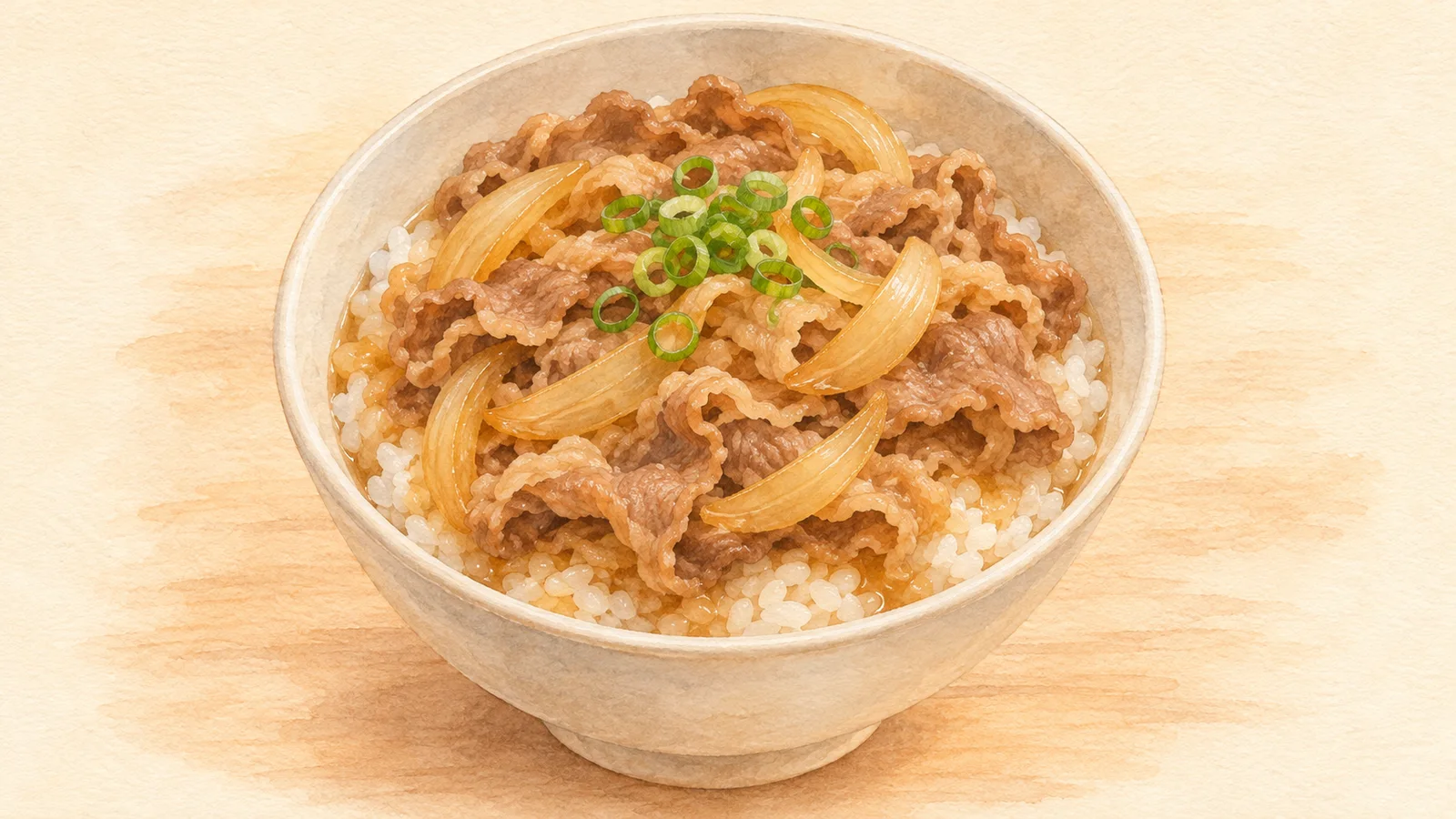
A bowl that keeps some broth
Gyudon puts thin beef and soft onion over rice with enough sweet soy broth to season the grains underneath. The sauce should still be spoonable. It does not need to become a sticky glaze, and the beef does not need a long braise.
Have the rice ready before starting the topping. This bowl uses cooked rice as an ingredient; its short stovetop sequence is not enough time to start a separate batch from raw grains. Keep freshly cooked rice hot at 140°F (60°C) or above if it must wait briefly.
Buy thin slices, not stir-fry chunks
Look for plain, thinly sliced ribeye or chuck sold for hot pot or similar quick cooking. Some marbling helps the slices stay pleasant to eat. Thick supermarket stir-fry strips do not behave the same way: the onions and broth may be ready while the meat remains chewy. If slicing a whole cut yourself, use the across-the-grain guide and keep the beef cold during preparation.
Softening the onions first gives them a head start. Once their sharp crunch has softened, the separated beef slices can cook in the broth without an extended wait for the vegetables. Keep the pan at a gentle simmer and stay with it. If the liquid is disappearing before the onion is tender, add a small splash of water; a wider pan evaporates more quickly.
Dashi and seasoning choices
Prepare dashi to its packet directions before measuring it, or use homemade stock. A salty instant stock can make the finished bowl saltier than an unsalted one. Start with the measured soy sauce and taste the broth only after the beef has cooked safely. Add water by the tablespoon if it needs loosening or tastes too strong.
This version uses water and sugar in place of sake and mirin. It will not have the same aroma as a bowl made with those rice wines, but the substitution is useful when you do not want to add them. Check the dashi and soy-sauce labels for your needs: common versions contain fish, soy and wheat. The beef and onions are enough on their own here; no raw-egg topping is required.
Keep the next bowl safe
Portion leftovers into shallow containers promptly, ideally refrigerating the rice within an hour. Keep at 40°F (4°C) or below and use the rice-containing meal within 24 hours. Reheat only once, stirring and checking that both rice and topping reach 165°F (74°C). A little added water helps the broth spread through chilled rice. Do not use reheating to rescue a bowl left sitting out too long.
For the rice-specific limits, see the Food Standards Agency’s rice guidance. The CDC’s food-poisoning prevention guidance covers the beef temperature and rest requirement, safe reheating, clean preparation and prompt refrigeration.
The ingredient balance and broth-based approach draw on Namiko Hirasawa Chen's gyudon and Japanese Cooking 101's beef bowl. This version softens the onions first and uses water and sugar instead of sake and mirin.
For a different rice-bowl dinner, try chicken and egg oyakodon.