Recipes
Beef Japchae with Sweet Potato Noodles
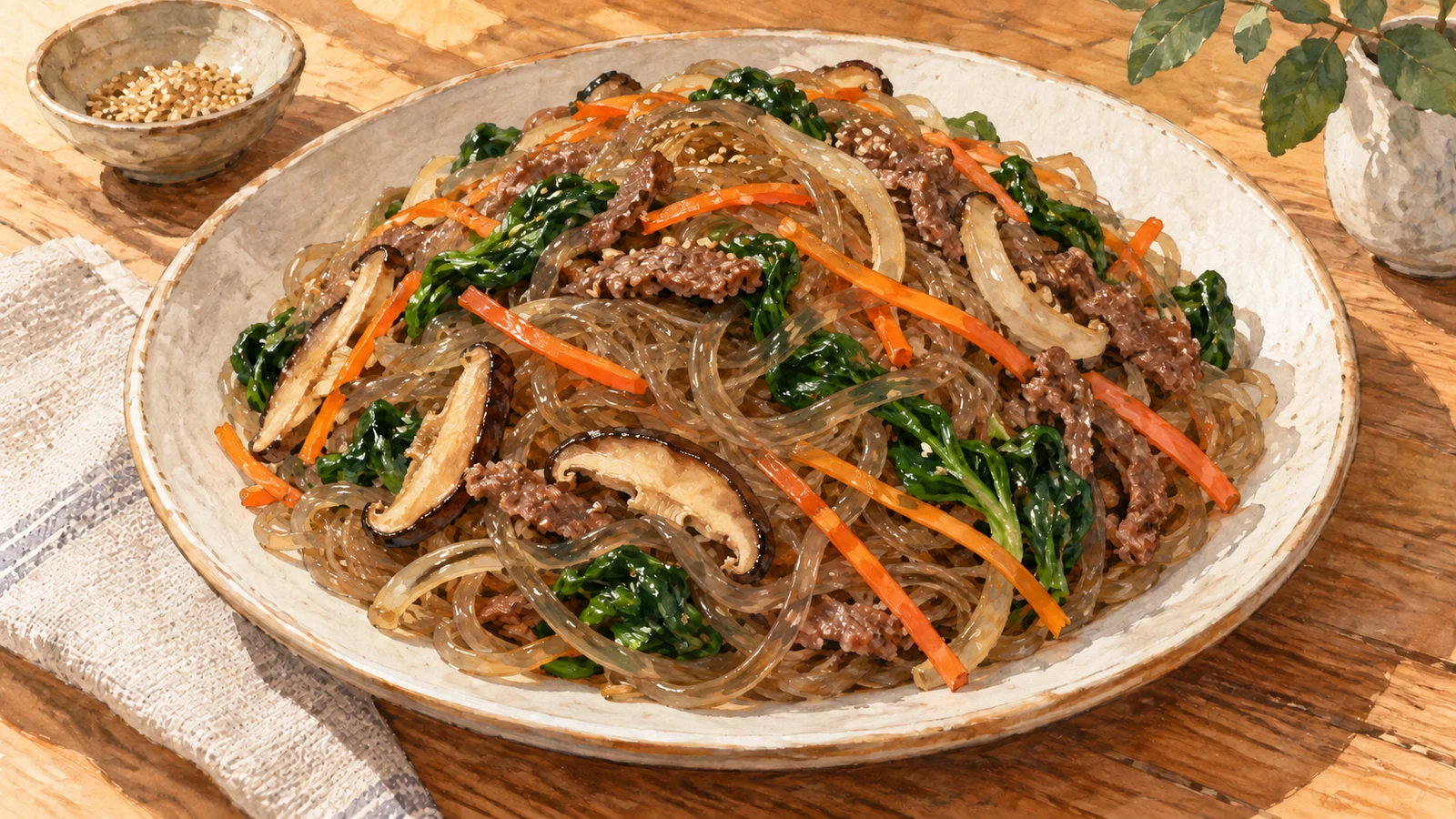
Chewy Korean sweet potato noodles with beef, spinach, carrot and mushrooms, cooked in manageable batches and finished with sesame.
Jump to recipe ↓Recipe
- Total time
- 50–60 minutes
- Method
- Boil and skillet
- Difficulty
- More involved
- Allergens
- Soy · Wheat may be present in soy sauce · Sesame
About 3 main-course servings
Allow roughly 50–60 minutes for cutting, boiling and several short batches in the skillet. Use Korean sweet potato starch noodles, not rice vermicelli. Everything is cooked in sequence.
Equipment: Saucepan, colander, large skillet, tongs, kitchen scissors, knife, board, mixing bowl, clean plate and a thin-tip food thermometer.
Ingredients
- 200 g dried Korean sweet potato starch noodles (dangmyeon), preferably thin round strands
- 200 g beef sirloin, sliced across the grain into thin strips
- 150 g fresh spinach, washed
- 1 medium carrot, about 100 g, cut into fine matchsticks
- 1 small onion, about 150 g, thinly sliced
- 100 g fresh shiitake mushrooms, tough stems removed and caps thinly sliced
- 3 tablespoons regular Korean or Japanese soy sauce, not soup soy sauce or dark soy sauce
- 1 1/2 tablespoons brown sugar
- 1 tablespoon toasted sesame oil
- 2 garlic cloves, finely minced
- 2 tablespoons neutral cooking oil, divided
- 2 teaspoons toasted sesame seeds
- 1/4 teaspoon ground black pepper
- Water for boiling, plus 2 tablespoons for loosening the noodles if needed
Method
Finish the cutting before the stove
Prepare the carrot, onion, mushrooms and spinach. Mix the soy sauce, sugar, sesame oil, garlic and pepper in a bowl until the sugar is mostly dissolved. Slice the beef on a separate board, refrigerate it until its turn, and clean hands, knife and surfaces after raw meat contact. Keep the sauce separate from the raw beef.
Convert a measurement for this stepBoil the dangmyeon
Bring a saucepan of water to a boil. Cook the noodles according to their package until flexible and cooked through, stirring so strands separate. Drain and rinse briefly under cool running water. Drain well, snip into manageable lengths with clean scissors and toss in the mixing bowl with 2 tablespoons of the prepared sauce. Turn off the burner.
Convert a measurement for this stepWilt and drain the spinach
Bring fresh water to a boil in the same saucepan. Add the spinach and cook just until wilted. Drain, rinse briefly with cold water and, once safe to handle, squeeze out excess water with clean hands. Roughly chop and keep in the colander. Turn off this burner; the remaining cooking uses the skillet.
Convert a measurement for this stepCook the beef on its own
Warm 2 teaspoons neutral oil in the skillet over medium-high heat, without smoking. Add the beef in one uncrowded layer, using batches if needed. Turn and stir until cooked, checking the thickest strips with a thin-tip thermometer inserted from the side for at least 145°F (63°C). Transfer to a clean plate, leaving raw-meat utensils aside for washing. Turn off the burner.
Convert a measurement for this stepRest the cooked beef
Let the beef rest on its clean plate for at least 3 minutes after it reaches 145°F (63°C). Keep the skillet burner off during this rest.
Convert a measurement for this stepGive the vegetables room
Warm another 2 teaspoons oil in the skillet over medium heat. Stir-fry the carrot and onion until tender but not limp, then move them to the noodle bowl. Add the remaining 2 teaspoons oil and the mushrooms to the skillet. Cook until softened and their released moisture has mostly evaporated. Add the drained spinach and stir to warm it through.
Convert a measurement for this stepBring the strands and vegetables together
Add the noodles, carrot, onion, cooked beef and remaining sauce to the skillet. Toss gently over medium-low heat until the noodles are hot and evenly coated. If they stick in a tight clump, add the reserved 2 tablespoons water a little at a time and loosen with tongs; do not pull hard enough to break them. Work in two batches if the skillet is crowded.
Convert a measurement for this stepFinish with sesame
Turn off the burner. Sprinkle with sesame seeds and transfer to a serving dish. Serve promptly while the noodles are warm and supple.
Convert a measurement for this step
Buy the noodle before choosing the vegetables
Dangmyeon gives japchae its translucent, chewy strands. Rice vermicelli and wheat noodles do not cook or feel the same, even if the package also says “glass noodles.” Look for sweet potato starch in the ingredients and follow that package’s cooking directions; thick flat varieties need different handling from thin round strands.
Carrot, onion, spinach and mushrooms give the noodles contrasting bites. The beef is one part of the dish rather than a steak dinner with noodles underneath. Cutting everything first makes the small skillet batches much calmer.
Adapted from japchae recipes by Maangchi and Hyosun of Korean Bapsang.
A wet handful of spinach changes the sauce
Drain the greens well before combining them with the noodles. Water trapped in the leaves dilutes the seasoning and collects at the bottom of the skillet. Mushrooms get their own brief turn for a similar reason: give their moisture time to leave before the final toss.
If the finished noodles need a little more seasoning, taste a forkful containing both noodle and vegetable first. A splash of soy sauce on one bare strand can overshoot the whole dish. The soy sauce guide explains why dark or sweet styles are not a straight swap here.
Pack away the extra portions
The beef check and rest follow USDA’s beef guidance. Refrigerate leftovers within two hours, or one hour above 90°F (32°C); use within 3–4 days and reheat to 165°F (74°C). Chilled noodles become firmer and soften again with reheating.
Soy sauce commonly contains wheat, and this dish contains soy and sesame. Sweet potato noodles alone do not make the finished dish gluten-free.