Kitchen skills
Toast Sesame Seeds Without Scorching Them
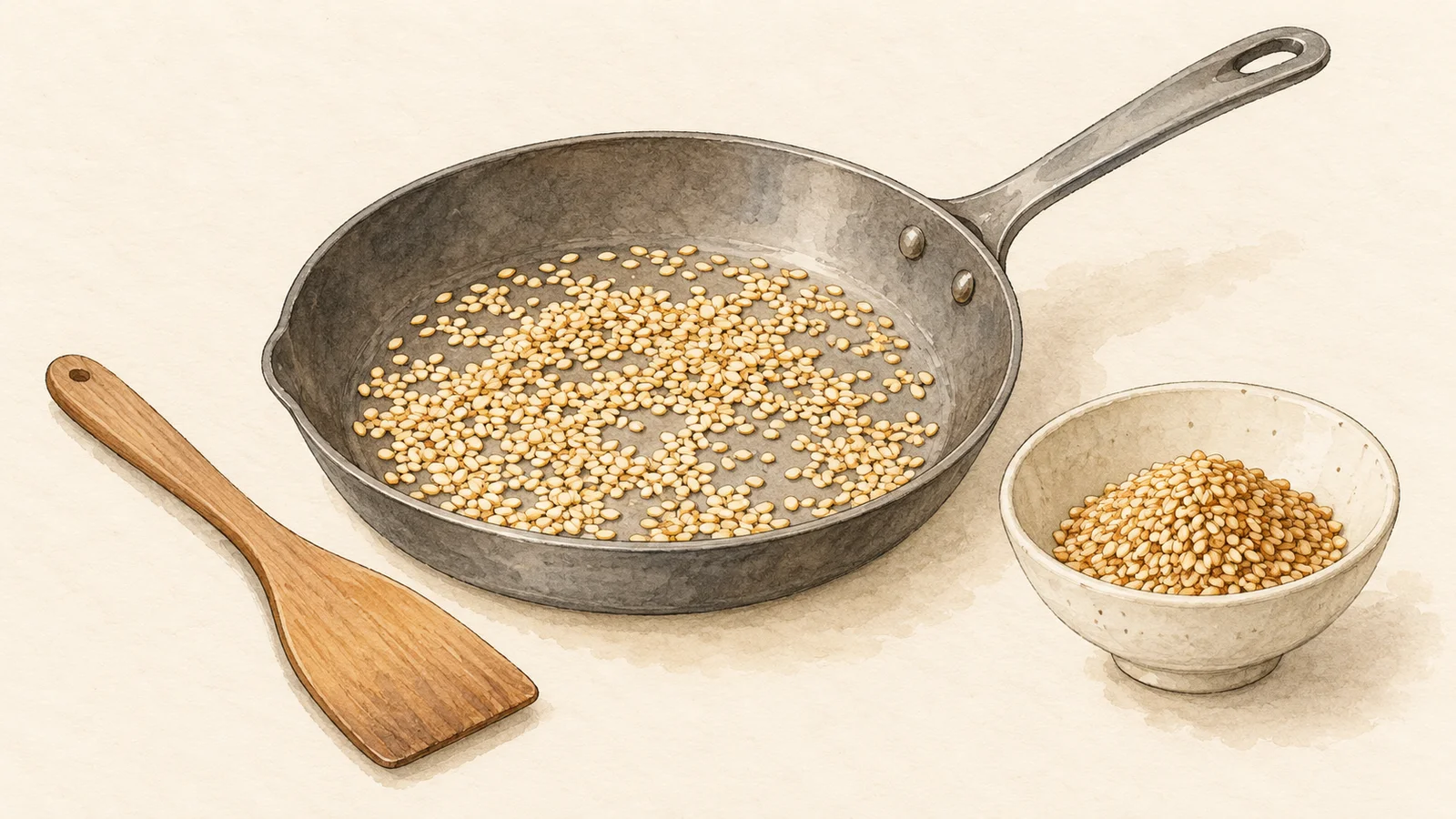
Set an empty heatproof bowl beside the stove before you toast sesame seeds. When the seeds smell nutty and the pale ones have turned golden, they need somewhere to go immediately. Turning off the burner leaves them sitting against a hot pan.
Read the packet before heating the pan
Seeds labeled roasted or toasted have already had this treatment. They may be ready to use straight from the packet. If their aroma seems faint, a brief warming in a dry pan can freshen it; they do not need the full process for raw seeds. Maangchi’s ingredient guide explains the distinction between raw and toasted sesame sold in Korean grocery stores.
Use the kind your dish specifies. White sesame lets you watch the color change; black sesame needs more attention to smell and taste. Do not assume a black seed is burnt because it is black, or that a pale seed must be raw. Read the label and check a cooled sample.
Sesame is a major food allergen identified by the FDA. This preparation still contains sesame. Keep that in mind before adding a casual sprinkle to food for someone else.
Dry rinsed raw seeds, then toast them
Judy Leung at The Woks of Life and Maangchi’s toasting method rinse raw seeds before heating them. Put a modest amount in a fine sieve that holds the tiny grains. Rinse, remove visible debris and drain well. Use a skillet large enough that you can move all the seeds around easily, without a deep pile hiding the bottom layer.
Put the drained seeds in the pan without oil. Begin over medium-high heat, stirring as the surface water cooks away. Once the wet crackle subsides and the seeds move freely, reduce the heat to medium-low. Keep stirring and sweeping seeds away from the pan’s edges. Stay at the stove: this is a short, attentive job, not a useful moment to start chopping something else.
Watch for an even light-golden color in white seeds and a toasted aroma. Some may pop, but popping alone is not the finish line. If a patch darkens faster than the rest, lift the pan away from the burner, lower the heat and keep the seeds moving.
Use a cooled sample to decide when to stop
Spoon a few seeds onto a cool plate and let them cool before tasting. They should be crisp and nutty, without an acrid or bitter burnt flavor. For black sesame, this check is particularly useful because the dark coat hides the color change. Leung also suggests crushing a few to assess their aroma.
As soon as the batch is ready, pour it into the waiting heatproof bowl. Do not leave it in the skillet while you finish another task. If it smells burnt or tastes bitter, start again with lower heat; mixing it into a larger batch will carry that flavor into the rest.
Already toasted seeds need a gentler refresh. Warm them in a dry pan over low heat, stirring or shaking and checking frequently, then transfer them out as soon as their aroma returns. Namiko Hirasawa Chen’s goma-ae method uses this brief second toasting before grinding. Do not rinse them and repeat the raw-seed drying stage.
Keep some whole; grind what the dish needs
Leave seeds whole for the final scattering over soy-braised potatoes. For a dressing, let them cool and grind them in a mortar, leaving some texture instead of turning every grain into paste. The spinach goma-ae recipe gives the amounts for its sesame dressing.
Cool unused seeds completely before sealing them in an airtight container. Leung recommends refrigeration for keeping their flavor. Label the container so the next cook knows these are already toasted, and keep the package’s storage instructions. A small batch that suits your next few meals is easier to use while its aroma is still lively.