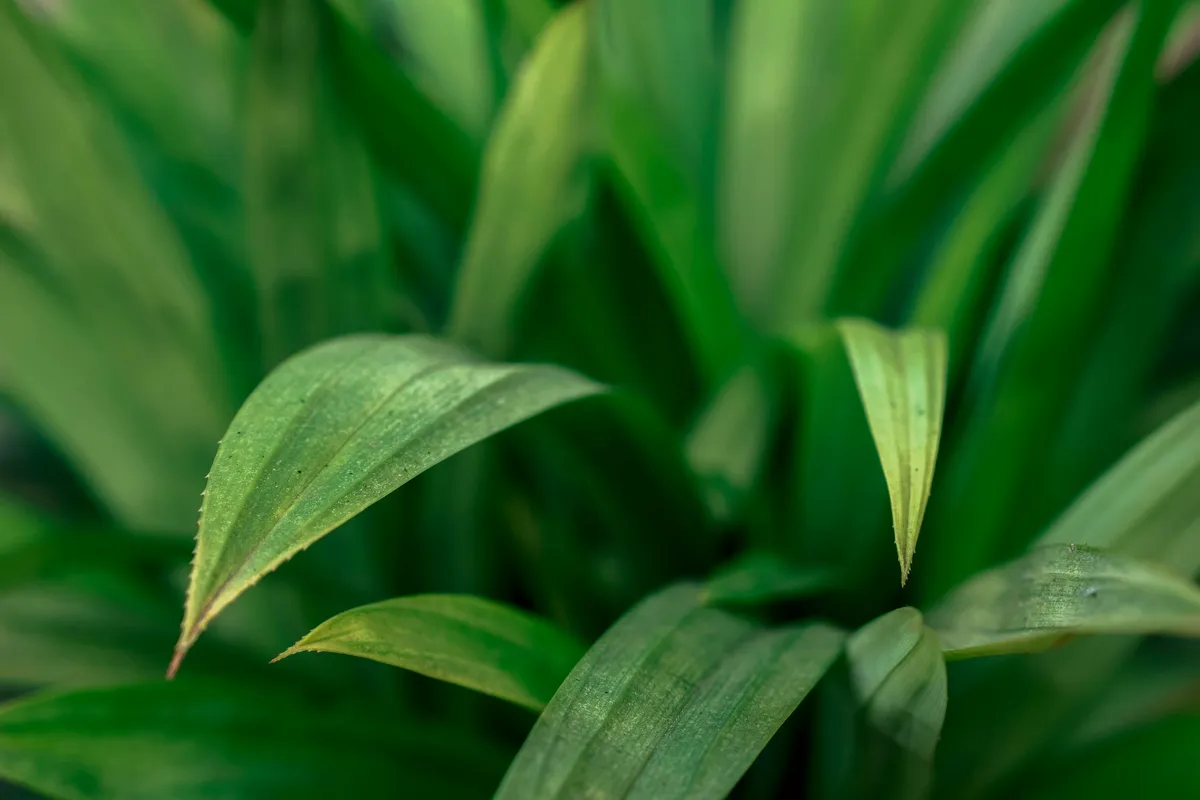
Culinary pandan is Pandanus amaryllifolius, an aromatic-leaved tropical plant grown for use in food. The name matters: Pandanus contains many species, and not every ornamental sold as a “screwpine” is the culinary plant. The Royal Botanic Gardens, Kew accepts P. amaryllifolius and records its native range as Maluku in the wet tropical biome.
Aroma, leaf color, and a common name are not enough to confirm edibility; begin with a plant labeled with the botanical name and sold for culinary growing.
Growing pandan indoors
Pandan grows in warm, wet tropical conditions. The Singapore National Parks Board species profile lists full sun to semi-shade, moderate to abundant water, and fertile, well-drained loamy soil. A household windowsill may offer much less light and warmth than those outdoor conditions.
Indoors, check the light, warmth, drainage, and moisture around the plant rather than treating outdoor care advice as a fixed household routine. Growth may slow substantially in weak winter light, cool conditions, or an unsuitable root zone.
| Factor | What to provide | Limit to remember |
|---|---|---|
| Identity | Labeled Pandanus amaryllifolius culinary plant | Scent alone cannot verify species or food use |
| Light | Strong light; tropical guidance permits sun or semi-shade | Indoor window direction does not measure intensity |
| Water | Keep the root zone from becoming severely dry while preserving drainage | “Lots of water” does not mean standing water in a container |
| Temperature | Warm, stable conditions consistent with a wet tropical plant | Protect the plant from cold nights, even when daytime temperatures are warm |
| Harvest | Take mature leaves from a healthy, growing plant | A fixed fraction or interval is not established for every pot |
Start with a verified plant
Buy a rooted plant or division from a nursery or herb grower that provides the full botanical name. Avoid seed claims: the Singapore profile reports that female inflorescences and fruit have not been observed and that male flowering is rare. Vegetative material is the practical starting point. If ordering across a national border, check permits and restrictions before purchase; USDA APHIS explains that imported plants and seeds may require permits, certificates, inspections, or post-entry quarantine.
Inspect before bringing the plant home. Choose firm green leaves, a stable base, and a root zone without a sour odor. Check leaf folds, bases, and undersides for white waxy insects or residue. Keep a new plant apart from other edible and ornamental plants during an observation period so a pest is easier to contain.
Do not harvest immediately after purchase. Confirm that every pesticide used was labeled for the edible crop and that each preharvest interval has passed. If the treatment history is unknown, keep the plant ornamental rather than assuming that later growth is suitable for food.
Give the container strong usable light
Outdoors in warm conditions, pandan can grow in sun or semi-shade. Indoors, place it at the brightest suitable window and judge the plant rather than the compass direction. Nearby buildings, trees, screens, season, and distance from the glass can reduce light sharply. Weak, narrow, leaning new leaves and little new growth can indicate that the site is too dim, although root stress can produce similar decline.
The National Parks Board species profile permits semi-shade, but tropical outdoor semi-shade does not mean a dark indoor corner. If a window cannot support compact growth, use an electric light designed for plants and follow its maker’s distance and duration guidance. For help choosing a fixture, see the grow-light guide.
Move an indoor plant outside only after weather is reliably warm, and acclimate it gradually to brighter exposure. Reverse the process before cool weather. Sudden sun can bleach or scorch leaves that formed behind glass; a cold night can damage a tropical plant even when the following day is warm.
Choose a stable, draining container
Use a food-safe container with unobstructed drainage holes. A broad, stable pot helps balance the long leaves and leaves space for suckers, but the current root mass should determine size. A very large pot surrounds a small root system with more wet medium than it can use.
Iowa State University Extension’s container-herb guidance recommends containers with sufficient drainage and a well-drained commercial potting mix. Choose a fresh mix that wets evenly, drains freely, and remains structurally open. Do not use garden soil in a container or add gravel as a substitute for a drainage hole.
Set the plant at its previous depth. Keep the central growing point and leaf bases above the mix while covering the established roots. Leave space below the rim so water can spread across the surface instead of running over one side.
Repot when roots or suckers fill the available volume, the mix has collapsed, or water no longer enters and drains evenly. An annual calendar is not proof that a larger pot is needed.
Balance moisture with root-zone air
Pandan is not a drought herb. Singapore guidance associates it with moist sites and generous water, so repeated severe drying is a poor target. In a container, however, roots still need oxygen. Water held in a cachepot, blocked drainage, or dense decomposed mix can damage roots even when the species prefers moisture.
Check below the surface and lift the pot when practical. Water when the upper root zone has begun to dry but the whole root ball has not become hard and shrunken. Apply water across the surface until excess drains, then empty the saucer or outer container. Recheck sooner during warm, bright growth and later during cool or dim periods. A weekly or 10-day rule cannot account for pot size, mix, leaf area, and season.
Iowa State University Extension’s houseplant guide stresses that plant species, container, medium, temperature, humidity, and light all affect watering. Adjust the watering interval to the conditions around your pot.
High humidity may reduce water loss, but do not impose a precise indoor target without species-specific guidance. Pebble trays and routine misting should not replace root watering or measured room humidity. Avoid wetting leaves so often that folds and bases stay damp. The site’s indoor humidity guide explains household-safe measurement.
Feed according to growth and the label
A container eventually has a limited nutrient supply, but fertilizer cannot correct weak light, cold conditions, damaged roots, or an oversized wet pot. Check whether the potting mix already contains fertilizer. When the plant is actively producing sound leaves, use a product labeled for edible container plants and follow its rate, interval, and harvest restrictions.
Pause and reassess if deposits form on the mix or leaf edges decline after feeding. Keep to the product’s directions rather than a fixed dilution and interval borrowed from another fertilizer, and do not apply household tonics. For help interpreting nutrient labels and recognizing salt buildup, see the houseplant fertilizer guide.
Propagate a rooted sucker or division
Pandan commonly expands through basal shoots. The National Parks Board’s culinary herbs and spices guide specifically describes pandan propagation by division, while the species profile also lists suckers and stem cuttings.
Wait until a sucker has enough size and its own useful roots to survive separation. Then:
- Remove enough mix to locate the sucker’s connection and roots.
- Support the parent and offset so neither is torn by its own weight.
- Separate at a natural junction, using a clean sharp blade only if needed.
- Retain as many sound roots as possible on the new section.
- Pot at the former depth in a proportionate draining container.
- Water to settle the mix, drain it, and return the division to warm, bright conditions without abrupt sun.
Skip fixed callusing periods, sealed plastic bags, and promised rooting deadlines. Keep the root zone evenly managed and judge establishment by firm leaves and later new growth rather than repeated unpotting.
Harvest leaves conservatively
The Singapore culinary guide describes using pandan leaf juice to scent teas, desserts, rice dishes, and jams, then discarding the processed leaves. Follow a tested recipe appropriate to the dish rather than treating this growing guide as food-preparation instruction.
Harvest clean, mature outer leaves with a sanitized blade while protecting the central growing point. Take only what an actively growing plant can replace; a small indoor division may support little or no harvest during low-light months. The species profile notes that regular leaf harvest helps maintain a shrub form, but it does not establish a universal one-third rule or a fixed number of leaves per week.
Wash harvested leaves under clean running water. Use only material from a correctly identified plant whose pesticide applications permit food use and whose preharvest interval has passed. Do not consume a plant sold solely as an ornamental when its identity or treatment history is uncertain.
Inspect before treating problems
The Singapore species profile identifies Pandanus mealybug as a pest. White wax, cottony clusters, sticky residue, or insects hidden at leaf bases justify isolation and close inspection. Confirm the pest through a local Extension or diagnostic service before treatment. Any pesticide must list the target pest and edible crop or applicable site on its label; follow all directions and harvest restrictions. A household oil or an ornamental-only product is not automatically suitable for culinary leaves.
| Observation | Check first | Practical response |
|---|---|---|
| Brown leaf tips | Root moisture, salts, heat, physical injury, and room humidity | Change one supported factor and monitor new growth |
| Yellowing with wet mix | Drainage, pot size, roots, and available light | Stop calendar watering and inspect the root zone |
| Pale, weak new leaves | Usable light and root condition | Improve light gradually after ruling out root damage |
| White material in leaf folds | Mealybugs or residue | Isolate, identify, and use an edible-crop labeled response if needed |
| Little winter growth | Light and warmth | Reduce harvest and match water to slower use |
| Sucker stalls after division | Root amount, planting depth, and moisture | Stabilize care rather than adding fertilizer immediately |
Culinary pandan can be a productive container plant where warmth, light, moisture, and drainage align. Its tropical requirements make “indoors in any climate” an unreliable promise. Correct identification, careful observation, and a modest harvest are the safer basis for growing it away from tropical outdoor conditions.
Sources
- Pandanus amaryllifolius Roxb. ex Lindl. (Royal Botanic Gardens, Kew). Accessed August 25, 2026.
- Pandanus amaryllifolius (Singapore National Parks Board). Accessed August 25, 2026.
- Growing Five Culinary Herbs and Spices (Singapore National Parks Board). Accessed August 25, 2026.
- Buy Plants and Seeds Online (USDA Animal and Plant Health Inspection Service). Accessed August 25, 2026.
- Growing Herbs in Containers (Iowa State University Extension and Outreach). Accessed August 25, 2026.
- How to Care for Houseplants (Iowa State University Extension and Outreach). Accessed August 25, 2026.