Recipes
Pork Shoulder Adobo for a Slow Simmer
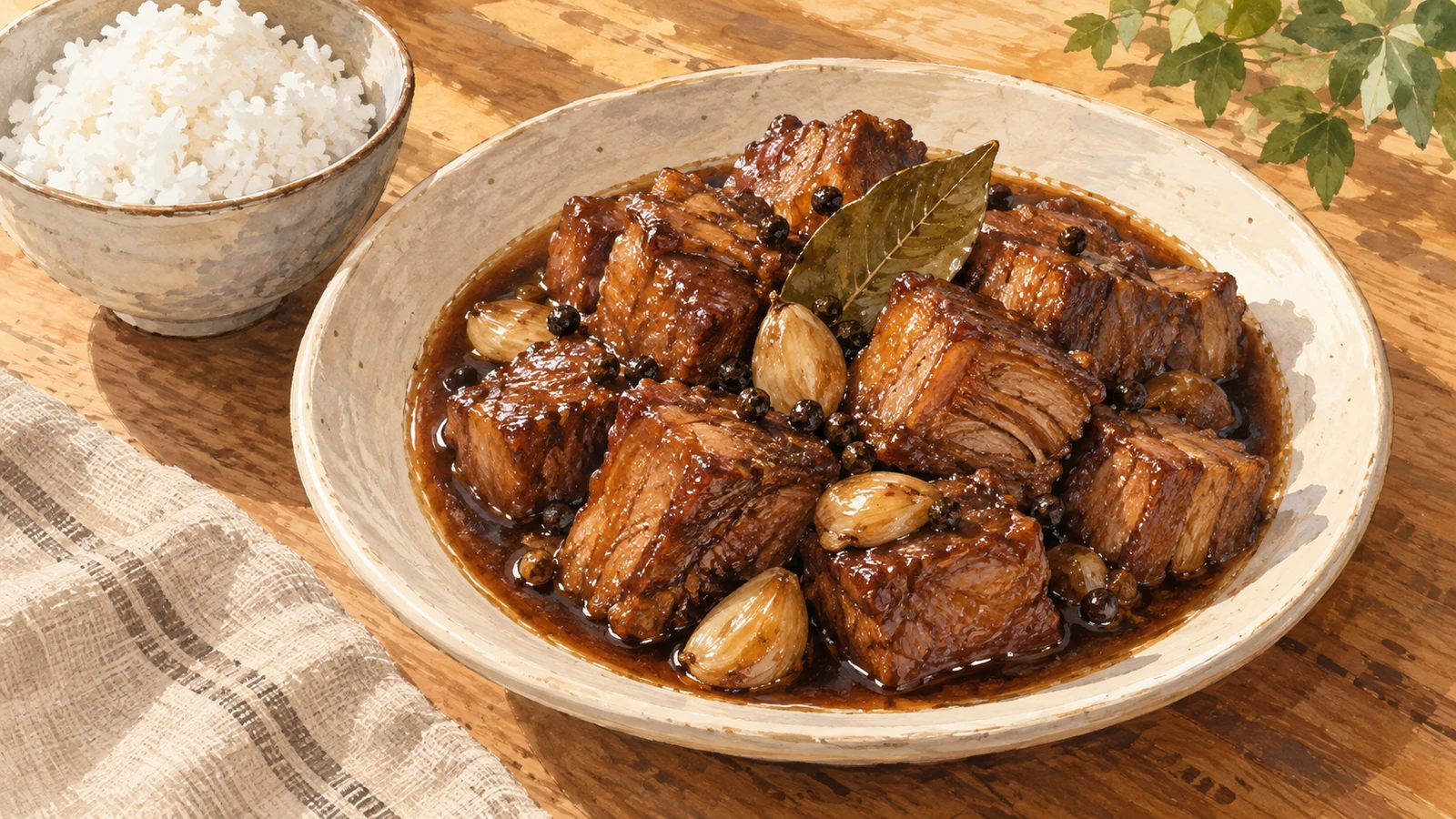
Filipino pork shoulder slowly braised with garlic, vinegar, soy and bay until tender, then served with the reduced sauce and rice.
Jump to recipe ↓Recipe
- Total time
- 1½–2 hours
- Method
- Braise
- Difficulty
- Moderate
- Allergens
- Soy · Wheat may be present in soy sauce
About 4 servings with rice
Allow roughly 1 1/2–2 hours, depending on the pork. Stay nearby during the braise and check the liquid every 10–15 minutes. Tenderness, not the clock, determines when shoulder is ready.
Equipment: Heavy lidded saucepan or small Dutch oven, tongs, wooden spoon, knife, board, measuring jug, clean plate and food thermometer.
Ingredients
- 800 g boneless pork shoulder, trimmed of thick outer skin and cut into 4 cm cubes
- 1 tablespoon neutral cooking oil
- 8 garlic cloves, peeled and lightly crushed
- 80 ml plain cane vinegar or white vinegar labeled about 5% acidity, not seasoned vinegar
- 60 ml regular soy sauce, not dark or sweet soy sauce
- 350 ml water, plus hot water as needed during the braise
- 2 dried bay leaves
- 1 teaspoon black peppercorns, coarsely cracked
- 1 teaspoon brown sugar, optional
- Freshly cooked rice, to serve
Method
Cut the shoulder into even pieces
Prepare the garlic and measure the liquids. Cut the pork into roughly 4 cm cubes and blot excess moisture. Keep some internal fat, but remove thick skin and large hard pieces of outer fat. Clean hands, board and knife after raw pork contact.
Convert a measurement for this stepBrown in a roomy pot
Warm the oil over medium heat. Brown the pork on a few faces, working in batches so the pieces sit in one layer. Move browned pieces to a plate that will be used only for the still-partly-raw pork. Lower the heat, add the garlic and stir briefly without burning it. Return all the pork to the pot and continue cooking immediately.
Convert a measurement for this stepBring the braising liquid together
Carefully add the vinegar, soy sauce, 350 ml water, bay leaves and cracked pepper. Scrape up browned bits with a wooden spoon. Bring to a boil, then lower to a gentle simmer and cover. The liquid should come partway up the meat; use a snug pot rather than an oversized shallow pan.
Convert a measurement for this stepKeep a gentle simmer until tender
Stay nearby and check every 10–15 minutes, turning the pieces and making sure there is liquid beneath them. Add hot water in small amounts if it is reducing too quickly. Begin checking tenderness around 60 minutes; shoulder can need 90 minutes or longer. Continue until a fork enters easily and a piece yields when pressed. Check at least 145°F (63°C) in the thickest pieces; reaching that minimum alone does not mean shoulder is tender.
Convert a measurement for this stepStop reducing when the sauce tastes right
Once the pork is tender, uncover. If the sauce is watery, simmer gently until it lightly coats the meat, checking a cooled spoonful as it reduces. Stop before it becomes too salty; loosen with water if needed. Add the optional teaspoon of sugar only if you want to soften the sharpness. Remove both bay leaves, then turn off the burner.
Convert a measurement for this stepRest off the heat
Leave the cooked pork off the heat for at least 3 minutes before serving. Keep the pot on a stable heatproof surface with the burner off.
Convert a measurement for this stepServe a little sauce with each portion
Spoon the pork beside rice and add some of the concentrated sauce. Use clean serving utensils, not the plate or tongs that held partly cooked pork.
Convert a measurement for this step
Give shoulder the time that loin does not need
Shoulder is the useful cut for this version: substantial cubes can simmer until tender without being treated like quick-cooking chops. The first hour is a point to start checking, not a promise that dinner is finished. If a fork meets resistance, keep a little liquid in the pot and continue gently.
Adapted from Vanjo Merano's pork adobo and Lalaine Manalo's chicken and pork adobo.
Do not reduce by color
Soy sauce can make the liquid dark well before it thickens. Taste a cooled spoonful when the pork is tender. If it is already salty enough, more evaporation will not improve it. Leave the sauce loose, or add water if you reduced it too far.
The vinegar should be ordinary food vinegar of the strength specified, not cleaning vinegar or a heavily sweetened seasoning. Cane vinegar is one option; plain white vinegar is another. They need not produce precisely the same flavor to work in this braise.
Adobo still belongs in the refrigerator
Vinegar in a meat dish is not a home preservation method. Do not leave this pot out overnight, even if someone describes adobo as a good make-ahead food.
USDA’s pork guidance specifies a minimum of 145°F (63°C) with a three-minute rest for whole cuts. A shoulder braise also needs the separate tenderness check in the card.
Divide leftovers into shallow containers and refrigerate within two hours, or one hour above 90°F (32°C). Use within 3–4 days, reheating to 165°F (74°C). A spoonful of water loosens the chilled sauce. The soy sauce commonly contains soy and wheat; check your bottle if either matters at the table.