Recipes
Kinpira Gobo: Burdock and Carrot with a Sesame Finish
Cut burdock and carrot into thin strips, cook to a crisp-tender bite, and finish with a light soy seasoning and sesame. Includes a guided cooking card.
Jump to recipe ↓Recipe
- Total time
- About 30–40 minutes
- Method
- Skillet sauté
- Difficulty
- Moderate
- Allergens
- Soy · Sesame · Wheat in regular soy sauce
About 4 small side portions
Allow roughly 30–40 minutes, depending on cutting speed and strip thickness. Contains soy, sesame, usually wheat, and alcohol from sake and many mirins; brief cooking does not guarantee alcohol removal.
Equipment: Clean vegetable brush, stable cutting board, knife and peeler, bowl, colander, clean towel, measuring spoons, large skillet, spatula and food thermometer for reheating.
Ingredients
- 270 g fresh edible burdock root (gobo)
- 70 g carrot
- 1½ tablespoons neutral cooking oil
- 1 tablespoon sake
- 1 tablespoon mirin
- 1½ tablespoons regular soy sauce
- 1 tablespoon granulated sugar
- 2 teaspoons toasted sesame seeds
- Water for soaking, plus 1–2 tablespoons at a time as needed in the pan
Method
Wash and cut the roots
Wash hands with soap for 20 seconds. Scrub the burdock and carrot under running water with a clean brush, without soap. On a stable board, cut the burdock into thin matchsticks about 5 cm (2 inches) long. Peel the carrot and cut similar strips.
Convert a measurement for this stepSoak and drain the burdock
Cover the burdock with cool water for about 10 minutes, changing the water halfway. Keep the carrot separate. Drain the burdock, rinse and pat dry with a clean towel before frying. Keep the stove off during preparation.
Convert a measurement for this stepHave the seasoning ready
Measure the sake, mirin, soy sauce and sugar into a small bowl. Set the sesame seeds aside for the finish. Have a little water within reach in case the vegetables need more cooking moisture.
Convert a measurement for this stepStart with the burdock
Heat the oil in a large skillet over medium heat. Add the drained burdock carefully and stir-fry until beginning to soften, about 2–3 minutes for thin strips. Stay at the stove and keep the pieces moving.
Convert a measurement for this stepAdd the carrot
Add the carrot and stir-fry for about 2–3 minutes more. Check a cooled burdock strip: it should be becoming tender while retaining a bite. If thick strips remain tough and the pan is dry, add water a tablespoon or two at a time and cook a little longer.
Convert a measurement for this stepCoat and reduce
Pour in the measured seasoning and stir to coat. Continue cooking and turning until little free liquid remains and the vegetables are crisp-tender. Lower the heat if the sauce catches; stop before the sugar scorches. Turn off the burner and fold in the sesame seeds.
Convert a measurement for this stepServe and store promptly
Serve small portions. Refrigerate leftovers promptly in a shallow container at 40°F (4°C) or below, within two hours or one hour above 90°F (32°C). Use within 3–4 days; discard food left out too long. If reheating, check for 165°F (74°C) throughout with a food thermometer.
Convert a measurement for this step
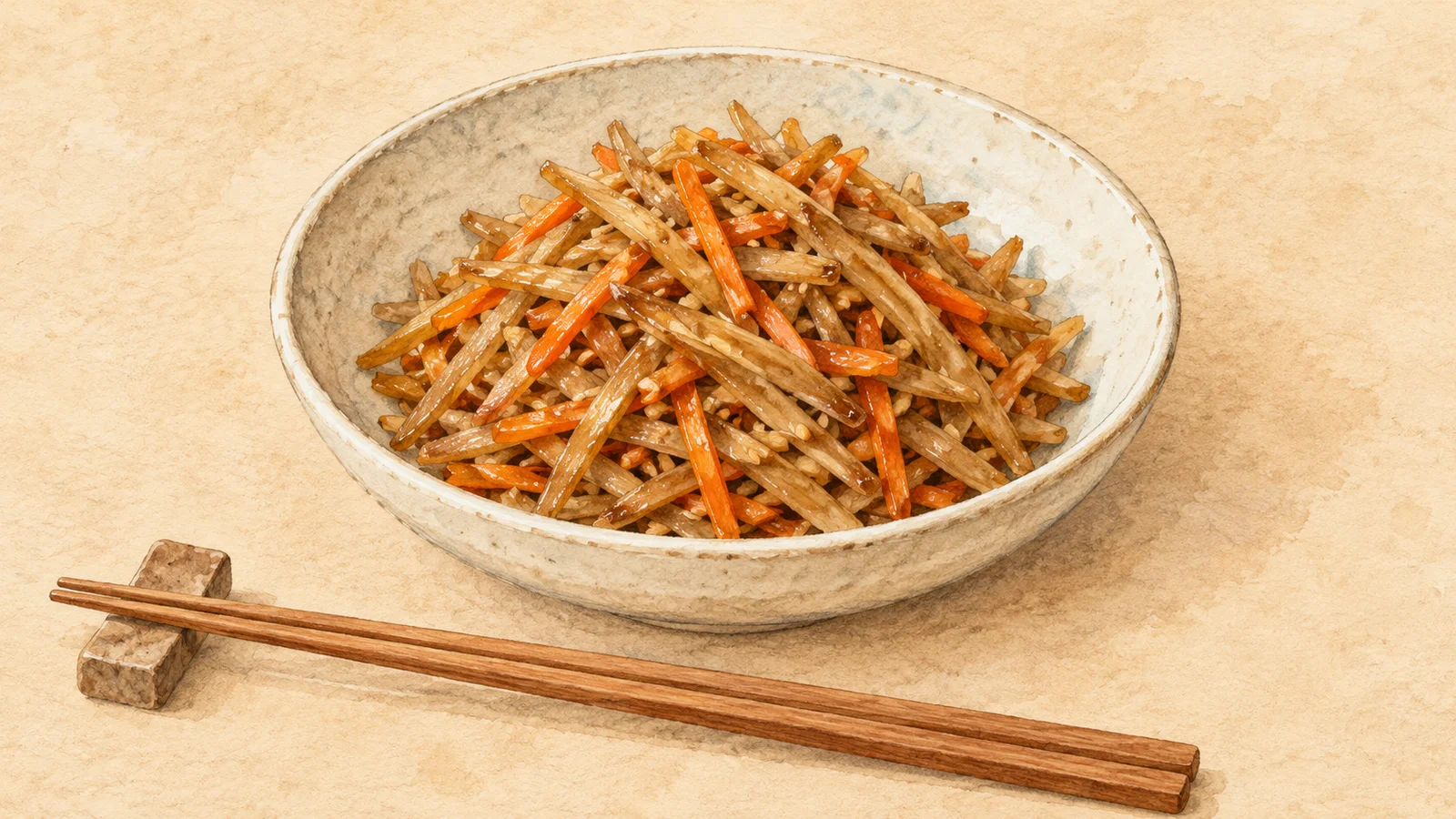
Thin burdock and carrot strips give kinpira gobo its bite. The burdock tastes earthy, the carrot adds sweetness, and a small amount of soy seasoning coats the vegetables. Set out a modest bowl beside rice and a main dish; this recipe makes about four small side portions.
Give the knife work a little time
Buy burdock root sold as food, often labeled gobo in a Japanese grocery. Use the weight in the card rather than counting roots, which vary in length and thickness. Choose sound roots and wash them before cutting. FDA’s produce guidance calls for plain running water and a clean brush on firm produce, without soap.
Keep the matchsticks narrow and reasonably even. A few oversized pieces can still feel woody when the rest are ready. Work with short, stable sections on the board and cut small stacks you can control. A mandoline is unnecessary for this amount.
Stop at a bite you enjoy
The finish is crisp-tender, not a purée. Makiko Itoh’s classic kinpira uses a taste of the burdock to judge that point and allows more water when it needs further cooking. Let a strip cool before tasting it. If the pan is drying while the root remains tough, a little water gives it more time without burning the seasoning.
The card adapts Namiko Hirasawa Chen's kinpira gobo, using her neutral-oil option and omitting optional chili. Allow roughly 30–40 minutes as a planning estimate; cutting speed and strip thickness change the time needed.
Use ordinary soy sauce and mirin, checking their labels. This recipe contains soy and sesame, and regular soy sauce usually contains wheat. Sake and many mirins contain alcohol; this short cooking method does not guarantee its complete removal. If alcohol must be excluded, choose a recipe formulated without it, such as spinach with sesame dressing, and check those condiment labels too.
Keep a small side ready for another meal
Kinpira fits beside teriyaki salmon or a bowl of miso soup. Serve only what you need and refrigerate the rest promptly in a shallow container. The sauce is seasoning, not a preservation method.
Maryland Extension recommends refrigeration within two hours, or one hour above 90°F, and using refrigerated leftovers within 3–4 days. Keep the refrigerator at 40°F or below. If reheating, bring the food to 165°F throughout and check with a food thermometer. A lunch portion needs cold storage too; carry it with adequate ice packs rather than leaving it on a desk all morning.