Ingredients
Choose Mirin by the Label and the Dish
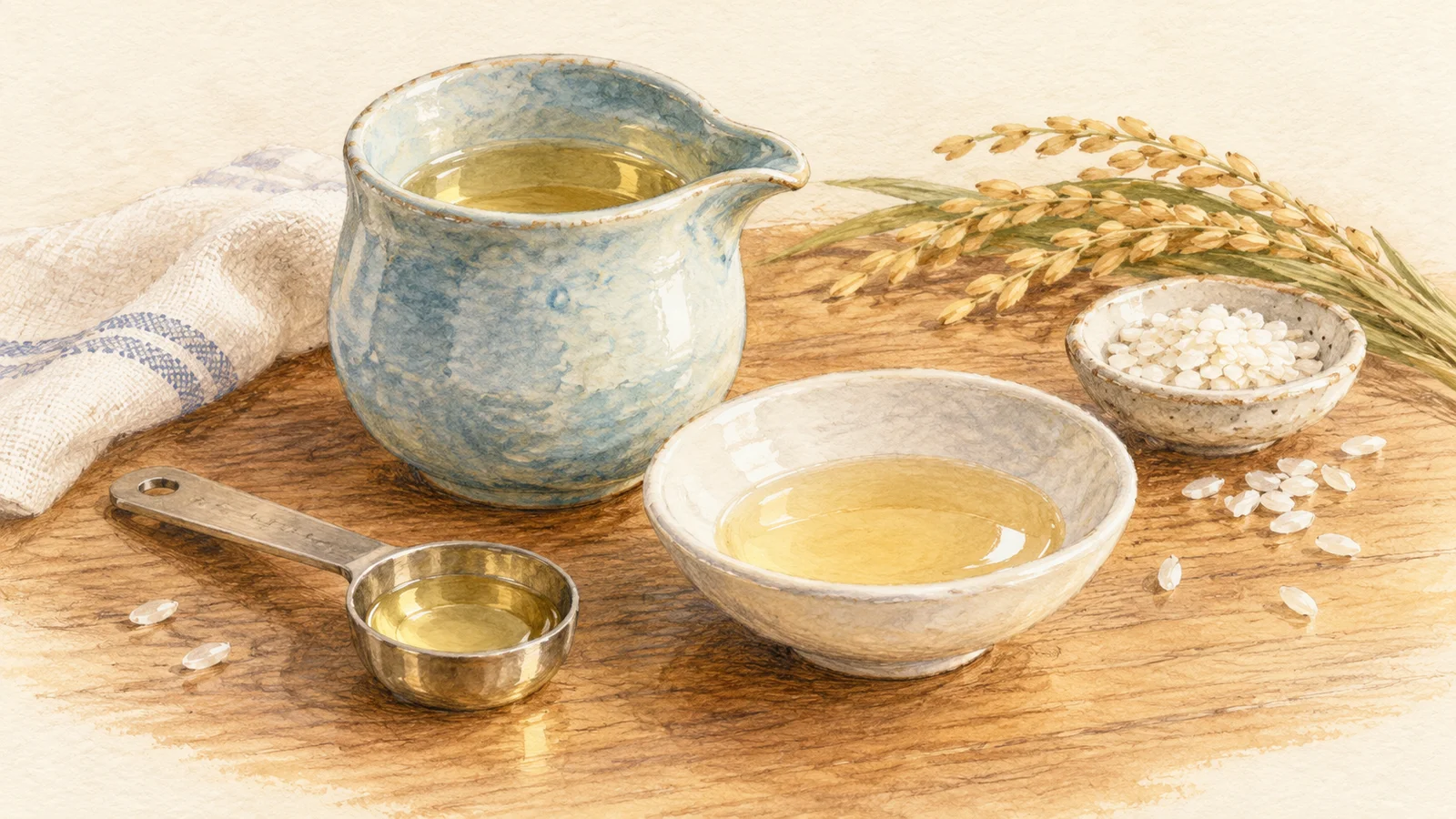
Mirin belongs on the sweet side of the pantry. It gives a soy glaze sweetness and shine, and rounds out the broth around simmered vegetables. Rice vinegar brings acidity instead. Their similar color and neighboring shelves make them easy to confuse, but swapping one for the other changes the dish.
The next distinction is on the bottle itself. “Mirin” can describe rice wine or a seasoning designed to do a similar job. Before buying, read the ingredients, alcohol information, sodium panel and storage directions together.
Three labels, different contents
- Hon mirin: Made with rice, rice koji and alcohol, commonly around 14% alcohol. It supplies sweetness and fermented flavor, with alcohol that matters for dietary choices.
- Aji-mirin or sweet cooking rice seasoning: Added sweeteners, salt and alcohol vary by formulation. It may contribute salt as well as sweetness; check before adding extra seasoning.
- Mirin-style or mirin-fu seasoning: Often much lower in alcohol. It can provide sweetness and gloss, but the name alone does not establish that it contains zero alcohol. Read the actual statement.
Kikkoman’s mirin glossary distinguishes alcohol-based mirin, salted sweet cooking rice seasoning and sweetened cooking seasoning. Treat those as useful categories rather than a guarantee about every imported bottle. The ingredient list on the product in your hand settles what you are buying.
Hon mirin develops sweetness as rice starch is broken down during production. Namiko Hirasawa Chen’s ingredient guide explains the role of rice koji and the differences among the commonly sold types. A bottle made with added syrup can still be useful for dinner; choose it with its salt and sweetness in mind.
Let the recipe set the timing
Mirin is not always a finishing splash. A simmered dish may cook it with broth; a teriyaki method may reduce it with soy sauce until the liquid coats the food. Kikkoman’s timing guidance gives different sequences for fish, vegetables and glazed dishes. Follow the sequence for the dish you are making instead of moving every addition to the end.
Two places to use a new bottle are teriyaki salmon and oyakodon. Their recipe cards give quantities and cooking checks. Measure the mirin with the other sauce ingredients before starting, so you can compare the recipe with your bottle without leaving a hot pan unattended.
When using a salted seasoning in place of unsalted mirin, account for that added salt before increasing soy sauce or salt elsewhere. Taste a fully cooked sauce when it is safe to taste; never sample liquid that has contacted raw meat or fish before it has cooked safely.
If the recipe needs mirin and the bottle is empty
Sake alone supplies neither the same sweetness nor the same balance. Chen suggests sake with sugar as a practical substitute, while noting that the flavor differs. Use a substitution written for the recipe where one is available. A delicate broth and a thick glaze give you different room to adjust sweetness and liquid.
Rice vinegar is not a straight replacement. Adding sugar to vinegar still leaves an acidic mixture, which can turn a mild simmering sauce sharply sour. Keep rice vinegar for the recipes that ask for its acidity.
For alcohol avoidance, use an explicitly suitable alcohol-free seasoning or the recipe’s water-and-sugar variation. “Low alcohol” and “mirin-style” are not sufficient assurances. Check the other ingredients too, and contact the manufacturer if the label leaves your particular requirement unanswered.
Heating does not reliably make an alcoholic ingredient alcohol-free. The USDA alcohol-retention data show that retention depends on preparation. A quick boil or the disappearance of a sharp smell is not a zero-alcohol test. Choose the appropriate ingredient at the start rather than extending a recipe’s cooking time in hopes of removing every trace.
Store the bottle you actually bought
Follow its after-opening instructions. High-alcohol hon mirin and low-alcohol sweetened seasonings do not necessarily share a storage method. Some need refrigeration; other labels call for a cool, dark place. Date the opening and keep the cap clean and closed.
For a first purchase, pick a bottle whose ingredients and storage instructions you can read, in a size you can use across a few planned dishes. Write its exact type beside any recipe adjustment you make. The next time the same sauce tastes different, that note is more useful than remembering only that you used “mirin.”