Recipes
Gamja Jorim: Soy-Braised Potato Cubes
Braise evenly cut potatoes in a sweet soy sauce, check the centers, then reduce the liquid to a light glaze. Includes a complete guided cooking card.
Jump to recipe ↓Recipe
- Total time
- About 30–40 minutes
- Method
- Skillet braise
- Difficulty
- Easy
- Allergens
- Soy · Sesame · Wheat in regular soy sauce
4 small side portions
Allow roughly 30–40 minutes; preparation and simmering vary with the potatoes and pan. Contains soy and sesame; regular soy sauce also contains wheat.
Equipment: Clean cutting board, knife and peeler, colander, mixing jug, measuring spoons, medium deep skillet with a fitted lid, broad spatula, skewer and food thermometer for reheating.
Ingredients
- 680 g (1½ lb) firm white or Yukon Gold potatoes
- 1 tablespoon neutral cooking oil
- 3 tablespoons regular soy sauce
- 2 tablespoons granulated sugar
- 1 teaspoon minced garlic
- 1 pinch ground black pepper
- 180 ml (about ¾ US cup) water, plus small additions if the pan dries before the potatoes soften
- 1 teaspoon toasted sesame oil
- ½ teaspoon toasted sesame seeds
Method
Wash and cut evenly
Wash hands with soap for 20 seconds. Scrub the potatoes under running water with a clean produce brush; do not use soap on them. Peel and cut into roughly 2.5 cm (1-inch) cubes on a stable board. Rinse the cubes and drain well before they meet the oil.
Convert a measurement for this stepMix the braising liquid
Stir the soy sauce, sugar, minced garlic, black pepper and measured water in a jug. Keep the sesame oil and seeds separate for the finish. Have the lid and skewer beside the stove before heating the pan.
Convert a measurement for this stepTurn the potatoes in oil
Heat the neutral oil over medium heat in the skillet. Add the drained potatoes carefully and cook for about 4–5 minutes, turning occasionally so they do not stick. Stay at the stove; the pieces need not be deeply browned.
Convert a measurement for this stepCover and check the centers
Carefully pour in the braising liquid and bring it to a boil. Reduce the heat to a steady gentle simmer and cover. Stay nearby, checking after about 5–6 minutes. Open the lid away from your face and test a large cube with a skewer. It should be nearly tender but still hold together. If the center is firm, continue cooking and recheck every few minutes; add water a tablespoon or two at a time if the pan is getting dry.
Convert a measurement for this stepUncover and reduce gently
Uncover and simmer for a few more minutes, folding the cubes gently with the spatula. Stop when a skewer slides easily into the largest pieces and the sauce lightly coats them, with a little loose liquid still in the pan. Lower the heat if the sauce reduces too quickly. Do not cook the pan dry or continue until the cubes crumble.
Convert a measurement for this stepTurn off the heat and finish
Turn off the burner. Fold in the toasted sesame oil, scatter over the seeds and serve in four small side portions. Refrigerate leftovers promptly in a shallow covered container at 40°F (4°C) or below, within two hours of cooking or one hour above 90°F (32°C). Use within 3–4 days. Reheat leftovers to 165°F (74°C) throughout, measured with a food thermometer; discard portions left out beyond the time limit.
Convert a measurement for this step
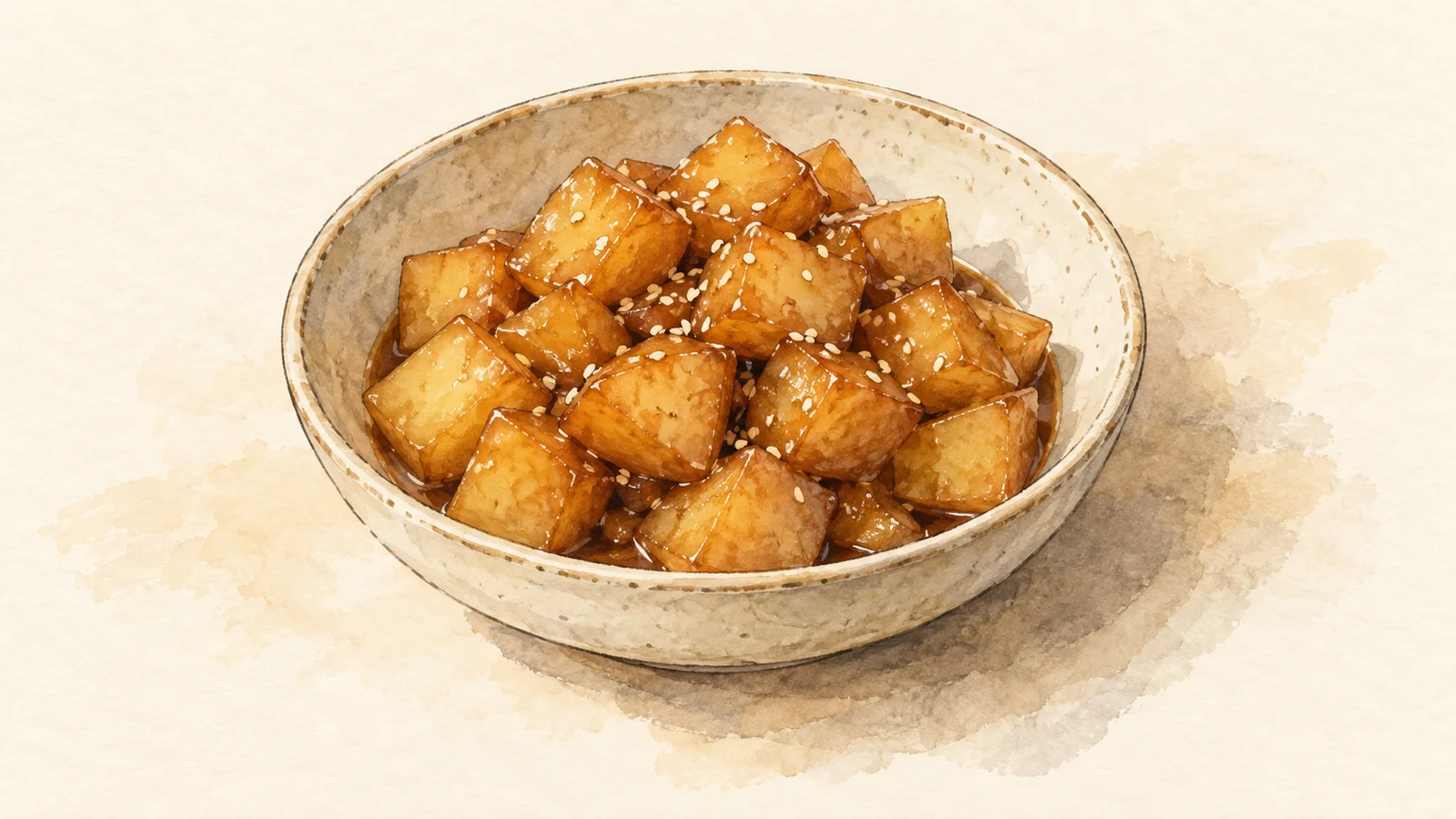
The best moment to stop cooking gamja jorim is when a potato cube gives easily to a skewer and its sauce still moves. Leave it reducing much longer and a glossy coating can become a sticky layer on the pan. These soy-braised potatoes make a small, savory-sweet companion to rice, with sesame added after the heat goes off.
Use ordinary white or yellow potatoes cut into cubes. Whole baby potatoes need a different cooking sequence: Maangchi’s algamja-jorim cooks the small, skin-on potatoes before adding the sweet soy glaze. The card here is for cut potatoes braised with water.
Start with pieces that can finish together
Choose a firm, sound potato and make the cubes roughly an inch across. A mix of tiny chips and large chunks makes the final decision harder: one piece may already be falling apart while another still resists the skewer. Trim the pieces toward a common size before heating the pan.
White or Yukon Gold potatoes are useful when you want recognizable cubes. Hyosun’s gamja jorim guide notes that these hold their shape better than starchier potatoes. Keep the turns gentle once the centers soften; lift and fold with the spatula instead of stirring vigorously.
Watch the liquid as well as the potato
During the covered stage, the sauce supplies moisture for the potatoes to cook. If the pan dries while the centers are firm, add a little water and continue gently. Turning up the heat to chase the clock only makes the remaining liquid disappear faster.
Once the potatoes are nearly tender, uncover and stay at the stove for the reduction. Tilt the pan slightly to see what remains. You want enough sauce to coat the cubes, with a little loose liquid still moving between them. The potatoes continue taking up sauce after cooking, so a pan reduced completely dry has gone farther than needed.
The card adapts Hyosun's gamja jorim linked above, using her plain-potato option and sugar substitution, without the optional wine or additional vegetables. The roughly 30–40-minute allowance is a planning estimate. Potato size, variety and your pan determine the actual cooking time.
Serve a little, chill the rest
Set out small portions beside braised tofu or garlic-chive eggs. This is a side dish; four portions means four modest accompaniments. Soy sauce supplies soy and usually wheat, while both the sesame oil and seeds contain sesame. Check labels for anyone avoiding those ingredients.
Follow FDA’s produce guidance: wash the potatoes before peeling, using running water and no soap. Clean the board and utensils before preparing the rest of the meal.
Put leftovers in a shallow covered container and refrigerate promptly. Maryland Extension gives the two-hour limit, reduced to one hour above 90°F, and a refrigerator limit of 3–4 days. The soy-and-sugar sauce does not make the potatoes safe to leave on the counter. If reheating, check for 165°F throughout with a food thermometer.