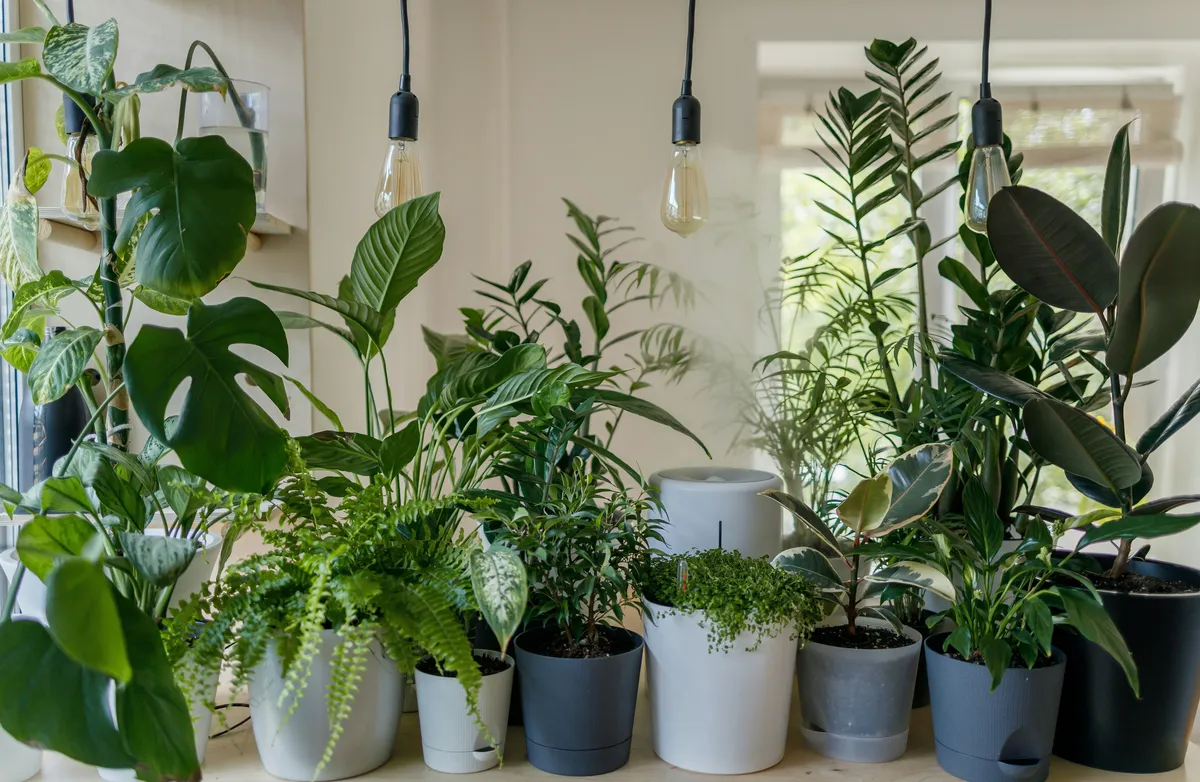
A trip length alone cannot determine whether a houseplant needs help. A small fern in bright summer light may use water quickly, while a succulent in a large pot may remain adequately dry for much longer. Species, root-ball size, potting mix, container material, light, temperature, humidity, and season all change water use.
The safest plan starts with the plant’s normal behavior in its current location. Observe how quickly its root zone moves from freshly watered to the point when that species normally needs water. Then choose the least complicated arrangement that can cover the expected interval. Any wick, reservoir, sitter routine, or location change should be tested before departure.
Start with a plant-by-plant moisture assessment
University of Connecticut’s houseplant watering guidance explains that watering frequency depends on the species, light intensity, temperature, humidity, and other environmental conditions. Divide the collection by actual moisture behavior rather than using one plan for every pot:
- Dry-tolerant plants: cacti, many succulents, and other plants normally allowed to dry substantially may need no added water. A continually wet reservoir can be more dangerous than the absence.
- Moderate-use plants: many foliage houseplants can rely on a normal, thorough watering if observation shows that the root ball stays within the species’ acceptable range for the full absence.
- Moisture-sensitive plants: plants that normally need attention during the absence require a tested self-watering system or a responsible sitter.
- High-risk plants: recent repots, divisions, propagations, seedlings, plants in unusually small pots, and specimens already affected by pests or root trouble need individual judgment. A sitter may be preferable to an unattended device.
Check the mix below the surface and lift smaller pots to compare their wet and dry weights. Inspect drainage holes and decorative cachepots. A wet surface does not prove the whole root ball is saturated, and water racing down a gap at the pot edge may leave a dry center.
Prepare without creating a second problem
Water only plants that are due or nearly due. When water is needed, apply enough to moisten the full root zone and let excess drain. Iowa State University Extension and Outreach recommends checking moisture rather than watering on a calendar, watering thoroughly when needed, and emptying collected water from saucers or outer pots. It also notes that a very dry mix can resist rewetting and may need repeated applications.
Do not give every pot an extra “insurance” watering. Saturating an already-wet root zone reduces oxygen around the roots and can contribute to root decline. Do not add an unneeded fertilizer dose before leaving; fertilizer does not compensate for a watering problem, and excess soluble salts can injure roots.
Remove fallen leaves and spent flowers from the potting mix, and inspect leaf undersides, stems, and the soil surface. UC Integrated Pest Management recommends examining foliage, leaf bases, stems, and roots for pests and disease symptoms. Isolate an infested plant rather than grouping it tightly with unaffected plants while nobody is present to notice spread.
Group pots by care need to simplify a sitter’s work, but keep adequate space for air movement. Label “check first,” “water if dry,” and “do not water” groups. Confirm that drainage water cannot damage furniture or flooring.
Adjust light and temperature conservatively
A hot, sunny window can accelerate water loss. University of Florida IFAS Extension advises moving indoor plants away from warm windows and direct sun to indirect light while away. Make a modest move that reduces heat load without putting the plant in darkness. Do not transfer an indoor plant outdoors just before travel; outdoor light, wind, rain, pests, and temperature can change its needs abruptly.
Keep heating or cooling at a range appropriate for the species and protect plants from vents, cold drafts, and hot glass. Closing every blind may leave inadequate light, while turning off climate control can expose plants to damaging extremes. Flowering plants and seedlings may be particularly sensitive to a major light change.
Choose a watering method by root-zone need
No supplemental system
Use the plant’s established moisture-use record. If it normally reaches its next watering point after the planned return, leave it in a stable location after normal care. This is often appropriate for dry-tolerant plants. Do not attach a reservoir merely because one is available.
A plant sitter
A reliable person is the most adaptable option when plants differ widely, the absence extends beyond their observed moisture window, or a system could fail unnoticed. Give the sitter a short checklist:
- Check only the labeled plants on the stated visit window.
- Test moisture as demonstrated; do not water merely because the surface looks pale.
- Apply the measured amount or water to drainage, according to the instructions for that pot.
- Empty saucers and cachepots after drainage.
- Send a photo or message if a plant is wilted while its mix is wet, a reservoir leaks, or pests appear.
Avoid vague directions such as “water everything a little.” Premeasure a suitable container if the sitter may have difficulty judging volume, and leave the sink or tub accessible for pots that must drain there.
A self-watering container or wick
Virginia Cooperative Extension describes self-watering containers as reservoirs that supply moisture through a wick. They can suit many houseplants but not plants that prefer a drier mix; reservoirs also require regular cleaning to limit algae and waterborne disease concerns.
A separate reservoir and cord use the same basic principle, but performance varies with wick material, height, potting mix, and root density. Test the complete setup in the plant’s actual location through at least one normal wet-to-dry cycle. Mark the reservoir level at the start and confirm that the mix becomes moist rather than saturated. Make sure the wick cannot slip out or siphon water onto a floor.
Do not assume a product’s reservoir duration. Measure that plant’s water use during the trial and leave a margin for warmer or brighter conditions. A system that empties too quickly needs redesign or human backup.
Bottom watering is not long-term storage
Setting an ordinary nursery pot in standing water for the entire absence can deprive roots of oxygen. Virginia Cooperative Extension advises that container houseplants not remain in a basin of water for an extended period. A bathtub or sink is useful for watering and drainage, but it should not automatically become a deep, unattended reservoir. Use only a tested setup suited to moisture-loving plants, and keep the pot itself above standing water unless the container was designed for reservoir irrigation.
Avoid unreliable shortcuts
Do not use an inverted bottle for the first time on departure day. Its flow can stop, discharge too fast, dislodge soil, or tip. Do not seal a plant in plastic unless a species-specific, tested propagation or terrarium method calls for it; condensation, leaf contact, overheating, and disease conditions are difficult to monitor while away. Misting foliage before leaving does not replace root-zone water.
Automatic pumps and timers add failure points. If one is necessary, use equipment intended for indoor irrigation, follow its instructions, test it under the expected conditions, secure every tube, and place the water supply where a leak cannot reach outlets, power strips, flooring, or furniture. Never improvise mains-powered equipment around an open reservoir.
Protect people, pets, and the home
Use stable, covered reservoirs where possible. Buckets, tubs, dangling cords, and top-heavy pots can be hazards for children and animals. Keep toxic plants and irrigation water out of reach; water that has contacted fertilizer or pesticides should never be accessible for drinking. Do not leave plants blocking exits, heaters, vents, or electrical equipment.
Ask a sitter to follow pesticide labels if treatment is unavoidable, but postponing routine spraying until someone can monitor the plant is generally simpler. Never leave unlabeled chemical mixtures for another person to identify.
Check the system, then leave it alone
Before departure, confirm that each plant has the correct label, every drainage route is clear, reservoirs are stable, and the sitter can enter. Photograph the arrangement and record starting reservoir levels. The goal is not to keep every pot continuously wet; it is to keep each root zone within a range the plant already tolerates.
On return, check moisture before watering. Wilt with wet mix can indicate root trouble rather than thirst. Empty standing water, restore plants gradually to their normal light positions, and inspect for pests. A few damaged leaves may not recover, but abrupt repotting, fertilizing, and heavy watering all at once can add stress. Correct the identified condition first and resume normal care based on the plant’s response.
Sources
- Vacation Plant Care (University of Florida IFAS Extension). Accessed August 25, 2026.
- Properly Watering Container Houseplants (Virginia Cooperative Extension). Accessed August 25, 2026.
- Houseplant Watering Recommendations (University of Connecticut Home & Garden Education Center). Accessed August 25, 2026.
- How to Care for Houseplants (Iowa State University Extension and Outreach). Accessed August 25, 2026.
- Houseplant Problems (University of California Statewide Integrated Pest Management Program). Accessed August 25, 2026.