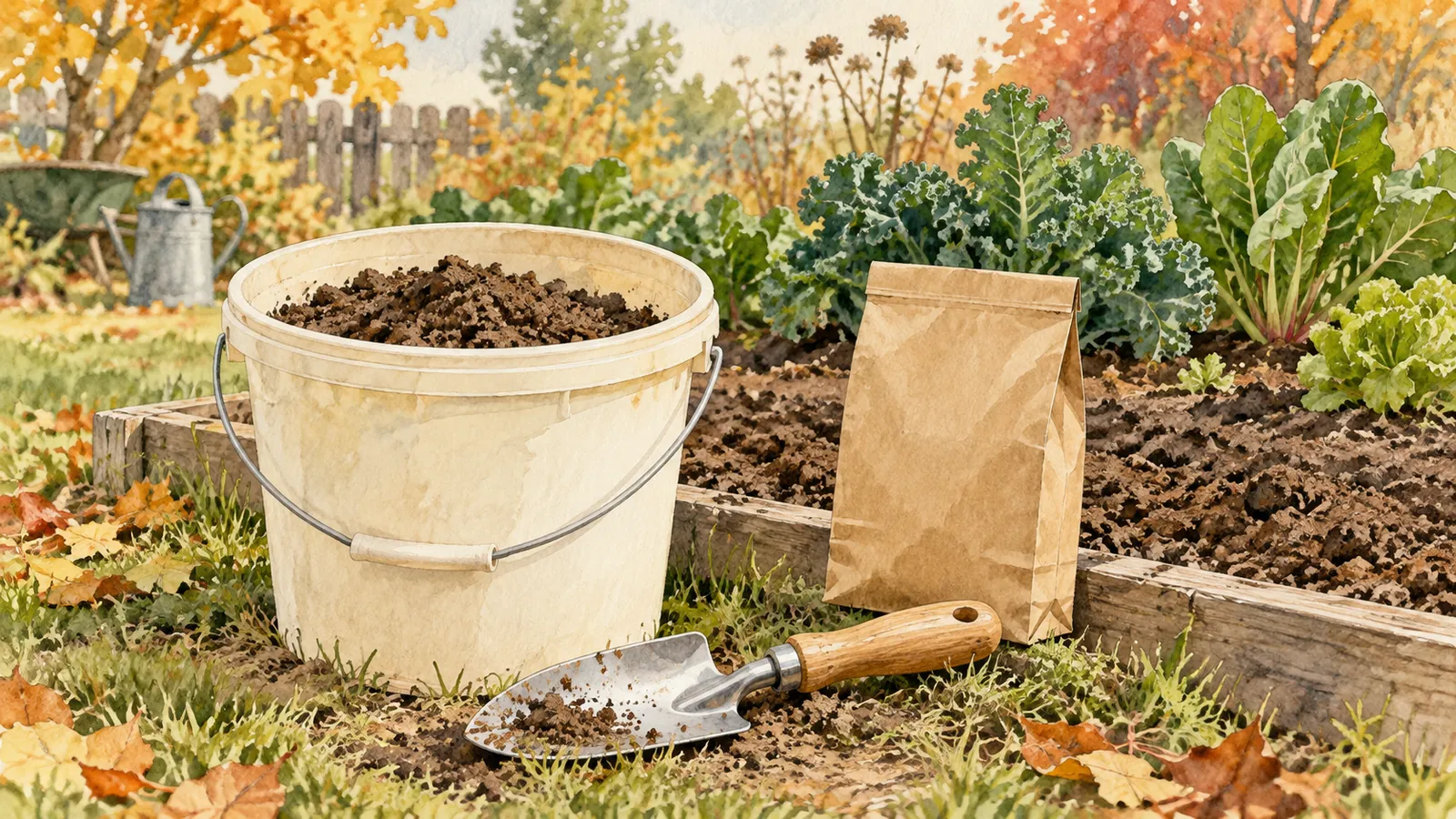
Before spreading another bag of lime or fertilizer over an empty vegetable bed, take a soil sample. The useful question is not whether the soil looks rich. It is what this particular bed needs for the crops you plan to grow next.
After harvest, the bed is accessible and there is time to consider the report before spring planting. A laboratory test can help you stop adding a nutrient that is already plentiful, as well as identify a shortage. The value starts with the handful of soil you send: it needs to represent the bed, not its best-looking corner.
Choose the test before picking up the trowel
Find your local Extension service’s soil-testing guidance and choose a laboratory that gives recommendations for home vegetable gardens. Download its current submission form and sampling instructions. Check the mailing address, required quantity and drying directions on the lab’s own website before collecting anything.
A routine fertility panel usually includes soil pH and several nutrient measurements, but packages differ. Minnesota Extension describes a regular test with estimated texture, organic matter, phosphorus and potassium; other labs bundle different measurements. Read what is included instead of assuming every test with the same name covers the same things.
For a bed filled mainly with a commercial soilless mix, ask the lab which service applies. A sample from an outdoor mineral-soil garden and a sample of container medium may need different handling and interpretation. Describe what is actually in the bed when you ask.
Draw the boundaries of each sample
Sketch the beds and give each sampling area a short name. Keep areas separate when their soil, drainage or past treatment differs. A bed that received years of compost should not disappear into an average made with a newly dug patch beside it.
UMass Amherst’s sampling instructions use similar appearance, texture, slope, drainage and management to define an area. Its guidance also advises against sampling very wet soil or sampling within six to eight weeks of lime or fertilizer application. If you have already treated a bed, tell your chosen lab what you added and when.
Take several slices from the root zone
Use a clean trowel, spade or soil probe and a clean bucket. Move surface mulch aside so it does not become the sample. Work across the growing area, avoiding paths and unusual spots such as a recent fertilizer spill. In raised beds, collect from the beds themselves rather than the walkways between them.
Take similar amounts from each location at the depth your lab specifies. This matters: a scrape from the surface is not equivalent to a slice through the cultivated soil. Keep the depth consistent throughout that sampling area.
For example, Penn State’s home-garden instructions call for thin slices or borings from at least 13 places, sampled to cultivation depth or six inches. UMass specifies 12 or more subsamples at six to eight inches. These are instructions for their respective services, not numbers to average together. Follow the lab receiving your sample.
Mix the subsamples thoroughly in the bucket, removing stones, roots and debris. The small portion you mail comes from this mixture. Do not fill the bag with just the last trowelful because it is convenient to reach.
Dry, label and describe it
Follow the lab’s air-drying directions; do not bake or microwave the soil to hurry it along. Penn State specifies air-drying without heat and sending one cup. Use the quantity and container requested by your selected lab, and keep each area separate while drying.
Match the name on the sample bag to the submission form and your sketch. Include the intended crop or crop code, the area represented and relevant treatment history. A label such as “east vegetable bed” will still make sense when the result arrives; “sample two” may not.
Keep a copy of the form and collection date with your bed sketch.
Read the recommendations, not just the numbers
Start with the crop named on the report, then read its pH and fertilizer recommendations. Soil pH affects nutrient availability, and a low number alone does not tell you how much lime to spread. The Maryland report guide explains how stored acidity and soil characteristics affect the amount required.
An adequate or high nutrient result is not an invitation to add more. Choose amendments that fit the recommendation, and measure the actual bed area before converting a rate. A rate expressed as pounds of nutrient is different from pounds of a fertilizer product; ask the lab or Extension office to check your calculation if that distinction is unclear.
A nitrogen recommendation may reflect the needs of the planned crop rather than a measurement of all nitrogen in the soil. Do not assume a missing nitrogen result means the lab forgot it. Follow the report’s application timing rather than applying the whole coming season’s fertilizer in fall.
Keep fertility and contamination questions separate
A satisfactory pH and nutrient report does not establish that a site is free of contaminants. Maryland Extension recommends lead testing for vegetable gardens. Confirm whether it is included, and discuss any known industrial use, suspect fill or other contamination concern before choosing a test. A routine fertility panel is not a general pesticide or pathogen screen.
Save the report with your bed sketch and a dated list of what you actually apply. Use the same lab for later comparisons when possible, since methods and reporting units can differ. The next purchase should follow the recommendation for that bed, with the amount written down before the bag is opened.
Sources
- Soil testing for lawns and gardens (University of Minnesota Extension). Accessed September 26, 2026.
- Soil Sampling Instructions (Penn State Agricultural Analytical Services Lab). Accessed September 26, 2026.
- Sampling Instructions for Routine Soil Analysis (University of Massachusetts Amherst). Accessed September 26, 2026.
- Soil Testing and Soil Testing Labs (University of Maryland Extension). Accessed September 26, 2026.
- Understanding Your Soil Test Report (University of Maryland Extension). Accessed September 26, 2026.