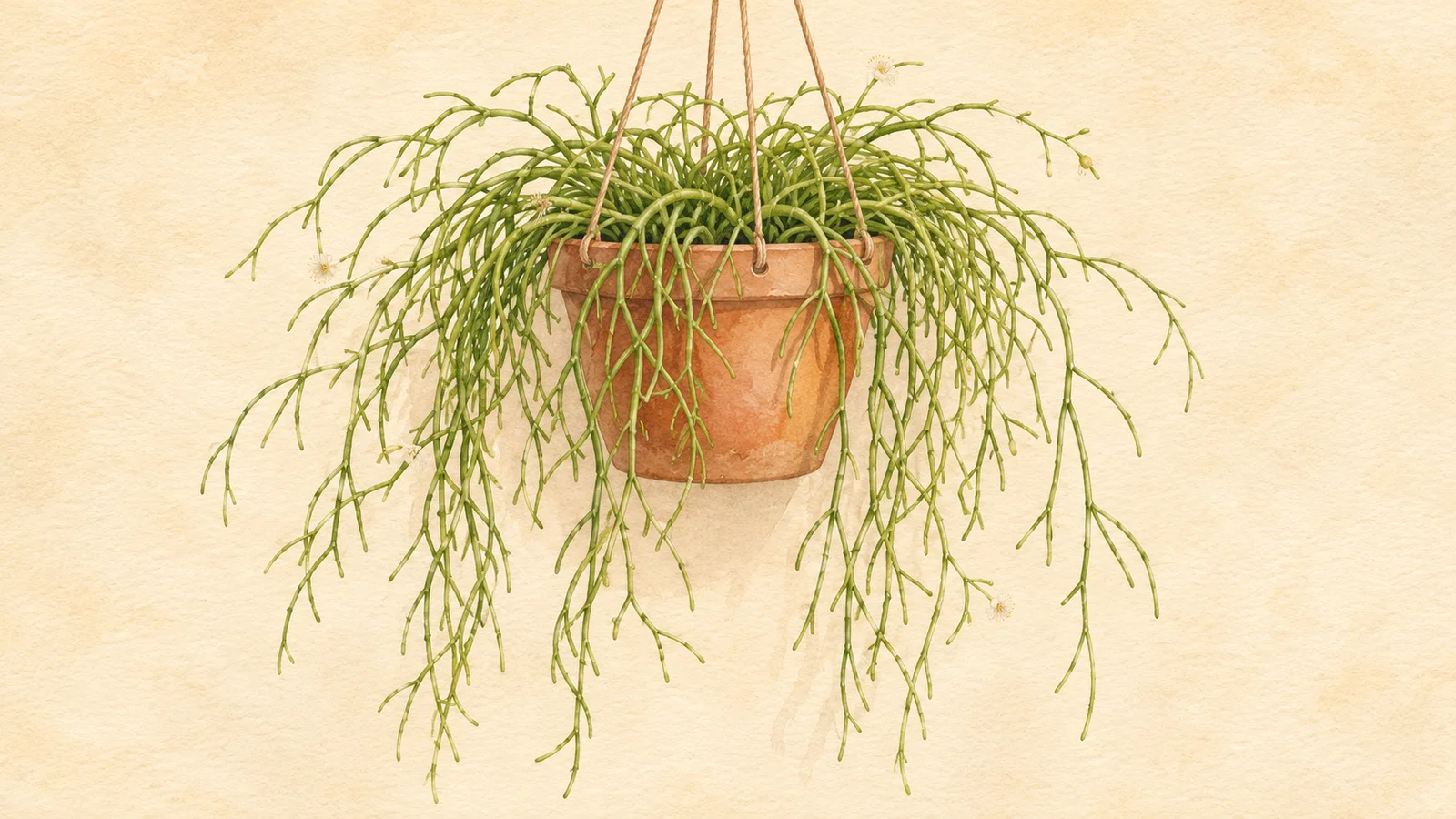
Mistletoe cactus makes a curtain of thin green stems, softening the edge of a shelf or spilling from a hanging pot. Its shape invites you to put it somewhere high. Before choosing that hook, make sure you can reach the potting mix and take the plant down to water it. A beautiful hanging plant still needs a workable routine.
The species here is Rhipsalis baccifera. Its stems are round and slender, with little branches growing out at irregular intervals. It belongs to the cactus family, but a sunny desert-cactus shelf and long stretches of bone-dry soil are a poor starting point for its care.
A cactus that grows on other surfaces
Kew’s plant database identifies this species as an epiphyte or lithophyte: it can grow on trees or rocks. Its native range extends through tropical and subtropical parts of the Americas, Africa and Sri Lanka. That background helps explain why a pot needs both air around the roots and access to moisture.
Check the label when buying. Rhipsalis is a whole genus with varied stem shapes; this guide concerns R. baccifera. Young stems may have a few fine bristles that become less conspicuous as they mature. Do not mistake the absence of large desert-cactus spines for a sign that the label must be wrong.
Filter the light, keep the pot within reach
Choose bright, indirect light. The RHS cactus growing guide specifically separates epiphytic cacti from sun-loving desert species. An east- or west-facing window can work; strong light at a south-facing window may need a sheer curtain.
Check the position at the plant’s height. A room can look bright from your chair while the pot hangs in shadow above the window. Conversely, the lower stems may catch a strip of harsh afternoon sun. Look at the whole plant during the day before deciding the spot is suitable.
Leave room for the stems to hang without catching on a door, dragging across a walkway or becoming trapped under the pot. Use a secure hanger rated for the weight of the watered container. If taking it down would require balancing on furniture, a lower shelf is the more useful home.
NC State Extension gives 60–80°F as a suitable temperature range. Keep stems away from freezing glass and strong heater drafts. A warm room does not help if the plant itself is pressed against a cold pane.
Let the surface dry without abandoning the roots
Use a container with drainage holes and a loose mix intended for epiphytic cacti. The RHS species profile recommends epiphytic cactus compost, moderate watering during growth and keeping the plant just moist in winter. Do not apply a desert cactus’s prolonged dry winter rest to this plant.
Check the mix before watering. Let its surface dry, then water thoroughly and let the excess drain away. Avoid waiting until the entire pot is hard and dry and the stems have shriveled. In winter, slower drying usually means a longer interval between waterings, not an instruction to ignore the pot for months.
Illinois Extension explains why a fixed weekly schedule is unreliable: light, temperature, humidity, pot size and potting mix all change water use. Set a reminder to check, then decide whether water is needed. Feel the mix rather than judging only its color.
Take a hanging pot to the sink if that makes thorough watering and draining easier. Empty any saucer or outer decorative pot before returning the plant to its place. Water hidden beneath the nursery pot still surrounds its drainage holes; an attractive cover does not make that standing water disappear.
When roots have outgrown the pot, repot in spring into a modestly larger container. The RHS warns that an oversized pot can stay wet too long. Our pot-selection guide helps compare container materials and drainage before you buy.
Humid air is a separate need
This cactus appreciates higher humidity. If indoor air becomes very dry during heating season, a humidifier can help. Iowa State Extension notes that misting raises humidity for only a few minutes; frequent spraying is not a dependable substitute for improving the room’s air.
Keep normal air movement around the stems. Avoid wedging the plant into a crowded, damp corner in an effort to make it humid. Adding water to already wet potting mix will not solve dry air, either. Our houseplant humidity guide explains ways to assess the room before changing your setup.
Read the stems alongside the soil
Puckered stems that lose their firmness can indicate thirst, but look at the mix before reaching for the watering can. NC State also warns that overwatering can cause mushy growth and root rot. A limp plant in wet soil needs investigation, not another automatic drink.
Brown tips can accompany dry conditions, while excessive direct sun can scorch stems. Check recent changes in placement and watering together. If only the sunward side is damaged, that is useful information to bring to a local extension office or nursery when asking for help.
Inspect the branching joints during watering for pests such as mealybugs, aphids or spider mites. Separate a suspect plant from neighboring houseplants while you identify the problem. Avoid choosing a spray solely because the plant looks unhappy.
Long stems may be trimmed if they obstruct the space, though routine pruning is not required. The RHS describes small white or greenish flowers, often in winter or spring. Enjoy them if they appear; the everyday attraction is the branching green curtain, which deserves enough light and room even when there are no flowers.
Sources
- Rhipsalis baccifera (Royal Botanic Gardens, Kew: Plants of the World Online). Accessed November 28, 2026.
- Rhipsalis baccifera: mistletoe cactus (Royal Horticultural Society). Accessed November 28, 2026.
- How to grow cacti and succulents (Royal Horticultural Society). Accessed November 28, 2026.
- Rhipsalis baccifera (North Carolina State University Extension). Accessed November 28, 2026.
- Watering: Houseplants (University of Illinois Extension). Accessed November 28, 2026.
- How can I raise the relative humidity indoors for my houseplants? (Iowa State University Extension and Outreach). Accessed November 28, 2026.