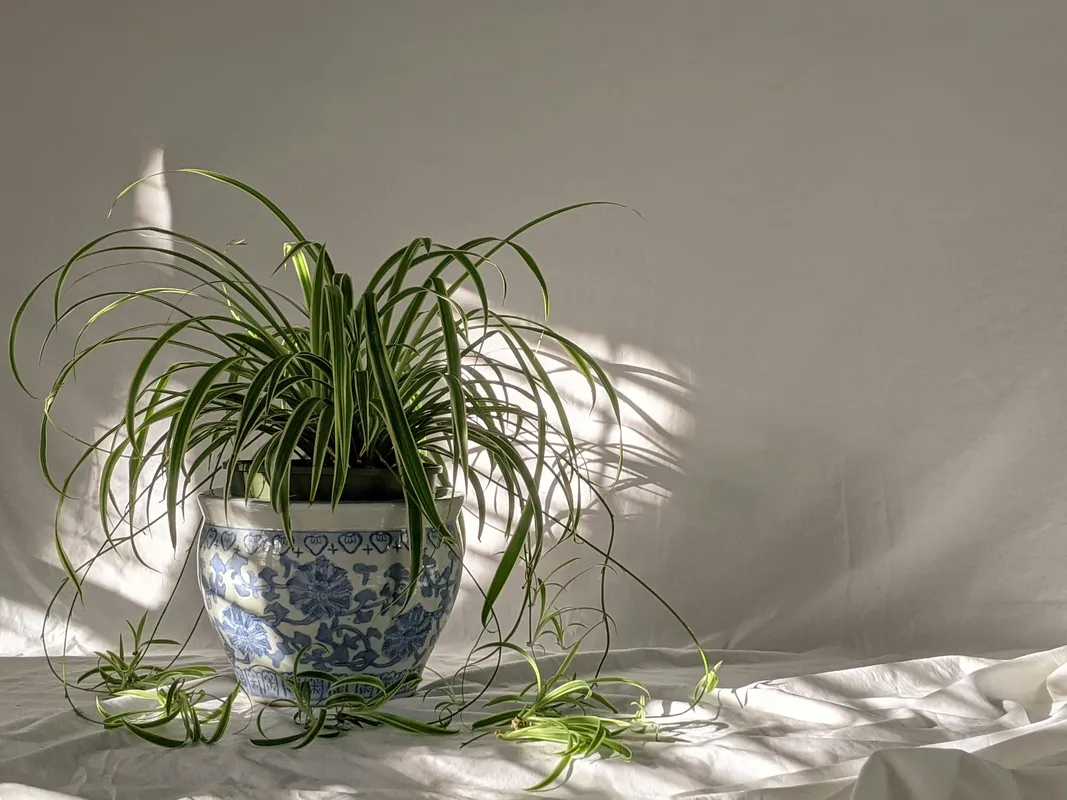
Spider plant (Chlorophytum comosum) produces small plantlets along arching flowering stems, often called runners or stolons. Those plantlets can become independent plants, but their visible leaves do not prove that they have a working root system. The safest choice depends on what is present at the plantlet’s base.
University of Wisconsin–Madison Extension describes two practical routes: hold an attached plantlet against soilless medium until it roots, or remove and pot a plantlet that has already begun developing roots. That distinction is more useful than choosing a method by a promised number of days. Rooting speed varies with plantlet development, parent health, light, temperature, moisture, and the growing medium.
Identify the plantlet and its roots
A spider plant’s narrow leaves arise from a central crown. Mature plants may produce small white flowers on long stems, followed by leafy plantlets. North Carolina Extension’s plant profile identifies those stolons and plantlets as characteristic structures and notes that plantlet formation is affected by light. Excess fertilizer can reduce plantlet production. A lack of pups is therefore not proof that the parent needs a larger dose of fertilizer or must be forced into a root-bound pot.
Inspect a candidate without pulling or twisting it. Useful signs include:
- several firm leaves emerging from an intact central base;
- short white or pale root nubs beneath the base; or
- longer, branched roots that can be spread into potting mix.
Brown tissue where the plantlet joins the runner is not the same as a healthy root. Softness, a sour odor, spreading leaf spots, visible pests, or collapse are reasons to pause. Propagating a stressed or infested plant can carry the same problem into a new pot.
An unrooted plantlet can still be propagated, but keeping it attached while it roots provides a continuing connection to the parent. A detached plantlet is the simpler choice when it already has a useful cluster of roots.
Prepare a clean, draining setup
Start with a healthy, correctly identified parent. Penn State Extension’s houseplant propagation guidance recommends stock plants free of disease, insects, water stress, excessive heat, and excess light. It also calls for sharp, clean tools and clean rooting media. These precautions reduce avoidable damage; they cannot guarantee that every plantlet will establish.
Gather the following:
- a small container with an open drainage hole;
- fresh, disease- and pest-free soilless houseplant mix;
- clean scissors or pruners;
- a second pot stand or stable surface if layering beside a hanging parent; and
- a clean U-shaped plant pin, bent wire, or paper clip if the plantlet will not stay in contact with the mix.
Choose a pot only large enough to spread the available roots and leave a modest margin. A large mass of wet mix around a tiny plantlet dries slowly. Pre-moisten the medium evenly, then let excess water drain. It should hold together lightly without releasing water when squeezed. Do not use garden soil, compact the mix tightly, or plant the crown below the surface.
Clean cutting tools before moving between plants. Keep sharp edges and pointed pins away from children and pets, and support the parent pot so the weight of a second container cannot pull it from a shelf or hanging hook.
Method 1: Root the plantlet while it remains attached
Attached layering is the conservative choice for a plantlet with no roots or only very short nubs. University of Illinois Extension recommends pinning a spider plantlet to medium in a second pot, waiting for roots, and severing it afterward. Its page gives two to three weeks as a typical example, but the plant’s evidence should decide when separation occurs.
- Place the prepared pot close enough that the runner reaches without a sharp bend. Keep the parent pot and new pot stable.
- Rest the plantlet’s base on the surface of the moist mix. Keep the leafy crown above the medium.
- If necessary, place a clean U-shaped pin over the runner immediately beside the plantlet. Do not pierce the crown or trap leaves under the pin.
- Put both pots in bright, indirect light. Avoid a sudden move into hot direct sun merely to accelerate rooting.
- Check the small pot frequently. Keep the rooting zone lightly moist, not saturated, and empty collected drainage water.
- After a reasonable interval, test with a very gentle sideways touch. Resistance can indicate anchoring roots. New central growth is additional evidence, but neither sign justifies a forceful pull.
- Once the plantlet is anchored and growing, cut the runner with clean scissors between the parent and the new plant. The remaining runner can be trimmed without cutting into either crown.
This method reduces the immediate drying risk for a rootless plantlet, but it can still fail if the base never contacts the medium, the pot dries completely, or the crown remains wet. Condensation covers are usually unnecessary for spider plant plantlets and can hide excess moisture or decay.
Method 2: Pot a detached, rooted plantlet
Choose direct potting when pale roots are already visible and long enough to arrange in a shallow planting hole. Detaching first is also practical when the runner cannot reach a stable second pot. University of Wisconsin–Madison Extension describes removing and potting a plantlet that has already begun developing roots.
- Support the plantlet in one hand and cut the runner with clean scissors. Do not tear the plantlet from the stem.
- Make a hole wide enough for the roots. Avoid folding a longer root sharply upward.
- Set the roots into the hole and position the base at the surface. Firm the mix only enough to hold the plantlet upright.
- Water once to settle mix around the roots, allow the pot to drain fully, and empty the saucer.
- Place the pot in bright, indirect light and inspect both the crown and medium during the first several weeks.
A detached plantlet with only tiny root nubs is less established than one with longer roots. Support it carefully in the draining mix and watch for anchoring and new central growth. For the next plantlet, use attached layering until the roots are further developed.
Water according to the pot, not a calendar
New roots need access to moisture and oxygen. Saturated mix excludes air, while a tiny pot can dry faster than the parent’s container. University of Illinois Extension’s watering guidance explains that species, light, temperature, humidity, pot size, plant size, medium, and drainage all influence watering frequency. It recommends checking the medium rather than following a fixed schedule and allowing excess water to drain completely.
During early rooting, inspect the mix near the plantlet rather than judging from the parent pot. Water when the rooting zone is beginning to lose moisture, then drain it. Do not leave the pot standing in water. As roots occupy more of the mix and new leaves appear, transition to normal spider plant care: bright to moderate indirect light and watering based on actual drying.
Do not fertilize in an attempt to rescue a plantlet that is not rooting. Fresh commercial mix may already contain nutrients, and excess salts can injure young roots. Wait for clear establishment, read the mix and fertilizer labels, and use only an application appropriate to the plant and season.
Confirm establishment without uprooting it
Rooting is best judged from several signs together:
- the base resists a light sideways movement;
- a new leaf emerges from the center;
- the plantlet remains firm between waterings; and
- roots eventually become visible at a transparent pot wall or drainage opening.
Do not lift the plantlet repeatedly to look for roots. Each inspection can tear new root hairs and reset establishment. Absence of visible top growth for a short period is not proof of failure, especially in cooler or lower-light conditions.
For an attached plantlet, delay cutting the runner if it lifts freely from the medium. For a detached plantlet, add support rather than burying the crown deeper. Remove the support after the roots hold the plant upright.
Diagnose early problems
| Observation | Possibilities to check | Response |
|---|---|---|
| Plantlet wilts while mix is dry | Small root system, missed watering, or poor root-to-mix contact | Moisten the mix evenly, drain it, and verify that roots contact the medium |
| Plantlet wilts while mix is wet | Oxygen-poor mix, crown rot, damaged roots, or heat stress | Stop automatic watering; inspect drainage, crown firmness, and placement |
| Base turns soft or smells sour | Decay associated with persistent moisture or damaged tissue | Isolate it, correct excess moisture, and discard badly decayed material |
| Leaves bleach or develop dry patches | Sudden direct-sun exposure may be scorching foliage | Move to bright indirect light; damaged tissue will not turn green again |
| No anchoring develops | Base is above the mix, medium repeatedly dries, plantlet was immature, or tissue is unhealthy | Correct contact and conditions; use attached layering for another unrooted plantlet |
| Fungus gnats appear | Persistently moist organic medium may be supporting larvae | Separate the pot from other plants and correct moisture conditions before treating |
Discard a collapsed plantlet with extensive soft decay rather than repeatedly repotting it. Clean the container and tools before another attempt. If the parent shows spreading symptoms or an unidentified pest, isolate it and seek a diagnosis from a local Extension service before distributing plantlets.
Attached layering and direct potting are not competing tricks. They fit different starting material. Keep an unrooted pup connected while it develops roots; detach and pot a plantlet that already has them. That single decision avoids most unnecessary handling and makes progress easier to judge.
Sources
- Spider plant, Chlorophytum comosum (University of Wisconsin–Madison Extension). Accessed September 18, 2026.
- Specialized Structures (University of Illinois Extension). Accessed August 25, 2026.
- Propagating Houseplants (Penn State Extension). Accessed August 25, 2026.
- Spider Ivy - Chlorophytum comosum (North Carolina Extension Gardener Plant Toolbox). Accessed August 25, 2026.
- Watering (University of Illinois Extension). Accessed August 25, 2026.