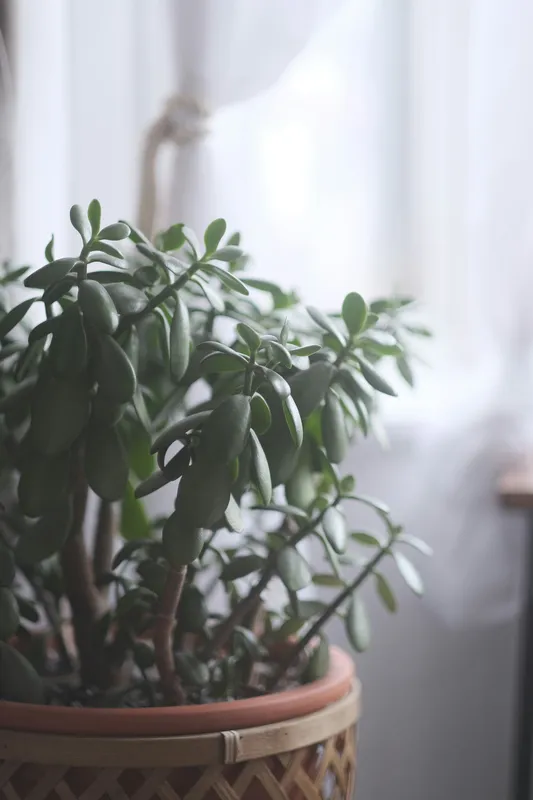
Jade plant (Crassula ovata) can produce a new plant from either a stem cutting or a complete leaf. A stem cutting begins with more stored tissue and gives a recognizable young plant sooner; a leaf cutting uses less material but must form both roots and a new shoot. Neither method has a guaranteed timetable. The condition of the parent plant, warmth, light, moisture, and the cutting itself determine whether and when growth begins.
The central rule is simple: use healthy tissue, allow the wound to dry, and provide a rooting medium that contains both air and a little moisture. Jade stores water in its fleshy stems and leaves, so a rootless cutting does not benefit from saturated mix.
Choose the method before cutting
Use a stem cutting when pruning an overlong branch or when a substantial new plant is the priority. Use a leaf cutting when only a small amount of material is available or when an intact leaf has detached cleanly.
University of Wisconsin–Madison Extension identifies both stem and leaf cuttings as suitable for jade. Its species guidance also notes that summer conditions generally favor easiest rooting, although propagation can succeed at other times. Indoors, season is only one variable: a warm, bright room may support growth outside summer, while a cold windowsill or weak winter light can slow it.
Do not propagate a stem that is soft, blackening, frost-damaged, or carrying an active pest infestation. University of Illinois Extension recommends beginning with healthy plants, clean containers, disease-free medium, and clean sharp tools. Propagation copies the parent plant; it does not cure diseased tissue.
Prepare the pot and work area
For either method, gather:
- a small container with an unobstructed drainage hole;
- fresh cactus or succulent mix, or another clean, coarse rooting medium;
- sharp pruners or a knife for a stem cutting;
- gloves, especially if skin is sensitive;
- a clean plate or tray for the drying stage.
A small pot is easier to manage than a large volume of mix around one cutting. The medium should drain promptly and remain aerated. University of Minnesota Extension recommends well-drained sandy conditions for cacti and succulents and sparse watering while stem cuttings root. Garden soil alone is a poor indoor rooting medium because it can compact, drain unpredictably, and introduce pests or disease.
Wash the container, clear the work surface, and clean the blade before making a stem cut. If several plants are being cut, disinfect the tool between plants. Let the blade dry before it touches tissue, and follow the disinfectant label rather than improvising a stronger concentration.
Method 1: take and root a stem cutting
- Select a firm, leafy tip. Choose a non-flowering branch with no soft spots, lesions, or insects. A piece roughly 3 to 6 inches long is a practical handling size; exact length is less important than healthy tissue and enough bare stem to anchor it.
- Make one clean cut. Cut below a leaf attachment point without crushing the stem. Remove the lowest leaves so none will be buried.
- Let the cut surface dry. Set the cutting in a dry, shaded, ventilated place. Wait until the cut face is dry and sealed rather than fresh or wet. This often takes several days, but stem thickness and room humidity matter more than the calendar.
- Insert it into airy medium. Pre-moisten the mix only if it is dusty-dry, then let excess water drain. Make a hole, place the bare stem into it, and firm the mix lightly. Do not bury leaves.
- Set it in bright indirect light. Avoid a dark corner, hot glass, or harsh midday sun while the cutting lacks roots.
- Manage moisture by the medium. Check below the surface. If the mix is still cool or damp, do not add water. If it has dried and the cutting remains firm, moisten sparingly and drain fully. Never leave the pot standing in water.
Iowa State University Extension and Outreach specifically includes Crassula among succulents suited to stem cuttings. It advises removing lower leaves, allowing the cut to callus for several days, and using a well-drained medium such as cactus mix or perlite. Rooting hormone is optional, not a requirement.
Do not keep pulling on the stem to look for roots. A stable cutting, new leaves, or a new side shoot is better evidence that it is establishing. If verification is necessary, wait until growth is visible or roots reach the pot edge, then slide the root ball out gently rather than tearing new roots with repeated tug tests.
Method 2: start a plant from one leaf
Leaf propagation depends on a complete leaf base. Hold a healthy leaf close to the stem and detach it cleanly. A torn middle section lacks the attachment tissue needed to make a complete new jade plant. Iowa State’s succulent guidance explains that the entire leaf and its attachment cells are required; partial leaf pieces will not produce a new plant by this method.
- Place the intact leaf on a clean tray until its detached end is dry.
- Lay it on top of slightly damp, well-drained medium with the former attachment end touching the surface. Do not bury the leaf blade.
- Keep it in bright indirect light and stable warmth.
- Recheck the surface before adding water. Maintain a trace of moisture near the leaf base, not a wet pot. A spray bottle can wet the immediate surface without saturating the entire container.
- Leave the original leaf attached while it remains connected to the developing plant. Remove it only when it separates easily or is fully dry.
A leaf may form roots before a shoot, a shoot before roots are visible, both, or neither. The North Carolina Extension Gardener Plant Toolbox lists both leaf and stem cutting as recommended strategies, but that species-level suitability does not mean every individual leaf will succeed. Discard a leaf that becomes translucent, foul-smelling, or completely soft. A wrinkling leaf can simply be using stored water, so judge the attachment end and new growth as well as appearance.
Why soil rooting is the practical default
Some houseplants root readily in a glass of water, but jade is better matched to an airy succulent medium. Iowa State notes that most succulents do not root well in water. Illinois Extension likewise cautions that water-formed roots can be weak and may adapt poorly when moved to potting mix.
Water rooting can show roots, but visibility is not the same as better establishment. A submerged jade stem has fewer air-filled pores around it, and any softening can progress quickly. Starting in a draining medium also avoids a later water-to-soil transition. If a cutting is already in water and remains firm, move it to a small pot of airy mix once it has a modest set of roots; do not wait for a dense tangle.
Adjust care after growth begins
Once new growth confirms establishment, introduce stronger light gradually. Wisconsin’s jade profile says established plants perform best with four or more hours of direct sun and may stretch or droop in inadequate light. A rooted cutting still needs acclimation: move it toward brighter exposure in stages and watch for pale or scorched patches.
Water thoroughly enough to wet the root zone, let excess drain, and then wait for the mix to dry before watering again. The interval will change with pot size, medium, season, temperature, and light. A weekly or monthly rule can be wrong in either direction. Do not fertilize merely because a cutting has been planted; wait for active new growth, then use a houseplant product at its labeled rate.
Read the plant and medium together:
- Soft dark stem at soil level: likely decay; remove wet mix and determine whether firm tissue remains above the damage.
- Cutting shrivels while mix stays wet: roots may have failed in oxygen-poor conditions; adding more water will not correct that.
- Firm cutting with no visible change: conditions may be cool or dim; improve them cautiously and allow more time.
- Long gaps between leaves or leaning growth: increase light gradually after rooting.
- White cottony clusters: isolate the plant and inspect for mealybugs before it joins a collection.
Handle jade cuttings safely
Jade is ornamental, not edible. The UC Agriculture and Natural Resources plant-safety profile describes it as mildly poisonous if ingested and notes that sap may irritate skin. NC State rates the plant’s poison severity as low but lists vomiting, depression, and incoordination among possible symptoms; the toxic principle is not identified. Those limits matter: “low severity” is not the same as safe to taste, and an uncertain compound is not a reason to dismiss exposure.
Wear gloves if sap contact is possible, keep hands away from eyes and mouth, wash exposed skin, and clean tools and work surfaces after cutting. Place loose leaves, cut stems, and potted plants where children and pets cannot chew them. If a person or animal ingests jade or develops symptoms, contact a poison-control service, clinician, or veterinarian for case-specific advice rather than inducing vomiting or trying a home remedy.
Sources
- Jade Plant, Crassula ovata (University of Wisconsin–Madison Extension). Accessed August 25, 2026.
- Jade Plant (Crassula ovata) (North Carolina Extension Gardener Plant Toolbox). Accessed August 25, 2026.
- How to Propagate Succulents (Iowa State University Extension and Outreach). Accessed August 25, 2026.
- Propagation (University of Illinois Extension). Accessed August 25, 2026.
- Cacti and Succulents (University of Minnesota Extension). Accessed August 25, 2026.
- Crassula ovata (University of California Agriculture and Natural Resources). Accessed August 25, 2026.