A poinsettia can arrive looking full and bright, then start dropping leaves beside the front door. Before adding water or fertilizer, look at the place you have given it. Cold air, a hot vent and water trapped inside a decorative cover can each turn a good plant into a struggling one.
For a newly purchased poinsettia, the job is to keep its roots evenly supplied with moisture and its leaves in steady light. The long nights used to produce its color have already done their work.
Look past the red bracts
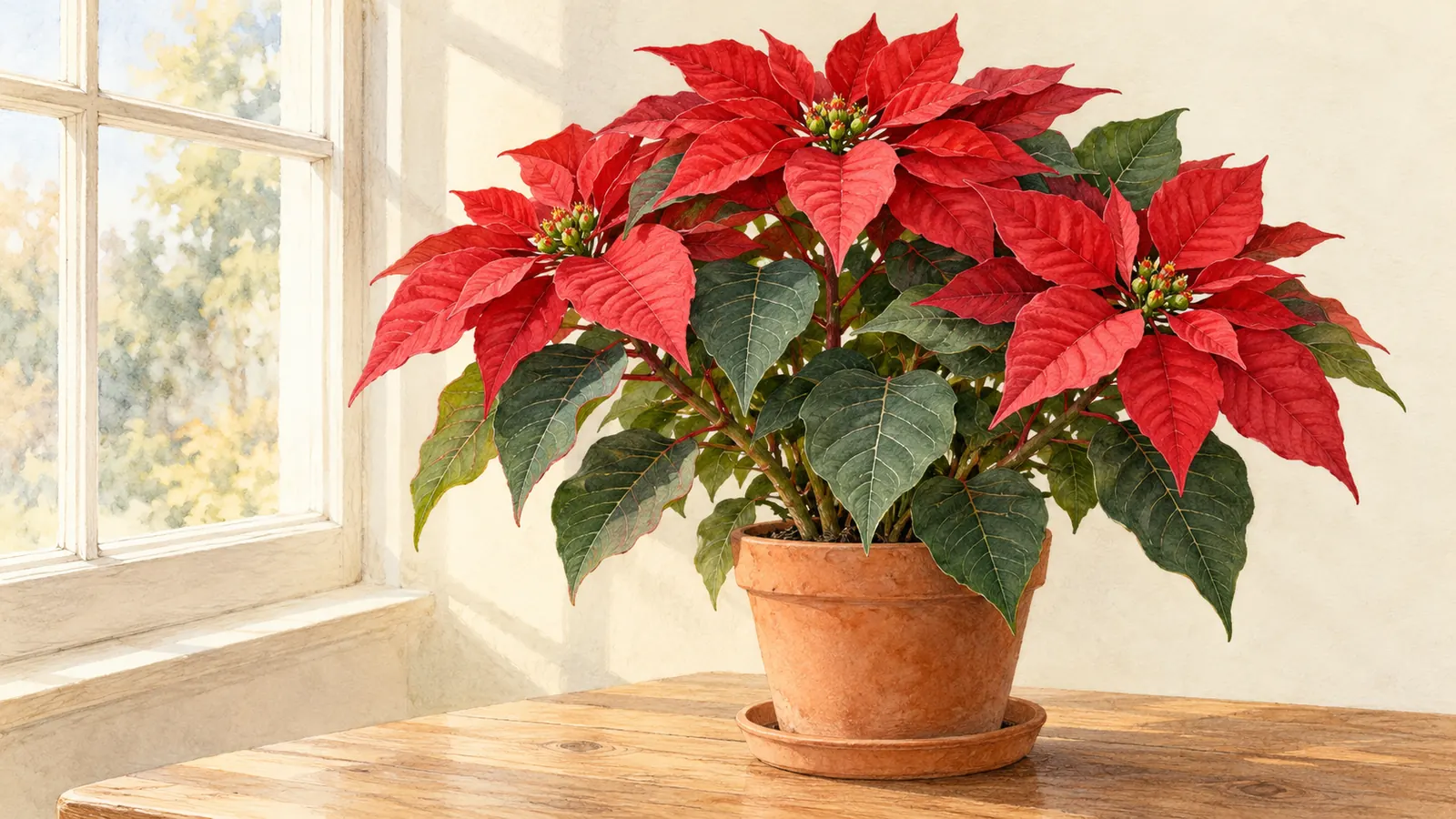
The colored parts are modified leaves called bracts. The true flowers are the small greenish-yellow structures clustered in their centers. Look there when choosing a plant: fresh-looking centers with little pollen are a better starting point than an aging display already shedding heavily.
Check the plant from the pot upward. Choose green lower foliage, intact branches and bracts without damaged edges. A plant with bare stems beneath a colorful top has already lost part of its display. If the leaves are wilted, feel the mix before assuming it only needs a drink. Wilting in wet soil is a reason to leave that plant at the store.
Illinois Extension’s selection guide also recommends checking leaf undersides for aphids and whiteflies. Choose another plant if you see pests. At home, keep a new arrival apart from your existing plants while you inspect it more closely.
Make the trip home the last stop
Poinsettias are cold-sensitive. Ask for a protective sleeve or wrap before carrying one outdoors in cold weather, and take it to a warmed vehicle. Do not leave it in the car while you finish other errands. Even brief freezing exposure can blacken leaves and lead to leaf loss.
Once indoors, remove the transport sleeve carefully. Cutting it away can be gentler than dragging it over the branches. Carry the pot from below; the stems are easy to break. The temporary sleeve protects the journey, but it is not a good long-term display container. These handling steps follow Iowa State Extension’s poinsettia guidance.
Give it a bright, comfortable place
Choose a spot with bright natural light, such as near an east-facing window. Keep the leaves clear of cold glass. If the room has strong afternoon sun, use a sheer curtain or move the plant back enough to soften the exposure.
A room around 65–70°F (18–21°C) is a useful target. Avoid the front-door draft, a radiator shelf, the fireplace and the stream of air from a heating register. A pretty spot is not useful if the plant alternates between hot dry air and a blast of cold whenever someone comes home.
The University of Minnesota warns that temperatures below 50°F can damage poinsettias. Treat that as a cold-exposure limit, not a nighttime target. Keep the plant inside a comfortably heated room rather than moving it to an unheated porch overnight.
Lift the nursery pot out before watering
Check the surface of the potting mix each day at first. Water when that surface feels dry; do not wait for the whole plant to collapse. A small pot can dry faster than a larger one, so two poinsettias bought together may need water on different days.
Lift the growing pot out of its foil or decorative outer container. At the sink, water the mix thoroughly until water runs from the drainage holes. Let it finish draining before putting it back. Empty the saucer or outer container, too: a pot with drainage holes still stays waterlogged if it sits in a puddle.
If removing the cover is awkward, take it off permanently and use a saucer. You should be able to see where the extra water goes. Mississippi State Extension emphasizes drainage, smaller pots’ faster drying and withholding fertilizer during flowering. There is no need to feed a newly bought plant just to keep its red bracts bright.
Read leaf drop alongside the soil
NC State Extension notes that drying out and temperature extremes can cause leaf loss. Yellowing lower leaves and persistent wetness suggest a different problem from curled leaves in very dry mix. In the first case, empty trapped water and check drainage before watering again. In the second, give the dry root ball a thorough watering and let it drain. Repeated small splashes can leave you uncertain about whether the whole pot became moist.
A plant that remains wilted in wet mix needs closer attention, not another drink. Soft, deteriorating roots warrant the inspection steps in the root-rot guide. Also think back to the trip home and check for drafts. Leaf drop alone cannot identify one cause, and fertilizer will not repair cold-injured leaves.
Keep the sap away from mouths and eyes
Place the plant where children and pets cannot chew it. Poinsettia sap can irritate skin; wear gloves when cutting stems and wash off sap after accidental contact. Avoid touching your eyes while handling broken branches.
The ASPCA describes mouth and stomach irritation, sometimes vomiting, and notes that poinsettia toxicity is commonly overstated. That does not make it an edible or pet-safe plant. Contact a veterinarian if a pet eats part of it.
Keep this year’s display in the light
Do not put an already colorful poinsettia in a dark closet each evening. That treatment belongs to the process of bringing a retained plant back into color next fall. For now, keep the same bright location and careful watering routine as long as the display lasts.
If you want to keep it afterward, it can grow on as a green plant. Producing another holiday display takes a longer care cycle and reliably uninterrupted dark nights; it is not a quick fix for fading bracts. University of Maryland Extension explains that cycle and cautions that a home-grown display may differ from a greenhouse-grown one. Decide whether you want that project when the current display fades, rather than changing a healthy plant’s routine today.
Sources
- Poinsettia (Illinois Extension). Accessed November 1, 2026.
- Guide to Selection and Care of Poinsettias (Iowa State University Extension and Outreach). Accessed November 1, 2026.
- Growing and caring for poinsettia (University of Minnesota Extension). Accessed November 1, 2026.
- Selecting and Maintaining Poinsettias (Mississippi State University Extension). Accessed November 1, 2026.
- Poinsettias (NC State Extension). Accessed November 1, 2026.
- Poinsettia (ASPCA). Accessed November 1, 2026.
- Poinsettias (University of Maryland Extension). Accessed November 1, 2026.