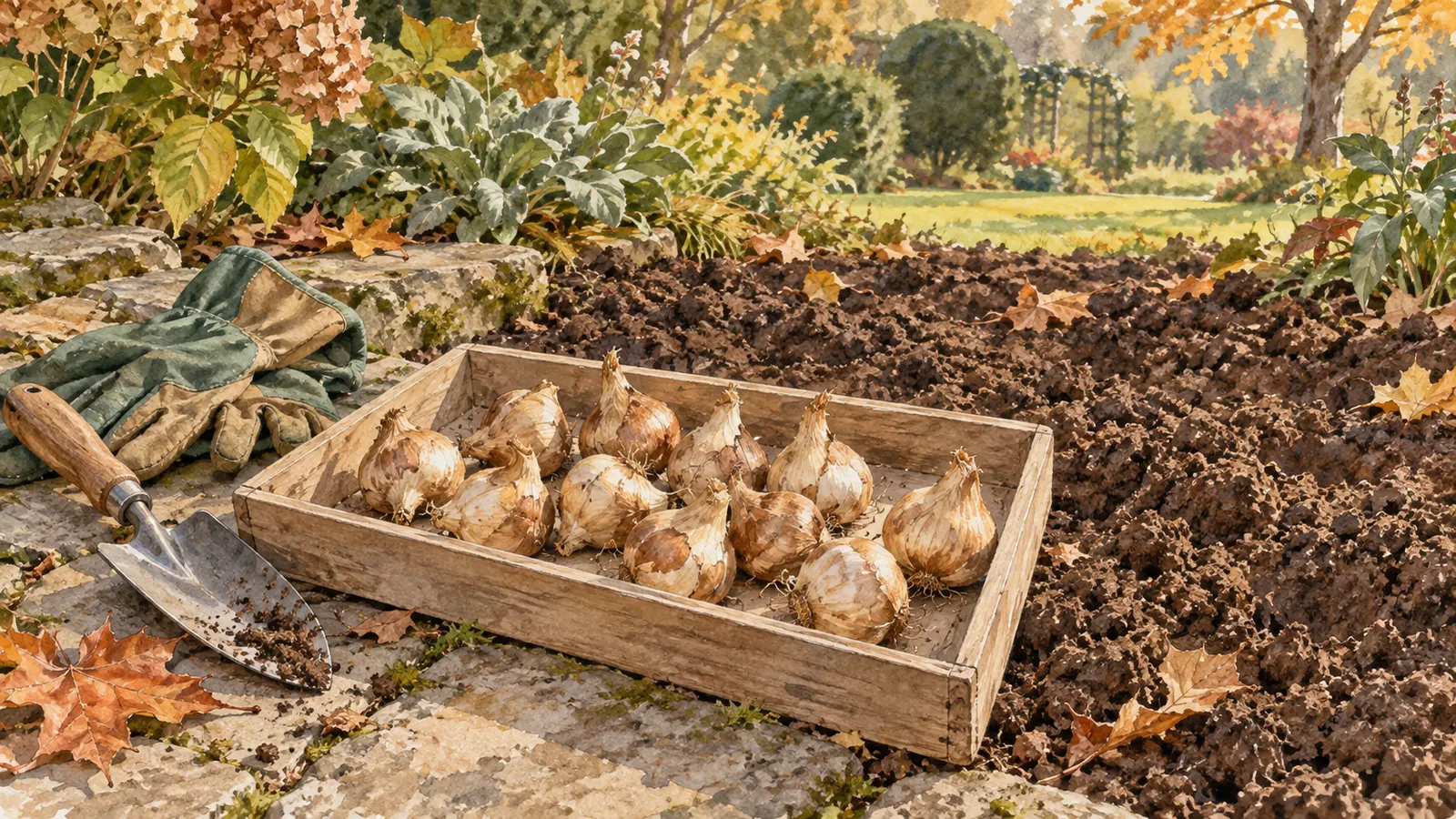
A bag of bulbs is easy to buy and surprisingly easy to leave beside the back door. Before choosing colors, choose their place in the garden. The useful question is whether that patch has the light, drainage and room the plants will need after the first flowers open.
This plan is for hardy spring-flowering bulbs planted outdoors, especially tulips and daffodils in climates with cold winters. Indoor forcing and tender summer plants such as dahlias need different schedules. A pot on an exposed balcony also needs a separate winter-protection plan; it does not behave like a garden bed.
Look at the bed in spring, not just today
Notice where water collects after rain. Maryland Extension warns that poor drainage can lead to bulb rot. A low spot that stays soggy is a poor choice even if it would look lovely from the kitchen window. Choose a better-drained patch or resolve the bed’s drainage before buying bulbs for it.
Consider spring light too. A deciduous tree may leave the ground sunny while early bulbs grow, then cast shade after leafing out. That opportunity does not make every spot beneath a tree suitable. Avoid damaging established roots when digging, and match the bulb to the light actually available.
Choose a place where fading leaves can remain after flowering. Later-growing perennials can soften their appearance, but the bulb foliage still needs time to do its work. A narrow strip that must be clipped neat immediately after bloom creates an avoidable conflict.
Put a local window on the calendar
In cold-winter gardens, the aim is to establish roots in fall before the soil freezes. Illinois Extension suggests roughly four to six weeks before ground freeze. Ground freeze is not the same as the first chilly night or first light frost. Treat that interval as regional guidance, then check local Extension advice and the supplier’s instructions.
A September display in a shop is not a command to plant immediately. Buy while the selection is good, but keep sound bulbs cool and dry until the appropriate planting window. Retain the cultivar names and instructions; two anonymous bags are harder to place well than two labeled ones.
Warm-winter gardeners should pause before following a northern calendar. UF/IFAS explains that Florida tulips generally need pre-chilled bulbs, winter planting and treatment as a one-season display. Choose bulbs suited to your region or obtain specific chilling instructions before ordering. A cold-hardiness rating alone does not tell you whether a warm winter will meet a bulb’s flowering needs.
Open the bag before digging
Set aside bulbs that are soft, moldy, badly shriveled or unusually light. Iowa State’s selection guide recommends firm, solid planting stock. A bargain bag is less useful if much of it is already deteriorating.
Read each label for mature height, bloom season, depth and spacing. Lay out one variety at a time, using the specified spacing rather than packing everything into the smallest possible hole. Keeping varieties in small groups makes it easier to see where one planting ends and another begins. Photograph the layout and labels before covering them.
Keep ornamental bulbs away from kitchen onions and garlic. Daffodils are poisonous, particularly their bulbs, and can resemble onions. The National Capital Poison Center recommends gloves and keeping them away from children and pets. Store planting stock where it cannot be mistaken for food or reached by an animal that digs through bags.
Measure from the bottom of the bulb
Use the instructions for the actual bulb and local soil conditions. For perspective, Iowa State lists many large tulips and daffodils at 6–8 inches deep, with smaller types often shallower. Those figures are examples, not one depth for every spring bulb.
The measurement runs from the bulb’s base to the finished soil surface. If a label calls for a 6-inch planting depth, that does not mean adding 6 inches of soil above the pointed tip. Check with a ruler or marked trowel instead of guessing from the open hole.
Set tulips and daffodils with their pointed end upward and basal plate downward. Give each bulb enough room to sit upright, then replace the soil gently. For a group, digging a shared area to the required depth can make placement easier than making many narrow holes. Keep the labels with the planting map, including any depth adjustment recommended for your soil.
Water once, then watch the weather
Water after planting to settle soil around the bulbs and support root growth. Afterward, respond to actual dryness and rain; avoid leaving the bed persistently wet. A planting label is a useful reminder that the apparently empty patch still contains living plants.
Do not automatically add bone meal to each hole. Illinois Extension recommends a soil test to establish whether more phosphorus is needed. Follow the resulting recommendation and product directions rather than assuming a concentrated dose belongs against every bulb.
If squirrels regularly dig up your planting, ask local Extension about a secured surface barrier. Iowa State describes mesh pinned over the planted area and removed as foliage emerges. Account for that removal in your spring notes; a protection measure should not become an obstacle to growth.
In spring, enjoy the flowers and leave green foliage in place. Maryland’s guidance explains that the leaves replenish the bulb for future growth. Mark bare patches and disappointing varieties on the same planting map. Next fall, you will know what actually happened in that bed before buying another bag.
Sources
- Selecting and Planting Spring-Blooming Bulbs (Iowa State University Extension and Outreach). Accessed September 20, 2026.
- How to plant flower bulbs for a colorful spring display (University of Illinois Extension). Accessed September 20, 2026.
- Bulbs (University of Maryland Extension). Accessed September 20, 2026.
- Tulips in Florida? (University of Florida IFAS Extension). Accessed September 20, 2026.
- Daffodils: Beautiful but potentially toxic (National Capital Poison Center). Accessed September 20, 2026.