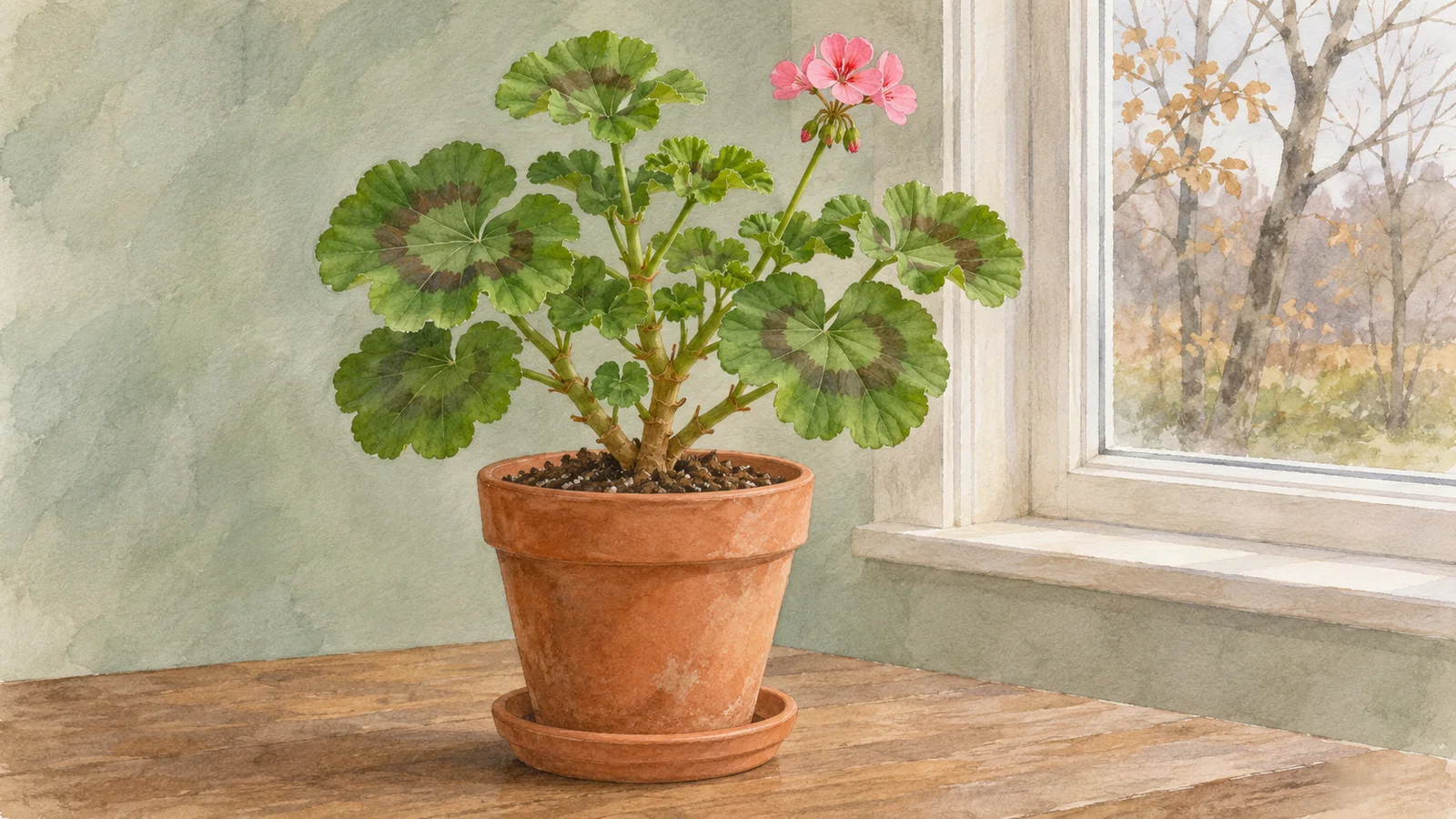
A favorite patio geranium can earn another summer in its pot. The first decision is where it will spend winter: a bright indoor spot where it can keep growing, or a reliably cool space where you can store it dormant. A warm, dark basement is a poor substitute for either.
This advice is for tender geraniums, Pelargonium, especially the familiar upright zonal types with rounded leaves and flower clusters. Hardy cranesbills belong to the genus Geranium and need a different winter plan. Minnesota Extension explains the distinction. Check the plant label before digging up a perennial that could have stayed in the border.
Choose the plants before frost chooses for you
Bring tender geraniums under cover before the first autumn frost. If your plants are already indoors, start by checking their condition and the space you have available; there is no need to put them outside again to begin a winter routine.
Keep your strongest, healthiest plants. Illinois Extension cautions that diseased or insect-infested geraniums are difficult to carry through winter and can spread problems indoors. Look beneath leaves, around stem joints and over the pot before moving it beside houseplants. The early pest-signs guide can help with that inspection.
For plants growing in a bed, lift the root system carefully and use a pot with drainage holes that accommodates it. A container-grown plant can stay in its existing pot if it drains properly. Reduce an awkward canopy by roughly one-third to one-half as Illinois recommends, and remove spent flowers and dead leaves. Make room for the plants you can actually light and inspect, rather than packing every pot into one corner.
A sunny window keeps a potted plant going
Choose a bright window away from cold glass, drafts and heaters. Minnesota Extension suggests cool indoor conditions around 60–65°F. If the window is too dim, use the grow-light guide to plan supplemental lighting.
Feel the growing medium before watering. If it is still moist, wait; when it feels dry, water and let the excess drain. Respond to the pot rather than preserving its summer watering schedule.
Some leaves may fall after the move indoors. Clear them away and watch the new growth. Long stretches of stem between leaves suggest inadequate light. Pinching above a leaf joint can encourage branching, but trimming alone does not brighten the room. Feed only during active growth, following the fertilizer label.
Cool storage saves window space, with a tradeoff
If you lack a bright window, an established geranium may be stored without its potting soil. This method needs a suitable room as much as it needs a suitable plant. Iowa State Extension describes a cool, dry place around 45–55°F and a large paper bag for one or two bare-root plants. Measure the temperature where the bag will sit. An unheated garage that freezes is not safe storage.
Lift the plant before frost and gently shake excess soil from the roots. Let wet foliage and stems dry before storing, rather than enclosing a freshly soaked plant. Label the bag so you can identify the color or variety in spring. Leave it accessible for inspection instead of burying it behind boxes until planting day.
Expect leaves to dry and drop. Bare branches alone do not mean the plant has died, but their condition matters. Geraniums have no bulb or tuber to fall back on: Purdue Extension explains that living stem and leaf tissue must carry them through winter. Save firm, healthy stems; do not mistake blackened, rotting or thoroughly shriveled tissue for ordinary leaf loss.
Bare-root storage is an experiment, especially in a modern warm, dry home. The RHS calls it the least reliable option and limits it to plants with tougher woody stems. For a particularly valued soft-stemmed plant, keep a potted specimen or plan rooted cuttings earlier in the season instead of putting your only plant into storage.
Check for drying and decay
Stored roots should not be forgotten all winter. Georgia Extension’s geranium guide notes that bare-root plants may need their roots soaked periodically to prevent excessive drying. Check the plant’s condition before doing this; a damp, deteriorating plant does not need another soak. Keep the stems out of standing water, and allow surface moisture to drain before returning the plant to storage.
For potted plants, empty collected water from the saucer. Georgia Extension warns that standing water can leave the root zone waterlogged. Remove fallen leaves and old flowers promptly: gray mold commonly begins on aging or decaying tissue, particularly in moist conditions. Keep pots far enough apart to reach the leaves and clear debris.
If a stem becomes dark and soft or a plant keeps wilting despite moist soil, separate it from the others and seek a diagnosis from your local Extension service. Adding fertilizer or repeatedly watering is not a diagnosis. Do not use a failing plant as cutting material.
Wake them up before the garden needs them
In late winter or early spring, bring stored plants into the light, remove dead material and cut back to firm living stem tissue. Pot bare roots, water thoroughly and let the pot drain. Iowa State uses March for this restart in its regional guidance; work backward from your own frost-free planting season rather than treating that month as universal.
Keep recovering plants indoors while they make new growth. When frost risk has passed, introduce outdoor conditions gradually over roughly two weeks, as the RHS recommends. Begin in a sheltered position and increase exposure instead of moving tender indoor foliage straight into a full day of sun and wind. A few healthy new shoots and a pot that you can water well are a better starting point than an impressive canopy grown lanky in winter darkness.
Sources
- Growing geraniums as annual flowers in Minnesota (University of Minnesota Extension). Accessed November 11, 2026.
- How to overwinter geraniums for next year’s garden (University of Illinois Extension). Accessed November 11, 2026.
- How can I over-winter my geraniums indoors? (Iowa State University Extension and Outreach). Accessed November 11, 2026.
- How to grow pelargoniums (Royal Horticultural Society). Accessed November 11, 2026.
- Winter Storage of Geranium, Canna, Gladiolus, Caladium, and Begonia (Purdue University Extension). Accessed November 11, 2026.
- Geraniums (University of Georgia Cooperative Extension). Accessed November 11, 2026.